The skin remembers what the mind tries to numb. On a humid southern afternoon, the air in southern Virginia usually smells of cut grass, stagnant river water, and the heavy promise of rain. But on July 30, 2025, inside the office of Showcase Magazine in Danville, the air suddenly smelled of high-octane gasoline and melted Styrofoam.
When fire takes hold of a human body, it does not just burn the surface. It consumes the oxygen in the immediate radius, forcing the victim to inhale the heat. Lee Vogler, a husband, a father of two, and a longtime fixture on the Danville City Council, was forced to breathe the very fire meant to kill him.
His attacker, Shotsie Buck-Hayes, had walked into the building carrying a five-gallon bucket. He had mixed the fuel with Styrofoam—a crude, homemade recipe designed to act like napalm, ensuring the fire would stick to the skin, eating through fabric and flesh without being easily extinguished. He doused Vogler. He chased him out of the building. Then, he struck the spark.
People often think of violence as an explosion. It is not. It is a theft of time.
The Chemistry of Malice
Consider what happens to the human form when sixty percent of it is subjected to third-degree burns. The skin loses its ability to hold moisture. The body enters a state of profound shock, desperate to protect its internal organs while the exterior barrier liquefies. Vogler survived the initial attack, flown by a medical helicopter to a specialized burn unit across the North Carolina state line. Survival, however, is a clinical term. It does not account for the months of skin grafts, the agonizing daily scraping of dead tissue, or the tight, painful contraction of new scars that restrict the movement of a limb.
Buck-Hayes claimed the attack was born of a jealous rage, fueled by suspicions of an affair involving his wife. In his mind, a grievance justified a crucible.
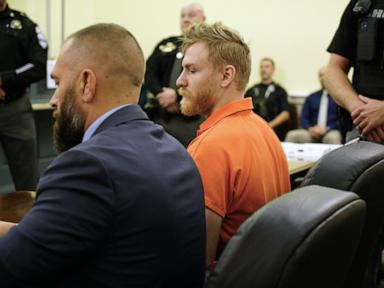
But malice has a strange way of refracting light. When Buck-Hayes stood before Circuit Judge James Reynolds inside a Danville courtroom to hear his fate, he offered an apology that sounded more like a re-litigation of his motives. He looked at a man whose face and body bore the permanent, melted map of that July afternoon.
Justice, when it arrived, did not look at the guidelines. The standard state sentencing formulas for aggravated malicious wounding are built for typical cruelties. They assume a ceiling to human malice. Judge Reynolds looked past the standard matrix, calling the act an extreme case of human cruelty. He handed down a life sentence for the malicious wounding, suspending all but thirty-five years, and added a consecutive five-year active term for attempted murder.
Forty years behind bars.
The Weight of the Aftermath
To understand forty years, you have to look at what it leaves behind. For Buck-Hayes, now entering the concrete monotony of the Virginia prison system, time will freeze. The world outside will move on, seasons will shift over the Dan River, and he will remain locked in the consequence of a single afternoon's spark.
For Vogler, the sentence provides a legal conclusion, but not a physical one. Scars do not unlearn their shape. Yet, standing outside the courtroom, the city councilman did not speak with the bitterness of a man trapped in his own skin. He referenced an old quote that had carried him through the darkest corridors of his recovery: only when you have been in the deepest valley will you know how magnificent it is to stand on the highest mountain.
He spent a year in that valley. He intends to spend the rest of his days on the mountain.
The courtroom cleared, the lawyers packed their briefcases, and the state took custody of a man who will now grow old behind a wall. The true weight of the story is found not in the length of the sentence, but in the quiet defiance of a survivor who refused to let the fire have the final word.