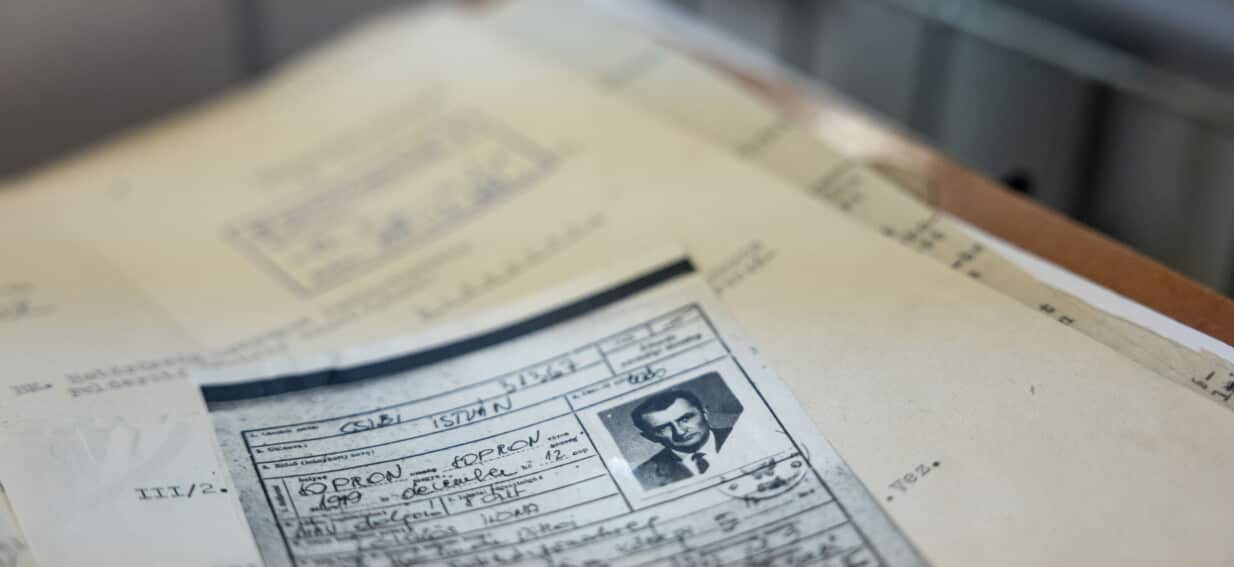
Every few years, a European archive unlocks another vault of Cold War surveillance records, and mainstream outlets immediately publish the exact same breathless autopsy. They frame these dusty folders as objective time capsules of omniscient state terror. They treat the ink on the page as gospel.
That narrative is lazy, historically illiterate, and dangerously naive. Read more on a connected topic: this related article.
When thousands of communist-era secret police files—whether from the East German Stasi, the Romanian Securitate, or the Polish SB—are unsealed, they do not reveal a flawless surveillance machine. They reveal an anxious, bloated bureaucracy drowning in its own fabricated noise. Journalists love to read these documents like transcripts of absolute truth because it makes for clean copy. In reality, treating a secret police dossier as an accurate record of society is like treating a hypochondriac's diary as a medical textbook.
The Lie of the Omniscient Archive
The standard coverage of unsealed intelligence files relies on a massive assumption: that state agents recorded reality. More reporting by NBC News delves into similar views on this issue.
They did not. They recorded what their superiors wanted to hear, filtered through the paranoia of an authoritarian regime and the self-preservation instincts of low-level informants. Having spent years reviewing declassified intelligence methodologies and archival historiography, I have seen researchers and reporters fall into this exact trap repeatedly. They find a file claiming a neighbor reported a dissident for hoarding Western radio parts, and they print it as historical fact.
Here is the operational reality of communist-era intelligence gathering. Case officers had quotas. Informants—often coerced, blackmailed, or paid small sums—had to produce material to justify their stipends or keep themselves out of prison. When you incentivize human beings to find subversion, they will invent subversion out of thin air.
Historians like Timothy Garton Ash, who literally read his own Stasi file and wrote extensively about the experience in The File, documented this exact phenomenon. He discovered that the officers tracking him were frequently incompetent, misinterpreting basic social interactions as elaborate espionage plots. The Stasi amassed over 111 kilometers of shelf space in paper files, alongside millions of index cards. That is not the footprint of an agile, all-seeing intelligence agency. That is the footprint of an organization suffocating under its own data hoarding, unable to distinguish a genuine threat from a drunk complaining about bread shortages.
Why Unsealed Files Are Weaponized Weapons of Misdirection
When people search for what unsealed communist files reveal, they usually ask two predictable questions: How many people were informants? and Which famous figures were secretly working for the state?
Both questions miss the structural mechanics of how these regimes actually operated. Focusing on the raw headcount of informants—such as the estimated 189,000 unofficial collaborators (Inoffizielle Mitarbeiter) working for the Stasi at its peak—creates a false binary of victims versus villains.
Consider the administrative reality inside those folders:
- The Ghost Informant: Case officers regularly padded their rosters by listing citizens as active informants after a single casual conversation, never informing the target they had been "recruited."
- The Saboteur: Many coerced informants deliberately fed their handlers useless, outdated, or wildly exaggerated gossip to protect their friends while appearing compliant.
- The Bureaucratic Echo Chamber: Reports were copied, summarized, and passed up the chain of command, with each layer stripping away context and amplifying the perceived threat to secure more departmental funding.
When modern politicians or journalists weaponize these files decades later—a process known in Central and Eastern Europe as lustration—they routinely destroy reputations based on incomplete, corrupt data. In Poland, Czechoslovakia, and Romania, waves of archival releases have repeatedly triggered political scandals where public figures were branded as traitors based on a single registration card, even when the corresponding operational file proving they never delivered a single piece of intelligence had been destroyed in 1989.
You cannot use the paperwork of liars to establish the truth.
The Signal-to-Noise Trap in Totalitarian Surveillance
To understand why the popular narrative around these files is broken, you have to understand information theory. Surveillance does not fail because a state lacks data; it fails because the state collects too much of it without a mechanism to verify accuracy.
Imagine a scenario where a modern corporation pays ten thousand employees a bonus every time they report a coworker for violating company policy, with zero penalty for false accusations. Within six months, the human resources database would be overflowing with millions of pages of petty grievances, fabricated rumors, and paranoid speculation. Nobody could ever use that database to understand how the company actually functioned. It would only tell you what the employees were afraid of.
Communist secret police agencies operated on this exact broken incentive structure for four decades.
In Romania, the Securitate relied on a massive network of informers to monitor millions of citizens, yet the regime was completely blindsided by the speed and ferocity of the December 1989 revolution in Timișoara. In East Germany, the Stasi possessed one of the highest ratios of secret police officers to citizens in human history, yet they failed to anticipate or stop the peaceful Monday demonstrations in Leipzig that brought down the Berlin Wall.
Why did they fail despite having millions of files? Because their archives were mirrors reflecting the regime's own ideological delusions, not windows into the real world. When an entire apparatus is trained to look for Western sabotage behind every factory delay and train derailment, it becomes blind to systemic economic collapse and genuine grassroots fury.
What the Files Actually Expose
If we stop reading these unsealed documents as factual biographies of the people being watched, they become infinitely more valuable. They become forensic evidence of the watchers.
When you strip away the sensational headlines about neighbor spying on neighbor, unsealed secret police files reveal three uncomfortable truths that mainstream coverage conveniently ignores:
- Banality Over Evil: The vast majority of secret police work was not cinematic espionage. It was mind-numbing clerical labor. Pages upon pages of transcripts detailing who bought groceries, who visited a cousin in another city, and who complained about the price of shoes. Authoritarianism does not sustain itself on dramatic torture chambers alone; it sustains itself on the soul-crushing tedium of middle managers filing paperwork.
- The Fragility of the State: Secure governments do not need to transcribe the pillow talk of university students. The sheer volume of unsealed files proves that communist regimes lived in a state of perpetual terror of their own populations. Every unsealed folder is a monument to state insecurity.
- The Myth of Total Control: Even with unchecked power, unlimited budgets, and zero legal oversight, these agencies could not control human behavior. People still told jokes, smuggled books, listened to forbidden broadcasts, and organized underground networks right under the noses of their handlers.
There is an obvious downside to adopting this skeptical, forensic approach to historical archives. If we treat secret police files as inherently unreliable, we risk letting genuine perpetrators off the hook. Real collaborators did exist. Real people were imprisoned, tortured, and murdered based on tips passed to the Securitate, the KGB, and the Stasi. Dismissing the entire archive as bureaucratic fiction insults the survivors whose lives were dismantled by those exact pieces of paper.
The answer is not to ignore the files, nor is it to swallow them whole. The answer is ruthless corroboration.
How to Read Declassified Intelligence Without Getting Played
If you are a researcher, a journalist, or simply someone trying to make sense of the latest wave of Cold War document dumps, stop reading the text at face value. Interrogate the document itself before you ever quote its contents.
- Verify the Provenance: Check who created the record and why. An operational report written to justify an arrest carries a completely different bias than a raw surveillance log recorded by a bored technician in a van.
- Look for the Missing Pages: In almost every post-communist transition, secret police officers spent weeks shredding and burning files before handing over the keys. What survives in the archive today is not a random sample; it is a curated remnant. Ask yourself what was destroyed to make the remaining pages look the way they do.
- Cross-Reference Outside the State: Never rely solely on regime paperwork to judge an individual's actions. Match archival claims against independent diaries, foreign diplomatic cables, underground samizdat publications, and oral histories.
- Follow the Money and Coercion: Before branding someone an informant, look for the recruitment file. Was the person a true believer, or were they a nineteen-year-old student threatened with their mother's firing from a hospital job if they refused to sign a piece of paper? Context changes everything.
Mainstream journalism treats unsealed secret police files like the final verdict of history, neatly packaged and ready for consumption. They are nothing of the sort. They are the toxic waste of dead dictatorships, and anyone who handles them without protective gear is going to get poisoned by the exact same lies the regimes told themselves.