Dawn breaks differently over the limestone cliffs of southern Thailand. For generations, the morning light revealed quiet stretches of sand where fishing boats bobbed gently on turquoise water, and the rustle of palm fronds was the only sound competing with the call to prayer or the chatter of morning markets. It was a rhythm built on hospitality—a cultural bedrock known as nam jai, or water of the heart, representing boundless generosity and kindness toward strangers.
Today, however, the sunrise often illuminates a different kind of landscape. Plastic bottles drift in the shallows of Maya Bay. A moped lies abandoned on a narrow cobblestone pathway in Chiang Mai, its rental plastic scratched and broken after a reckless turn. Outside a centuries-old temple in Bangkok, a traveler poses for a selfie, shouting instructions to a companion while standing directly in front of monks engaged in morning meditation. Meanwhile, you can explore similar events here: The Clockwork Sky And The Weight Of Waiting.
The friction is palpable. It is not just about noise or litter. It is about a fundamental unravelling of an unspoken social contract.
The Anatomy of Over-Tourism
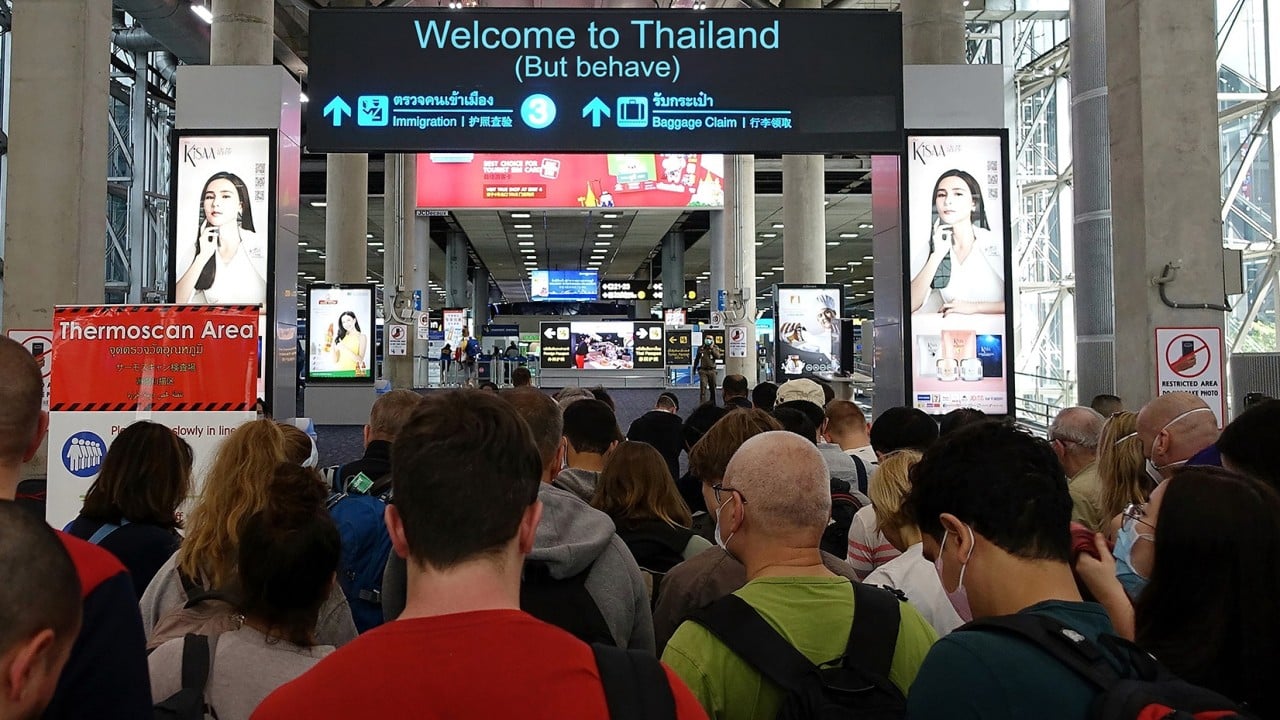
To understand why communities across the Kingdom are pushing back, we have to look past the glossy brochures and unpack the numbers. Before the global disruptions of the 2020s, Thailand welcomed nearly forty million international visitors annually—a figure exceeding half of its total local population. To see the complete picture, check out the recent report by Condé Nast Traveler.
Imagine a house designed for a family of four suddenly hosting a neighborhood block party every single day. The plumbing strains. The floors wear down. The hosts grow exhausted.
This sheer volume changed the nature of travel. When tourism scales up infinitely, the intimate cultural exchange that once defined backpacking adventures transforms into mass consumption. Entire neighborhoods in Phuket and Chiang Mai morphed overnight. Long-term residential leases vanished, replaced by short-term rentals that priced locals out of their own ancestral towns. Small grocery stores gave way to souvenir stalls selling identical, mass-produced trinkets manufactured thousands of miles away.
Consider Somchai, a fictional yet entirely representative lifelong resident of a coastal village in Krabi. For thirty years, Somchai fished the same waters and shared meals with the same neighbors. When tourism arrived, he welcomed it, opening a small beachside café serving fresh seafood prepared with his grandmother's secret curry paste.
At first, travelers sat at his wooden tables, asked questions about his life, and respected the quiet evening hours of the village. But by the late 2010s, Somchai’s café was frequently surrounded by tourists demanding western menus at midnight, playing loud music from portable speakers, and leaving without a word of acknowledgment for the people serving them.
"They come to see our paradise," Somchai remarked to a local newspaper reporter last year, his voice heavy with a quiet resignation. "Sometimes it feels like they are eating it piece by piece."
The Breaking Point
Respect is a two-way street, but it often gets lost in translation. Cultural misunderstandings frequently spark the initial friction. In Thai culture, the head is considered sacred and the feet are considered the lowest, dirtiest part of the body. Touching someone’s head, pointing the soles of your feet toward a sacred image, or raising your voice in anger—known locally as losing "face"—are profound social offenses.
Yet, every day in tourist hubs, these customs are broken out of sheer ignorance or apathy. Videos go viral on social media platforms with alarming frequency: foreign nationals climbing ancient temple ruins, refusing to wear shirts in government offices, or engaging in late-night brawls on pristine beaches.
Local law enforcement and community leaders found themselves trapped in a difficult dilemma. Tourism is the lifeblood of the national economy, contributing roughly twelve percent of the gross domestic product. Shutting the doors entirely would plunge millions of families into financial ruin. Yet, enduring endless disrespect and environmental degradation felt equally destructive.
The breaking point arrived not with a single dramatic event, but through a cumulative exhaustion. Environmental scientists began sounding alarms about coral reef bleaching caused by chemical sunscreens and unregulated boat anchoring. Local residents began organizing neighborhood watch groups not to fight crime, but to monitor unruly behavior in residential zones.
When governments stepped in with new regulations—restricting visitor numbers to vulnerable national parks, imposing stricter penalties for visa violations, and launching campaigns highlighting cultural etiquette—it was not out of malice. It was a desperate attempt to restore equilibrium.
Reimagining the Journey
The narrative that Thailand is turning its back on the world is entirely false. The heart of the country has not hardened. Rather, the boundary lines are being redrawn.
Change requires participation from both sides of the ticket counter. Travel should never be an act of extraction. It is not enough to simply consume scenery, snap a digital trophy, and move on to the next destination.
True exploration demands humility. It asks us to research local customs before packing our bags, to lower our voices in sacred spaces, to support family-owned businesses that honor local traditions, and to remember that behind every service worker, hotel desk clerk, and Tuk-Tuk driver is a human being with a rich history and a deep-rooted community.
The beaches are still breathtaking. The curries are still vibrant and complex. The morning light still hits the limestone cliffs with the same timeless brilliance. But the era of unfettered, consequence-free carelessness is coming to a close.
Paradise was never meant to be a playground. It is a home. And those who wish to step inside its borders are finally being asked to act like guests.