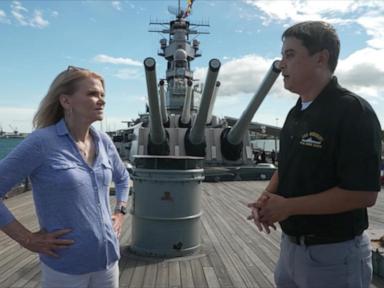
The modern United States Navy views the tragedy of Pearl Harbor as the crucible that forged its global supremacy, yet the institution is currently repeating the exact cultural and bureaucratic blind spots that led to the 1941 disaster. Decades of undisputed maritime dominance have bred a dangerous complacency within the Pentagon, masking critical vulnerabilities in shipbuilding, industrial capacity, and strategic readiness. While military leaders frequently invoke December 7 as a rallying cry for vigilance, the actual lessons of that day—the catastrophic failure to anticipate asymmetric threats, the reliance on outdated deterrence models, and the crippling decay of domestic production—are systematically ignored.
The consequences of this collective amnesia are no longer theoretical. As geopolitical tensions escalate across the Pacific, the gap between American naval rhetoric and actual operational capacity is widening into a gulf that adversaries are actively preparing to exploit.
The Illusion of Invincibility and the Blueprint for Surprise
Military disasters rarely happen because an adversary possesses superior technology. They happen because the dominant power assumes the status quo is permanent. In the months leading up to December 1941, American naval leadership possessed ample intelligence indicating Japanese hostility, yet a rigid institutional belief in the superiority of the US Pacific Fleet created a collective psychological blind spot. Top officials assumed that the sheer presence of American battleships at Oahu acted as an absolute deterrent.
A similar dynamic operates within the Pentagon today. The Navy relies heavily on its fleet of supercarriers to project power and deter conflict. These massive vessels are technological marvels, but they have also become centralized targets in an era defined by long-range anti-ship ballistic missiles, hypersonic weapons, and swarms of low-cost autonomous drones.
History shows that weapons systems designed for yesterday's conflicts become liabilities when the strategic environment shifts. The US Navy entered World War II convinced that the battleship would remain the arbiter of naval warfare, only to watch the devastating effectiveness of carrier-based aviation rewrite the rules of engagement in a single morning. Today, the service risks making the same mistake by over-investing in a small number of extraordinarily expensive platforms while underfunding the distributed, resilient systems required to survive a modern high-intensity conflict.
The Invisible Collapse of American Shipyards
A warship is only as good as the infrastructure that builds and maintains it. The true miracle of the post-Pearl Harbor mobilization was not merely the courage of the sailors, but the sheer, overwhelming output of American industrial manufacturing. Between 1941 and 1945, American shipyards turned out thousands of vessels, literally out-producing the losses inflicted by the Axis powers.
That industrial engine is completely gone.
+-------------------------------------------------------------+
|    U.S. NAVAL SHIPYARD DECLINE: THEN VS. NOW                |
+-------------------------------------------------------------+
| 1940s Mobilization Era:      | 2020s Modern Era:            |
| - Dozens of active yards     | - 4 public shipyards remaining|
| - Surge capacity: Days/Weeks | - Maintenance backlogs: Years|
| - Global manufacturing leader| - Minor share of global build|
+-------------------------------------------------------------+
Today, the United States relies on just four public naval shipyards to maintain its entire submarine and aircraft carrier fleets. These facilities are plagued by aging infrastructure, severe labor shortages, and massive maintenance backlogs that keep critical combatants sidelined for months or even years at a time. Private shipbuilders are similarly constrained, struggling with supply chain bottlenecks and a lack of skilled workers to build new hulls on schedule.
If a major conflict were to break out in the Pacific tomorrow, the US Navy would face a reality it has not encountered since the dark days of early 1942: the inability to rapidly repair battle damage or replace lost hulls. A single missile strike on a modern shipyard could paralyze naval production for years, turning a tactical setback into a strategic catastrophe. Adversaries have spent decades building massive commercial and military shipbuilding ecosystems that dwarf current American capacity, shifting the structural balance of power before a single shot is fired.
Technology as a Vulnerability
The contemporary Navy prides itself on network-centric warfare, where every ship, aircraft, and sensor is linked in real-time to create a unified picture of the battlespace. This interconnectedness is a massive force multiplier, but it also introduces a single point of failure that did not exist eighty years ago.
In 1941, the failure was one of intelligence synthesis—the inability to connect disparate warning signs into a cohesive picture of an imminent attack. In a modern conflict, the failure will likely be electronic and digital. The heavy reliance on satellite communications, GPS navigation, and complex data links means that a sophisticated adversary does not need to sink an American warship to take it out of the fight. They only need to blind it.
Cyber attacks, electromagnetic spectrum jamming, and anti-satellite weapons can instantly sever the digital threads holding the modern fleet together. When communication drops and screens go dark, operational commands devolve to individual ship captains who have spent their entire careers operating within a highly managed, centralized command structure. The Navy frequently trains for optimal conditions, but it rarely rehearses the chaotic, degraded environments that characterized the chaotic surface battles around Guadalcanal, where survival depended on raw seamanship and decentralized initiative rather than data links.
The Tyranny of Distance and Logistics
Amateurs talk about strategy; professionals study logistics. The geographic reality of the Pacific Ocean has not changed since World War II. It remains a vast, unforgiving expanse where the tyranny of distance dictates military outcomes.
Operating thousands of miles from the American mainland requires a massive, protected logistics tail. During World War II, the Navy developed revolutionary mobile service squadrons—floating bases composed of tankers, supply ships, and repair barges that followed the combat fleets across the ocean. This allowed American warships to refuel and rearm without returning to distant ports.
The Weakness of the Modern Auxiliary Fleet
The current American logistics fleet is dangerously small and highly vulnerable. The Combat Logistics Force consists of a handful of unarmored auxiliary ships tasked with keeping the entire forward-deployed Navy fueled and fed. In a contested environment, these slow-moving targets would be the primary focus of enemy submarines and long-range bombers.
- Fuel starvation: A fleet without oil is nothing more than floating iron.
- Ammunition depletion: Modern warships carry a fixed number of vertical launching system cells that cannot be easily rearmed at sea.
- Port dependency: Without secure forward infrastructure, damaged ships must transit thousands of miles backward across the Pacific just to find a dry dock.
If an adversary successfully targets these logistics vessels, American strike groups will find themselves isolated, low on ammunition, and running out of fuel thousands of miles from safety. The legacy of Pearl Harbor is often framed as a story of operational recovery, but it was actually a story of logistical resilience. Ignoring this element of maritime power reduces the fleet to a glass cannon—capable of delivering a devastating initial strike, but unable to sustain a prolonged war of attrition.
The Cultural Shift from Warfighting to Administration
The officer corps that entered World War II was quickly purged of peacetime bureaucrats and replaced by aggressive, risk-tolerant leaders who understood that winning required tactical innovation and personal accountability. Commanders who failed to perform were ruthlessly relieved of command.
Decades of peacetime operations have altered the institutional culture of the Navy. Today's promotional pathways often favor administrative compliance, risk aversion, and career management over raw warfighting competence. The proliferation of administrative requirements, compliance training, and zero-tolerance policies for minor non-operational errors has created a climate where young officers are conditioned to avoid mistakes rather than take bold, calculated risks.
This bureaucratic bloat slows decision-making cycles down to a crawl. In a fast-moving, high-intensity conflict where hypersonic missiles bridge distances in minutes, a command structure weighed down by layers of administrative review will be systematically outpaced by an agile adversary. The Navy needs to rediscover its tradition of decentralized command, empowering junior officers to make critical decisions without waiting for approval from a distant headquarters.
The High Price of Strategic Denial
The true legacy of Pearl Harbor is a warning about the danger of self-delusion. The United States assumed its position, its technology, and its economic might made it immune to a sudden, catastrophic blow.
The signs of systemic strain within the modern naval enterprise are visible to anyone willing to look. Ships are deploying for longer periods, crews are facing historic levels of operational fatigue, and the industrial base is fracturing under the weight of decades of neglect. Continuing to project an image of global dominance while failing to address these foundational weaknesses is an open invitation to disaster.
Reversing this decline requires more than increased defense spending or grand political speeches. It demands a fundamental reassessment of how the nation builds, maintains, and fights its fleet. The Navy must move away from its dependency on a few exquisite, irreplaceable platforms and embrace a larger, more distributed force that can absorb losses and keep fighting. The industrial base must be treated as a critical element of national security, with sustained public and private investment to restore the domestic shipbuilding capacity that won World War II.
Deterrence fails when an adversary calculates that your vulnerability outweighs your willingness to adapt. The smoking hulls in Oahu's harbor proved that lesson at a terrible cost in American lives. Failing to apply that knowledge to the realities of modern maritime competition ensures that the nation will eventually learn it all over again, under far more punishing conditions.