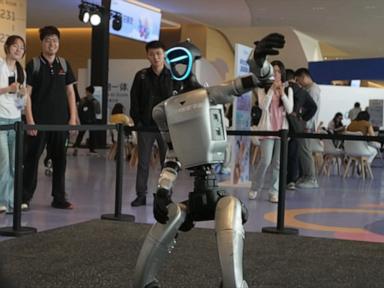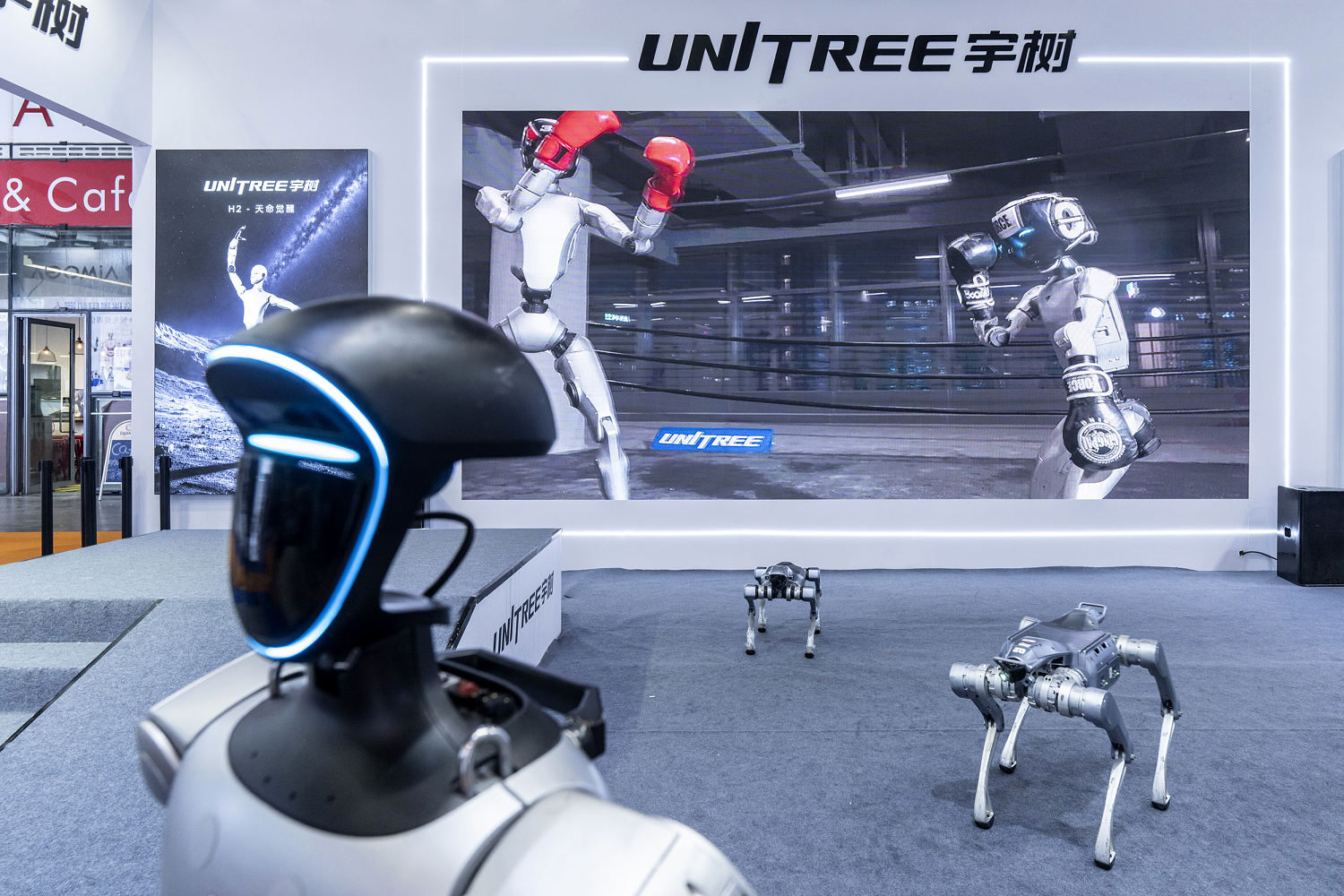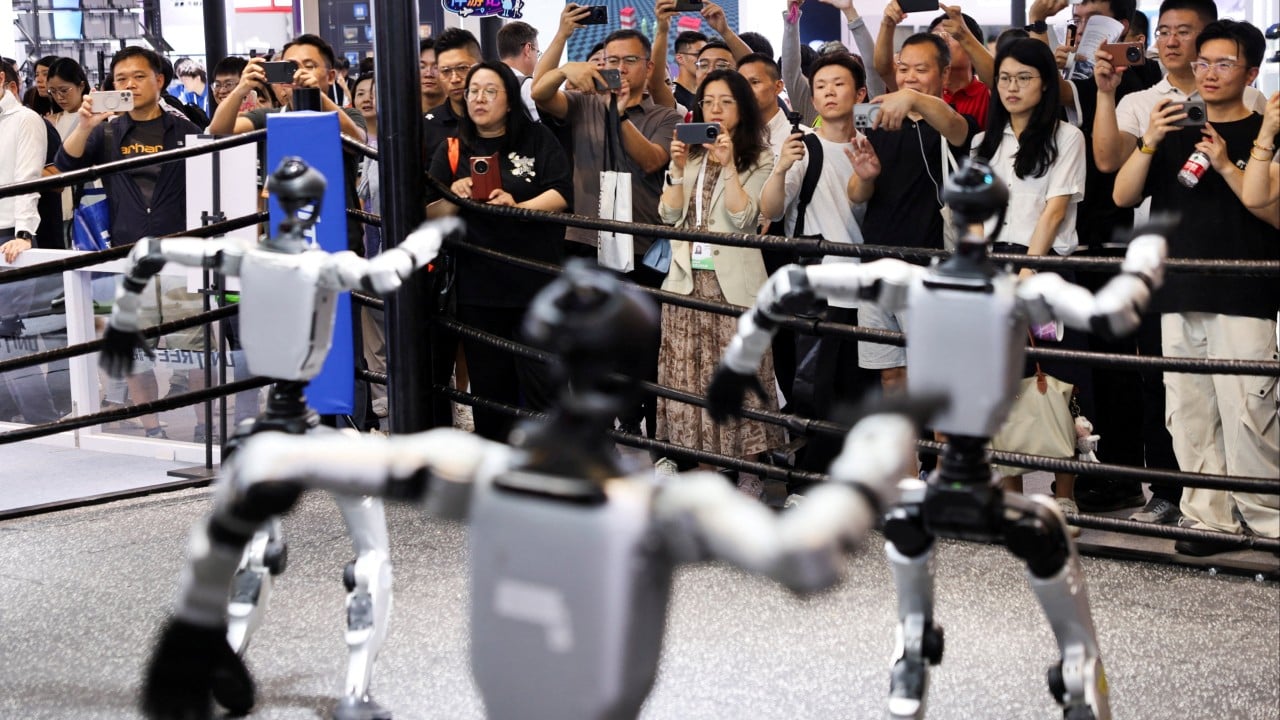
Wall Street and the financial press are popping champagne over Unitree Robotics hitting a sixty-six billion dollar valuation during its Shanghai market debut. The lazy consensus says this is the watershed moment for humanoid mechanics. The narrative goes that bipedal hardware has finally cracked the commercial code, public markets are ravenous, and we are marching straight into a Jetsons future of domestic mechanical labor.
Every single word of that is dangerous nonsense.
I have watched venture capitalists and public market tourists light billions of dollars on fire chasing speculative hardware spikes for two decades. They see a massive valuation number and mistake capital velocity for structural viability. A sixty-six billion dollar debut for a humanoid robotics company does not prove the market is mature. It proves that liquidity has nowhere else to go and investors are dangerously desperate for a hardware story they can pitch to their limited partners.
Let us strip away the ticker tape and look at the brutal mechanical reality.
The Margin Illusion Destroying Hardware Startups
The fundamental flaw in the public excitement surrounding Unitree is a profound misunderstanding of unit economics versus valuation hype. Building a humanoid robot that can do backflips in a controlled laboratory or trot down a Shanghai sidewalk is a PR achievement. It is not a business model.
Mechanics are expensive. Actuators wear out. Harmonic drives degrade under load. Thermal management inside a sealed metallic torso handling continuous dynamic stress creates a maintenance nightmare. When a company prices its valuation at sixty-six billion dollars, the implied cash flow required to justify that multiple fifty years down the road demands an operating margin that hardware simply cannot sustain.
Software scales with zero marginal cost. Hardware fights the laws of thermodynamics every single second it stays powered on.
I have seen industrial automation projects blow millions on custom actuators because commercial off-the-shelf components could not handle the duty cycle of a standard shift. When you scale a bipedal robot to thousands of units in a logistics warehouse or a manufacturing floor, the maintenance overhead eats your profit margins alive.
If a robot costs thirty thousand dollars to build, requires a complete actuator overhaul every eighteen months, and demands constant telemetry monitoring by a team of human engineers, your service contract is a loss leader. Scaling that model does not generate wealth. It accelerates cash burn.
Why Bipedalism is the Wrong Engineering Priority
The entire obsession with humanoid form factors is driven by science fiction nostalgia rather than practical utility. Humans walk on two legs because our evolutionary ancestors needed to traverse uneven terrain and hold tools while moving across open savannahs.
Factories and warehouses are not built for humans. They are built for efficiency.
Conveyor belts, automated guided vehicles, and stationary robotic arms do not fall over. They do not require complex balance algorithms that consume massive amounts of onboard compute just to stand still in a stiff breeze. A humanoid robot is a monument to structural inefficiency. It has a high center of gravity, dozens of points of potential mechanical failure, and requires an astronomical amount of energy to perform tasks that a wheeled or tracked chassis could execute with ten percent of the power draw.
When investors applaud a company for building a humanoid form factor, they are cheering for an engineering handicap. They are paying a massive premium for a shape that looks good in a promotional video, while ignoring the fact that four-wheeled mobile bases with a six-axis arm do the actual heavy lifting in modern supply chains at a fraction of the cost.
The Valuation Bubble and the Coming Correction
Let us address the Shanghai debut directly. A sixty-six billion dollar price tag for Unitree puts them in the conversation with global manufacturing titans that have decades of proven supply chain dominance, massive cash reserves, and billions in actual net income.
Unitree is trading on pure momentum and the psychological fear of missing out on artificial intelligence hardware plays. The market is conflating the breakthrough of foundation models with the maturity of mechanical engineering.
We saw this exact movie play out during the autonomous vehicle frenzy of the mid-twenty-teens. Billions poured into self-driving startups because the demos looked incredible on sunny days in Silicon Valley. Then winter hit, rain obscured the sensors, edge cases multiplied, and capital evaporated overnight. Companies that held trillion-dollar mindshare valuations suddenly found themselves restructuring or liquidating assets.
Robotics is facing that exact reckoning, only the stakes are higher because hardware cannot be patched over-the-air when a gear strips out under a heavy load.
The Counter-Intuitive Playbook for Industrial Automation
If you want to make money in automation, stop looking at companies that build toys for trade show floors. Look at the boring, unsexy component manufacturers. Look at the firms engineering high-torque density brushless motors, advanced tactile sensors, and edge-computing thermal dissipation systems.
The real winners of the robotics boom will not be the brands selling complete bipedal robots with high-profile stock market debuts. The winners will be the picks-and-shovels providers supplying the raw durability that keeps industrial machinery running for ten years without a catastrophic failure.
Stop buying the hype of the sixty-six billion dollar illusion. Stop pretending that a robot doing a clumsy dance routine translates to enterprise profitability.
Build for reliability. Design for the factory floor, not the internet. And if you are holding public shares priced on the promise of an immediate humanoid workforce, cash out before the physics catch up to the valuation.