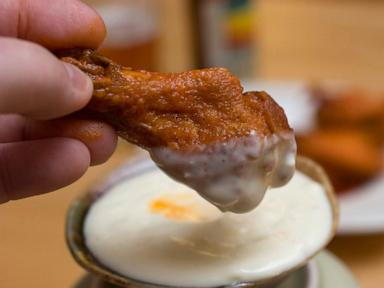
The commercial proliferation of the Buffalo wing represents one of the most successful commodity arbitrage plays in modern foodservice history, transforming an anatomically awkward, low-yield poultry byproduct into a high-margin menu anchor through precise thermal processing and emulsified lipid chemistry. Most culinary commentary reduces this dish to regional folklore or subjective heat tolerance. That framing obscures the industrial supply chain dynamics, protein denaturation physics, and structural menu engineering that actually dictate whether a wing operation generates profit or bleeds margin.
The Commodity Arbitrage Origin and Anatomical Economics
Before 1964, chicken wings were an operational liability for poultry processors. In standard poultry dismemberment—breaking a bird into breasts, thighs, drumsticks, and wings—the wing represents roughly 10% to 12% of the total dressed carcass weight, yet it possesses the lowest meat-to-bone and meat-to-skin ratio of any marketable cut. Prior to their standardization as a standalone center-of-plate item in Western New York, wings were routed almost exclusively into low-value industrial streams: rendered for animal feed, simmered for commercial stock bases, or discarded entirely to minimize cold-storage overhead.
The transition from waste stream to primary profit center required three structural shifts in restaurant operations:
- Anatomical Segmentation: Separating the whole three-joint wing into the drumette (humerus), the flat or wingette (radius and ulna), and discarding the tip (manus). Removing the tip eliminates a zero-yield component that otherwise burns during high-heat frying and absorbs excess frying oil without contributing edible mass.
- Inventory De-coupling: Initially, operators purchased whole birds or bulk wing lots at near-zero marginal cost. As consumer demand decoupled wing pricing from whole-bird pricing, wings transitioned into an independent commodity market. Unlike chicken breasts, which are elastic and easily substituted with other lean proteins, chicken wings exhibit extreme supply inelasticity. A single broiler chicken yields exactly two drumettes and two flats; poultry integrators cannot breed four-winged birds to meet seasonal demand spikes such as the Super Bowl or March Madness.
- Portion Standardization by Piece Count: By pricing wings by unit count (e.g., 10, 20, or 50 pieces) rather than net cooked weight, operators created a flexible buffer against biological variance. When bird sizes fluctuate due to feed costs or flock health, a fixed-count pricing model shifts yield variance onto the consumer rather than eroding gross margin—until wholesale wing prices spike above the psychological ceiling consumers will pay per unit.
The Thermodynamics of Crispness Without Breading
Standard American fried chicken relies on a starch-and-protein matrix—flour, cornstarch, or batter—to create a physical barrier between the muscle tissue and the cooking lipid. The authentic Buffalo preparation rejects exogenous breading entirely. Achieving a crisp exterior on naked chicken skin requires exploiting the specific water-loss and fat-rendering mechanics of avian dermis under deep-fat immersion.
Chicken skin is composed of water, collagen, and subcutaneous adipose tissue. When raw wings enter oil heated to precisely 350°F to 375°F (177°C to 191°C), three sequential phase changes occur:
- Surface Dehydration and Steam Barrier Formation: Moisture at the skin surface flashes into steam immediately upon contact with the lipid. This escaping vapor creates positive outward pressure, preventing the cooking oil from saturating the skin while simultaneously dehydrating the epidermal layer. If the fryer oil temperature drops below 325°F (163°C) due to basket overloading, vapor pressure collapses, allowing oil to penetrate the tissue and resulting in a greasy, flaccid exterior.
- Subcutaneous Fat Rendering: As internal skin temperatures pass 140°F (60°C), solid triglycerides within the adipose layer liquefy and migrate outward into the fryer vat. Rendering out this subcutaneous fat reduces the chewiness of the skin and leaves behind a porous, honeycombed collagen matrix.
- Collagen Gelatinization and Maillard Cross-Linking: Prolonged exposure to high heat converts tough dermal collagen into gelatin, which then dehydrates into a rigid, brittle lattice. Simultaneously, reducing sugars and amino acids on the skin surface undergo Maillard browning above 285°F (140°C), generating complex pyrazines and furans that provide savory depth without external seasoning.
A critical operational bottleneck emerges immediately after extraction from the fryer. Residual internal moisture inside the drumette and flat continues to migrate outward as steam. If cooked wings are immediately tossed in a water-based sauce or sealed inside an unvented takeout container, this escaping vapor rehydrates the brittle collagen lattice within 90 to 180 seconds, destroying structural crispness. High-performing kitchens mitigate this through a mandatory resting phase on perforated wire racks—allowing flash-steam to dissipate—or by executing a double-fry protocol: an initial blanch at 275°F (135°C) to render fat and gelatinize collagen, followed by a rest period, and a final flash-fry at 375°F (191°C) to dehydrate the exterior seconds before saucing.
Emulsion Chemistry and Sauce Adhesion Dynamics
The canonical Buffalo sauce is not a thickened glaze; it is a temporary, warm oil-in-water emulsion composed primarily of aged cayenne pepper sauce (vinegar, cayenne solids, salt, water) and melted butter or liquid butter alternative. Understanding why this simple binary mixture clings to slick, rendered chicken skin—rather than pooling at the bottom of the serving vessel—requires examining interfacial tension and viscosity control.
Pure vinegar-based hot sauce has low viscosity and high surface tension relative to fried chicken skin. Poured directly onto fried wings, it runs off immediately, leaving behind harsh acetic acid burn without fat-soluble flavor carry. Conversely, pure melted butter coats the skin evenly due to lipid affinity, but lacks acidity and capsaicin punch.
Combining the two creates a functional emulsion governed by specific physical constraints:
- The Lecithin and Milk Solid Bridge: Whole butter contains approximately 80% butterfat, 16% to 18% water, and 1% to 2% milk solids (casein proteins and phospholipids like lecithin). When melted butter is whisked into room-temperature or gently warmed cayenne sauce, the amphiphilic milk proteins and lecithin molecules orient themselves at the boundary between the aqueous vinegar droplets and the continuous butterfat phase, preventing immediate phase separation.
- Thermal Breakage Thresholds: Because this emulsion lacks heavy hydrocolloid stabilizers (such as xanthan gum or modified food starch), it is thermodynamically unstable. If the sauce mixture is heated above 140°F (60°C), the protein-lipid matrix denatures and breaks. The butterfat separates into a clear yellow oil slick floating atop a thin, acidic red brine. This broken state destroys mouthfeel and causes uneven capsaicin distribution across the batch.
- Viscous Drag and Micro-Topography: When held within the optimal 110°F to 130°F (43°C to 54°C) window, the emulsion achieves a semi-viscous shear-thinning behavior. When wings are tossed in a stainless-steel bowl, mechanical agitation forces the sauce into the microscopic crevices of the dehydrated, blistered skin. The residual heat of the wing slightly sets the sauce on contact without breaking the emulsion.
Operators substituting commercial liquid butter alternatives (typically partially hydrogenated or fractionated soybean oil with artificial butter flavoring and soy lecithin) gain superior thermal stability and lower ingredient cost, but sacrifice the dairy-derived Maillard notes and rich mouth-coating viscosity of real butterfat.
The Structural Anatomy of the Accompaniment Ecosystem
The traditional accompaniments—raw celery stalks and blue cheese dressing—are frequently dismissed as nostalgic garnish. In reality, they serve distinct physiological and operational functions designed to counteract palate fatigue and manage capsaicin receptor saturation.
Capsaicin, the active vanilloid alkaloid in cayenne peppers, does not cause actual chemical burns; it binds to TRPV1 (transient receptor potential vanilloid 1) ion channels on sensory neurons, tricking the central nervous system into registering extreme thermal heat. Because capsaicin is hydrophobic—possessing a long hydrocarbon tail—water is entirely ineffective at clearing it from the oral mucosa. Drinking water merely spreads the hydrophobic molecules across additional pain receptors.
Blue cheese dressing solves this biochemical problem through two mechanisms:
- Casein Encapsulation: Dairy proteins, specifically casein micelles suspended in the sour cream, buttermilk, and mayonnaise base of the dressing, act as molecular detergents. The hydrophobic regions of the casein proteins bind to the capsaicin molecules, stripping them away from the TRPV1 receptors and allowing them to be swallowed safely.
- Fat Solubility and Cooling: The high lipid content of the dressing dissolves free capsaicin into solution, while the refrigerated serving temperature (38°F to 40°F / 3°C to 4°C) provides immediate conductive cooling to the oral tissue.
Celery provides a complementary mechanical reset. High-fat dairy and lipid-rich fried skin coat the tongue, dulling taste bud sensitivity after three to four wings. The rigid, fibrous cellulose structure and high water content (roughly 95%) of raw celery physically scrub lipid residue from the tongue surface while delivering a crisp, bitter-alkaline contrast that resets the palate for subsequent high-acid, high-fat bites.
Operational Bottlenecks and Margin Compression Risks
While the culinary mechanics of the Buffalo wing are straightforward, scaling a wing-centric business model exposes operators to severe structural vulnerabilities. Relying on traditional bone-in wings as a primary revenue driver introduces three distinct operational risks:
1. Wholesale Price Volatility and Menu Rigidities
Because wing supply is tied to whole-bird processing volumes rather than standalone demand, wholesale spot prices experience violent cyclical swings. During peak demand windows, wholesale jumbo wing prices frequently double or triple within a single quarter. Restaurants locked into printed menus face a lose-lose choice: absorb the spike and watch food cost percentages balloon from a healthy 28% to over 50%, or raise menu prices rapidly and trigger severe customer defection.
2. Fryer Capacity as a Hard Throughput Ceiling
Bone-in wings require 10 to 14 minutes of continuous fryer dwell time to reach a safe internal temperature of 165°F (74°C) while fully rendering the skin. During peak service hours, fryer vat square footage becomes the absolute bottleneck of the kitchen. Unlike grilled or sautéed items where a cook can accelerate output through technique, fryer dwell time is fixed by physics. Attempting to increase throughput by dropping larger baskets drops oil temperature, ruins product quality, and extends recovery times.
3. The "Boneless Wing" Margin Hedge
The industry-wide proliferation of "boneless wings"—which are structurally chicken breast tenders diced, breaded, and fried—is not a culinary innovation; it is a financial hedge. Chicken breast meat is significantly cheaper per edible pound than bone-in wings, exhibits far greater supply stability, cooks in 4 to 6 minutes rather than 12, and delivers 100% edible yield. By steering consumers toward boneless alternatives through combo pricing and promotional bundling, operators protect gross margins during bone-in commodity spikes while doubling kitchen throughput capacity.
Strategic Execution for Foodservice Operators
To build a resilient, high-margin wing program without succumbing to commodity price shocks or quality degradation during off-premise delivery, operators must execute four structural adjustments:
- Implement Dynamic Weight-or-Tiered Pricing: Abandon static per-piece pricing on printed menus. Transition to digital menu boards or market-price tiering that allows rapid adjustments based on weekly wholesale spot rates, or sell wings by raw pre-cooked weight (e.g., half-pound and full-pound increments) to insulate margins against biological flock size variances.
- Decouple Thermal Cooking from Peak Service via Par-Cooking: Eliminate the 12-minute fryer bottleneck during rush periods by implementing a two-stage thermal workflow. Bake, smoke, or low-temp oil-blanch wings during off-peak morning prep to render subcutaneous fat and bring internal temperatures to 165°F. Chill the par-cooked product on sheet pans to dry the skin surface completely, then execute a 3-minute flash-fry at 375°F to order. This cuts ticket times by 70% while producing superior skin crispness.
- Engineer Delivery-Specific Packaging and Saucing Protocols: Off-premise delivery accounts for a massive share of wing volume, yet standard clamshell containers turn crisp wings into steamed, soggy liabilities within ten minutes. Mandate corrugated cardboard boxes with die-cut steam vents for all delivery orders, and for transit times exceeding 15 minutes, package the sauce in separate portion cups rather than tossing prior to dispatch.
- Stabilize the Emulsion for High-Volume Holding: Replace raw butter-and-hot-sauce whisking on the line with a thermally stabilized emulsion. Incorporating 0.15% to 0.25% xanthan gum by weight into the hot sauce base prior to emulsifying with butterfat prevents phase separation at holding temperatures up to 165°F, ensuring consistent viscosity, zero oil pooling, and uniform capsaicin adhesion from the first order of the shift to the last.