The distance between Bengaluru and San Jose is 8,700 miles. It is a journey measured in more than just nautical miles or hours spent in a pressurized cabin. For an Indian graduate student, that distance is measured in dreams, in the weight of a family’s collective savings, and in the quiet, pressurized hope that a degree from a California university will finally unlock the door to a global future.
Saketh Sreenivasaiah made that journey. He carried with him the standard luggage of the ambitious: a background in electrical engineering, a keen mind for data, and the specific, relentless drive required to navigate the competitive ecosystem of San Jose State University.
But on a Tuesday in late February, the map he was drawing for his life simply stopped.
The Quiet Before the Search
Imagine the rhythm of a typical week for a Master’s student. It is a blur of sensor data, late-night coding sessions, and the functional loneliness of being an international student in the Silicon Valley. Saketh was deeply embedded in this world. At 28, he was no longer a child, yet to his parents back in India, he remained the focal point of their universe.
When the digital tether snapped—when the WhatsApp messages remained on a single gray checkmark and the calls went straight to a voicemail that felt increasingly like a void—the panic didn't arrive as a scream. It arrived as a cold, creeping realization.
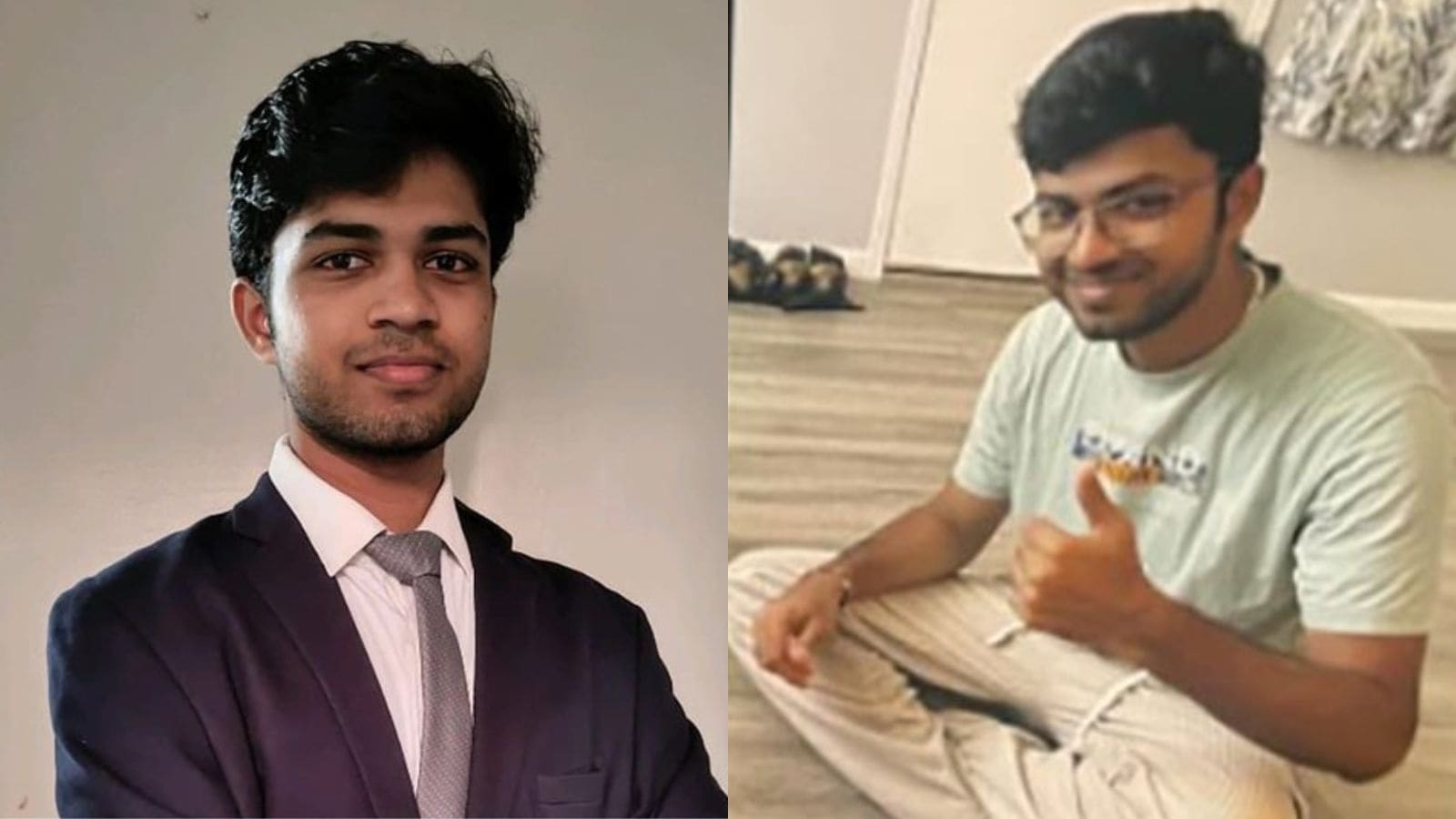
His friends and family didn't wait for the official machinery of the state to turn its heavy gears. They turned to the internet. They turned to the community. The "Missing" posters began to circulate through the digital arteries of the South Asian diaspora. They featured a face that looked like a thousand other faces in the South Bay: intelligent, slightly reserved, wearing the look of someone who was busy thinking about a problem he hadn't quite solved yet.
The facts provided by the San Jose Police Department were sparse. Saketh had last been seen on February 25, 2026. He had walked away from the familiar orbit of the campus and his residence. In a city where everyone is constantly tracked by GPS, Wi-Fi handshakes, and doorbell cameras, a human being had managed to become invisible.
The Geography of a Disappearance
San Jose is a city of brutal contrasts. It is the wealthiest place on earth by some metrics, yet it possesses a rugged, unforgiving geography just beyond the glimmer of the tech campuses. To the east lie the foothills; to the north, the marshes of the bay.
For five days, the search was a fever dream of "what ifs."
Was he under the pressure of finals? International students face a unique, crushing burden. Their legal right to remain in the country is tied directly to their academic performance. One failed class isn't just a GPA hit; it is a potential deportation. The stakes are not just personal; they are existential. We often talk about the "brain drain" as a statistical phenomenon, but we rarely talk about the mental tax paid by the individuals who make up those statistics.
Consider the silence of a studio apartment when the only sound is the hum of a laptop fan. Consider the isolation of being thousands of miles from the smell of your mother’s cooking, trying to master the intricacies of VLSI design while wondering if you’ll ever earn enough to justify the debt your family took on to send you there.
These are the invisible stakes. They are the shadows that walk beside every student who arrives at SFO with a trunk full of spices and a heart full of terror.
The Discovery at the Water's Edge
The search ended where the land gives way to the Alviso Slough.
On a Sunday morning, while the rest of the valley was waking up to brunch and the soft light of a California spring, a body was recovered from the water near the Alviso Marina County Park. The Santa Clara County Medical Examiner-Coroner later confirmed what the community had been fearing in the dark: it was Saketh.
The transition from a "missing person" to a "recovery" is a violent shift in narrative. Suddenly, the energy of the search—the frantic sharing of posts, the calling of hospitals—has nowhere to go. It turns into a heavy, stagnant grief.
The police have stated that, as of the initial investigation, there were no immediate signs of foul play. In the sterile language of official reports, this is meant to be a form of closure. But for a family in Bengaluru, it is the start of a much more painful questioning. If no one hurt him, why is he gone?
We tend to look for villains in stories like these. We want a culprit to blame, a dangerous neighborhood to avoid, or a specific lapse in security to fix. It is much harder to reckon with the possibility that the environment itself—the pressure, the isolation, the sheer weight of expectations—can be just as lethal as any external threat.
The Weight of the "Model Minority"
There is a specific kind of silence that surrounds the struggles of Indian students in the United States. They are often viewed through the lens of the "model minority"—resilient, high-achieving, and self-sufficient. This stereotype is a cage. It suggests that they don't need help, that they don't struggle with the same mental health crises as their peers, and that their success is guaranteed.
But the reality is far more fragile.
Since the start of 2024, a disturbing number of Indian students have met tragic ends in the U.S. Some were victims of random violence, some were lost to accidents, and others were claimed by the quiet desperation that comes when the dream starts to feel like a trap. Saketh’s death is not an isolated incident; it is a data point in a growing, tragic trend that we are failing to address.
We build massive systems to track their academic progress. We have complex software to manage their visas. We have portals for their tuition payments. But where is the system that tracks their soul? Where is the infrastructure that catches them when the 8,700 miles of distance finally becomes too much to bridge?
The Empty Desk in San Jose
Saketh Sreenivasaiah was more than a headline or a cautionary tale. He was a son. He was a friend who liked to discuss the future of technology. He was a person who took the immense risk of leaving everything he knew because he believed in the promise of a better life.
The tragedy of his death isn't just in the loss of his potential, though that is significant. The tragedy is in the broken circuit. A life that was supposed to be a bridge between two worlds has been cut short, leaving a family in India to navigate a grief that is compounded by the vastness of the ocean between them.
They must now deal with the bureaucratic nightmare of repatriating a body. They must sign forms in languages they may not fully master, dealing with officials who see their son as a case number. They must wait for a toxicology report that will take weeks to arrive, and even then, will provide no real answers as to why their vibrant, intelligent boy is never coming home.
The map of Saketh’s life ended in the marshes of Alviso, far from the streets of Bengaluru where it began. It is a map that remains unfinished, a series of lines that were supposed to lead to a career, perhaps a family of his own, and a long, storied life in the sun.
Instead, there is only the quiet lapping of the tide against the shore and the flickering light of a laptop screen in a room that is now much too empty.
We often talk about the "American Dream" as if it is a prize to be won. We rarely speak of it as a journey that some people simply do not survive. The cost of that dream is sometimes paid in the highest currency possible.
The next time you see a student walking across a campus, weighed down by a backpack and the invisible gravity of a thousand expectations, remember Saketh. Remember that every one of those 8,700 miles is a tightrope. And remember that sometimes, even the strongest among us lose their balance in the wind.
The water in the slough is cold, and it keeps its secrets well.