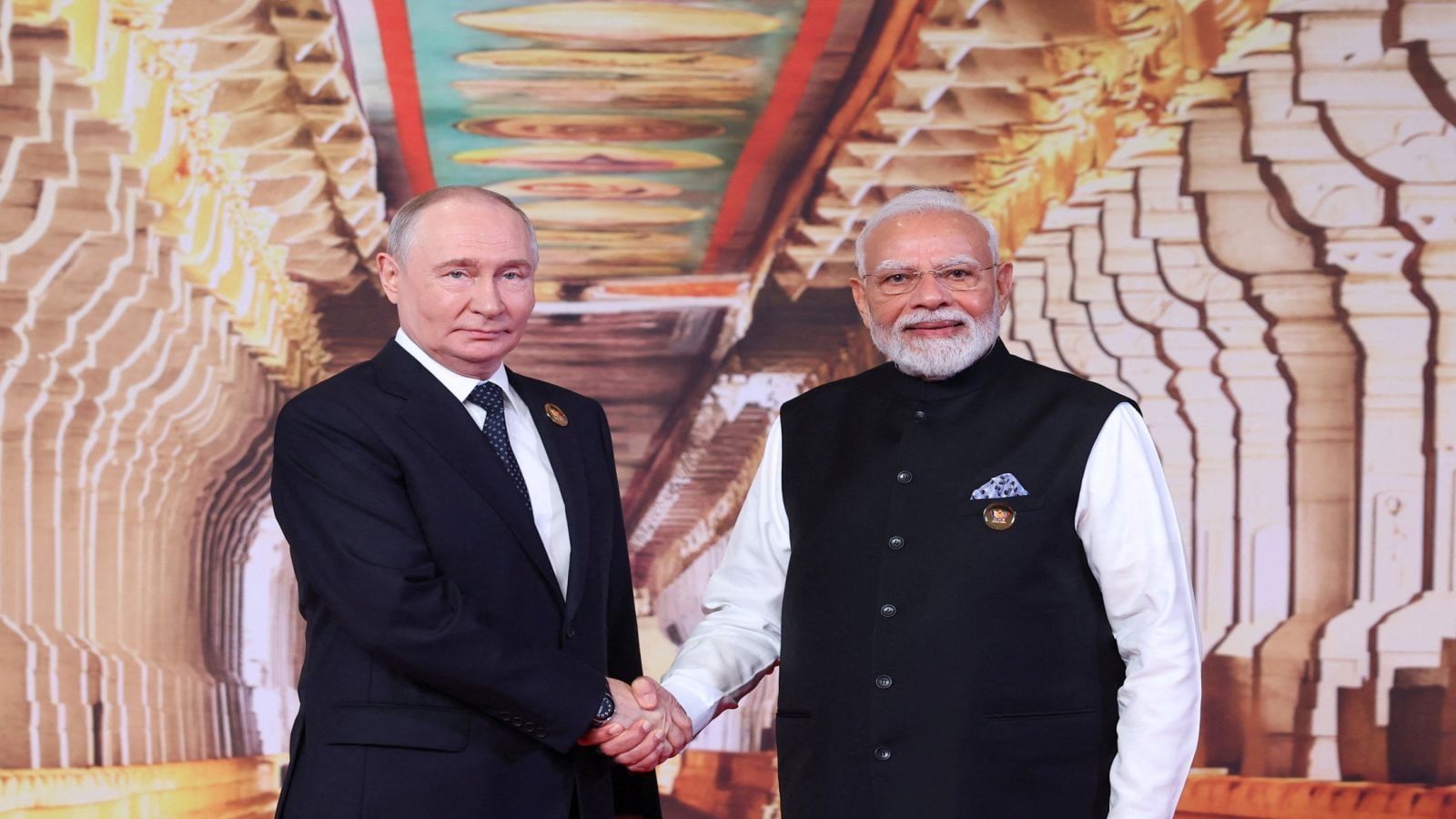
The United Nations chief recently called the BRICS summit declaration on multilateralism reassuring. That single sentence is a masterclass in institutional comfort food. It relies on the lazy consensus that any diplomatic document praising cooperation is inherently good, stable, and progress
Why UN Praise For BRICS Multilateralism Is Dangerous Naivety
news
When the top official at the United Nations steps up to praise a BRICS summit declaration for its steadfast commitment to multilateralism, diplomats nod sagely, headlines write themselves, and the global press corps goes home early. It is a comforting ritual. It creates the illusion of institutional harmony, suggesting that the rising powers of the Global South are locked arm-in-arm with the post-war liberal international order, ready to sign off on the same rulebook written in 1945.
It is also complete nonsense.
To call the diplomatic boilerplate issued by BRICS leaders "reassuring" is to mistake a tactical framing maneuver for a structural conversion. If you sit in foreign ministries or sovereign treasury desks long enough, you learn to spot the language of institutional camouflage. BRICS does not champion multilateralism because its members love the current architecture of global governance. They champion it because it is the only legal crowbar currently available to pry open a unipolar financial and diplomatic system that has spent the last eight decades serving Washington and Brussels.
To understand why UN leadership is whistling past the graveyard, we have to look past the diplomatic pleasantries and examine the mechanics of what is actually happening behind closed doors.
The Mirage of Shared Rules
Let us dismantle the foundational myth. The lazy consensus in international relations holds that expanding blocs like BRICS want to reform the United Nations, the World Bank, and the International Monetary Fund from within, preserving the core operating system while updating the floor plan.
This view ignores basic strategic incentives. When a coalition consisting of authoritarian giants, regional heavyweights, and sanctioned economies talks about multilateralism, they are talking about a multipolar balance of power, not a rules-based order. These are fundamentally different concepts. A rules-based order implies a set of universally enforced constraints, often backed by Western-dominated institutions. A multipolar balance of power implies a collection of sovereign sovereign zones where regional anchors dictate terms within their own hemispheres without interference from Western human rights rhetoric or secondary sanctions.
I have watched policy analysts spend years parsing communique paragraphs about "inclusive global governance" as if they were holy writ. They treat diplomatic text as a binding contract rather than a strategic smoke screen. When countries under heavy financial restriction sign a declaration praising international law, they are not endorsing the authority of Western courts or Western-led oversight bodies. They are weaponizing the vocabulary of international law to shield themselves from unilateral coercion.
Pretending this is a shared commitment to the liberal status quo is a failure of basic analytical hygiene.
De-Dollarization Is Not a Protest, It Is an Insurance Policy
The most glaring omission in the mainstream reaction to BRICS declarations is the willful blindness toward financial fragmentation. The UN secretariat loves to emphasize cooperation, green transitions, and shared development goals. Meanwhile, the actual policy architects inside central banks from Beijing to Brasilia are quietly executing the most aggressive portfolio diversification campaign since the collapse of Bretton Woods.
Look at the numbers. Gold accumulation by emerging market central banks has broken historical records year after year. Bilateral trade settlements bypassing the greenback are moving from the experimental fringes to mainstream commodity contracts.
The standard counter-argument from Western economists is that the United States dollar possesses unmatched network effects, deep capital markets, and liquidity that cannot be easily replicated by a collection of disparate currencies with capital controls. That argument is technically correct, and entirely irrelevant.
No one is claiming that a unified BRICS currency is replacing the dollar tomorrow morning. That is a straw man designed to dismiss the threat of gradual erosion. What is actually happening is a slow, structural hedging strategy. Sovereign actors are building parallel plumbing because they watched the United States and its allies freeze three hundred billion dollars of Russian central bank reserves overnight. That single event did more to accelerate the end of Western financial hegemony than a decade of anti-imperialist rhetoric at international forums.
When a sovereign state realizes that holding its foreign exchange reserves in Western debt instruments is a political vulnerability rather than a safe asset, financial behavior changes permanently. They do not need to overthrow the system; they simply need to stop using it for everything.
The Internal Contradictions No One Wants to Name
If you want to understand the limits of BRICS multilateralism, you do not need to look at Washington or Geneva. You just need to look at the border between India and China.
The idea that a bloc containing two nuclear-armed geopolitical rivals with active territorial disputes, vastly divergent economic models, and competing ambitions for continental dominance is going to anchor a harmonious new multilateral order is pure fantasy. BRICS is not a cohesive ideological alliance. It is a marriage of convenience driven by a shared aversion to Western overreach.
China wants an alternative global architecture centered around Beijing's industrial gravity and supply chain dominance. India wants strategic autonomy, refusing to be a junior partner in anyone else's hegemony while maneuvering to capture manufacturing supply chains leaving East Asia. Brazil and South Africa want developmental finance without political conditionalities.
When these nations sign a declaration calling for a fairer international system, they are agreeing on what they oppose, not on what they want to build. A coalition united purely by what it hates is notoriously fragile once the immediate pressure lifts. To call this fragile alignment "reassuring" to the architects of the current global order requires an astonishing capacity for self-deception.
Stop Reading Communiques and Look at the Balance Sheets
We need to stop grading international summits on the quality of their feel-good rhetoric and start measuring them by structural shifts in capital, trade corridors, and military alignments.
When the UN chief calls a BRICS text reassuring, he is doing his job: maintaining diplomatic decorum and keeping channels of dialogue open with actors who might otherwise ignore the multilateral framework entirely. But analysts, investors, and policymakers who mistake that professional courtesy for strategic alignment are flying blind.
The post-war international order is not being reformed; it is being bypassed. The new institutional architecture is being poured in concrete right now, block by block, bilateral swap line by bilateral swap line, sovereign gold vault by sovereign gold vault.
Pay less attention to what is written in the declarations, and pay a lot more attention to where the gold is flowing.