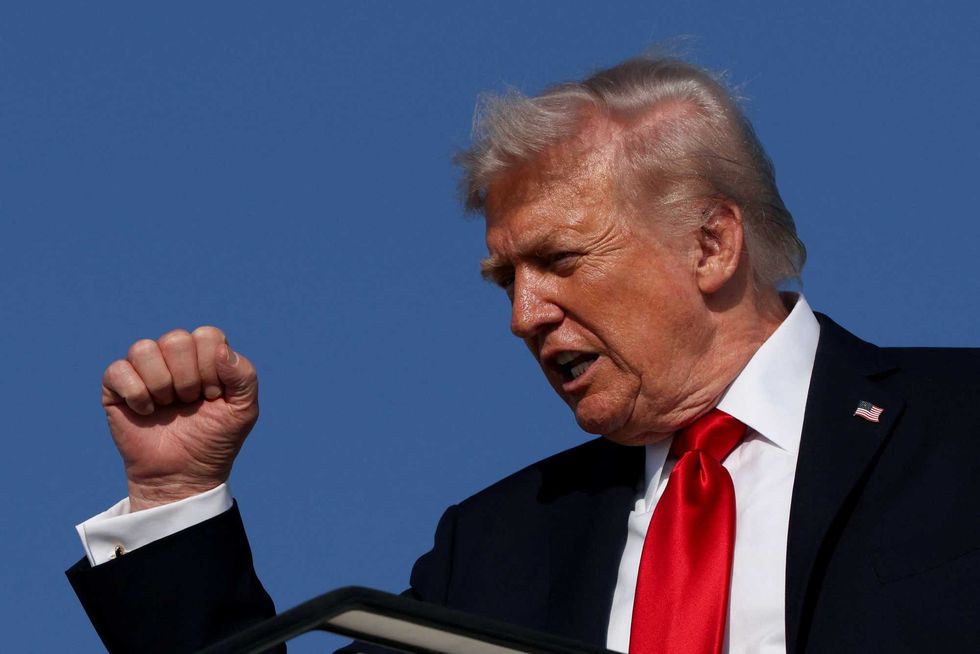
The political science establishment is clutching its pearls again. The latest round of hand-wringing involves Donald Trump’s assertions about how he handled—and would handle—conflict with Iran. Academics call it "tragic irony." They claim his rhetoric is a dangerous cocktail of ego and instability. They are wrong. In fact, they are so spectacularly wrong that they’ve missed the most significant shift in geopolitical leverage of the last fifty years.
What the ivory tower labels "boasting," the market recognizes as price discovery for regional risk. We’ve spent decades trapped in a cycle of "strategic patience" and "calibrated escalation," fancy terms for a status quo that costs trillions and delivers nothing but perpetual tension. Trump didn't break the system; he exposed that the system was a protection racket for career bureaucrats who thrive on "managed" conflict.
The Myth of the Rational Actor
Traditional foreign policy experts operate on the delusion that international relations is a game of chess played by sober, rational actors. They believe that if we just follow the "rules-based order," everyone stays in their lane.
The reality is more like a high-stakes poker game in a basement with no windows. In that room, the most dangerous person isn't the one with the best cards; it's the one willing to kick the table over.
When Trump boasts about the strike on Qasem Soleimani or claims he could end wars in twenty-four hours, he isn't just talking to his base. He is signaling a complete abandonment of the predictable "escalation ladder." This drives political scientists insane because they can’t model it. If you can’t predict the response, you can’t calculate the cost of provocation.
By being "unstable," you force your opponent to be cautious. It is the ultimate deterrent. The "tragic irony" isn't Trump's rhetoric; it's that the "experts" who crave stability are the ones whose predictable policies invite the very aggression they claim to despise.
Transactional Peace vs. Ideological War
We have been conditioned to believe that foreign policy must be rooted in "values." We are told we must support "democratic transitions" and "human rights frameworks."
I’ve spent years watching how these lofty ideals translate on the ground. They don't. They translate into NGOs with bloated budgets and "interim governments" that dissolve the moment the checks stop clearing.
Trump’s approach is nakedly transactional. It’s business. "What do I get, and what do you get?"
This is where the Abraham Accords came from. While the State Department was busy trying to solve the unsolvable "root causes" of 1948, the administration just started making deals based on shared economic interests and a mutual fear of Tehran. It was the first time in a generation that anyone treated the Middle East like a market rather than a mission field.
The establishment hates this because it makes them irrelevant. You don't need a PhD in International Relations to understand a trade agreement or a security pact based on hardware sales. You just need a calculator.
The Iranian Paper Tiger
The "expert" consensus is that Iran is a sophisticated, ideological juggernaut that must be handled with extreme delicacy. We are told that any "reckless" move will set the entire region on fire.
This is a lie.
The Iranian regime is a fragile gerontocracy held together by a paramilitary mafia (the IRGC). Its economy is a shambles, its population is Restless, and its regional proxies are only as effective as the cash flow from Tehran allows.
When the U.S. acts with blunt force—like the Soleimani strike—the predicted "regional conflagration" doesn't happen. Instead, there is a period of stunned silence followed by a desperate scramble for de-escalation.
The "irony" is that the hawks and the doves are both wrong. The hawks want a regime change war we can't afford, and the doves want a "grand bargain" the regime doesn't want. The third way—the one Trump stumbled into and now shouts from the rooftops—is Dominance through Disruption.
The High Cost of "Expert" Advice
Let’s look at the data. Since 2001, the "rational" foreign policy establishment has presided over:
- $8 trillion in "War on Terror" spending.
- The collapse of Libya into a slave-trading failed state.
- A Syrian civil war that displaced millions and fueled European populism.
- The disastrous withdrawal from Afghanistan.
If a CEO had this track record, they wouldn’t be invited to give commentary on cable news; they’d be sued for malpractice and barred from the industry. Yet, when Trump suggests a different path, these same failures are cited as the voices of reason.
The truth is that the "political scientist" quoted in the competitor article isn't worried about peace. They are worried about their monopoly on "expertise" being shattered. If the world finds out that a brash, ego-driven real estate developer can achieve more regional realignment through a few tweets and a well-placed drone than they could in thirty years of summits, their entire industry collapses.
Stop Asking if it’s "Presidential"
People ask: "Is this how a leader should talk?"
It’s the wrong question. You’re asking about aesthetics when you should be asking about outcomes.
If the rhetoric prevents the deployment of 50,000 troops, who cares if it’s "crass"? If the boast creates enough uncertainty in the minds of the Ayatollahs that they hesitate to close the Strait of Hormuz, then the boast has more value than a thousand diplomatic cables.
We have spent decades valuing the process of diplomacy over the results of it. We love the photo ops in Geneva and the joint communiqués. We love the "holistic" approach to regional security. But while we were refining the process, the world got more dangerous.
The Reality of the "Madman Theory"
Richard Nixon first toyed with the "Madman Theory"—the idea that if your enemies think you’re crazy enough to do anything, they won't provoke you. Trump didn't study Nixon; he just lives the theory.
This isn't a strategy for the faint of heart. The downside is obvious: one genuine miscalculation and you are in a shooting war. But the "stable" alternative has been a slow-motion car crash for two decades.
We are currently funding both sides of multiple conflicts. We provide aid to Gaza while arming Israel. We sanction Iran while leaving the door open for "diplomatic off-ramps" that they use to fund the Houthis. It is a chaotic, expensive, and blood-soaked mess.
Trump’s "boasts" are an attempt to simplify the board. He is saying: "The price of messing with us just went up, and I don't care about your rules."
Your Tactical Playbook for the New Geopolitics
If you are waiting for a return to "normalcy" in foreign policy, stop. The old world is dead. Whether it's Trump in office or someone else using his playbook, the era of predictable, "calibrated" intervention is over.
- Ignore the Rhetoric, Watch the Flow: Don't get distracted by the headlines about "outrageous comments." Watch the oil prices and the insurance premiums for shipping. If the market isn't panicking, the "danger" is just noise.
- Bet on Transactions: Ideologies are failing. Security is being privatized. Look for countries making bilateral deals that bypass international bodies. That is where the real power is shifting.
- The End of the Umbrella: The U.S. is no longer the world’s unpaid security guard. Allies who don't pay or contribute are being cut loose. This is a business decision, not a moral one.
The "tragic irony" is that the people most terrified of Trump’s war talk are the ones who have spent their lives making war inevitable through their own incompetence. They want a quiet, polite decline. They are being offered a loud, messy redirection.
The status quo is a graveyard. If it takes a boastful, ego-driven disruption to stop the bleeding, then start cheering for the disruption.
The experts have had their turn. They failed. Let the table-kickers have the floor.