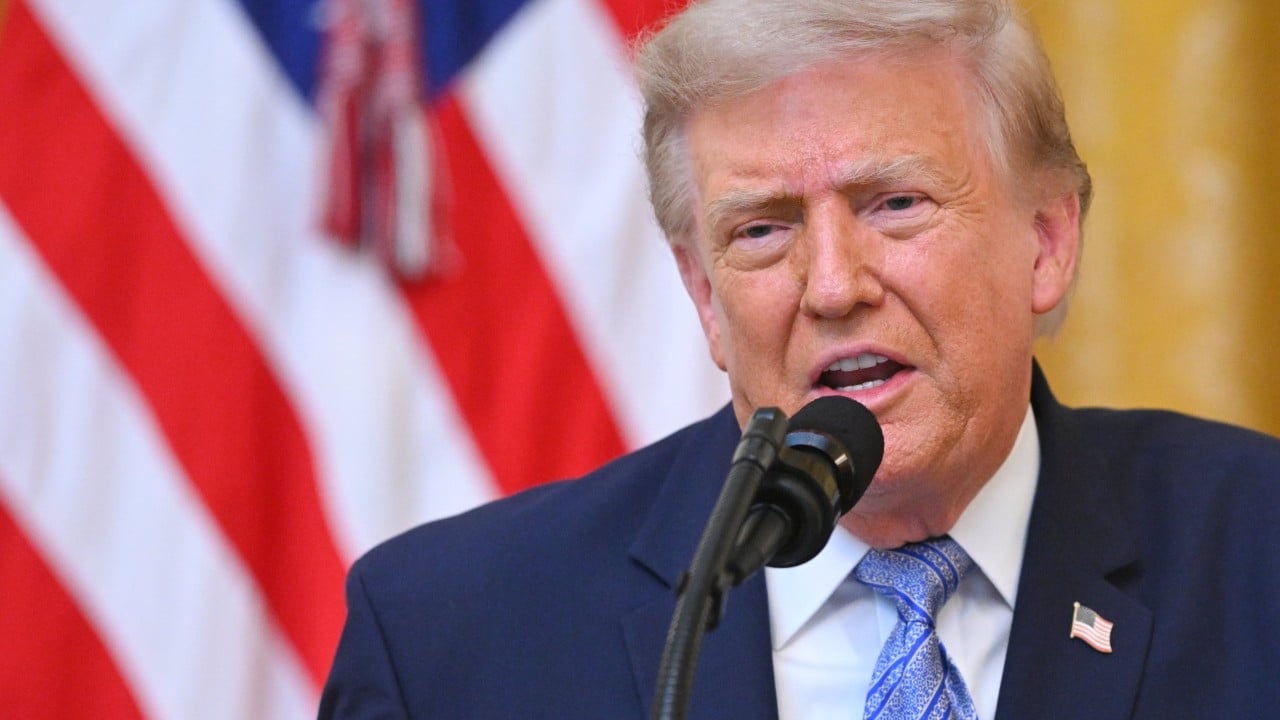
Donald Trump just dropped another political bombshell during a prime-time address to the nation, and Beijing wasted no time hitting back. The former president used his latest speech to rehash lingering grievances about the 2020 election, but this time he threw a massive new accusation into the mix. He claimed China orchestrated the largest compromise of election data in history, alleging a specialized unit swiped roughly 220 million American voter files.
China's response? Quick, blunt, and completely dismissive.
Foreign Ministry spokesperson Lin Jian called the claims entirely fabricated and slanderous, stating clearly that Beijing has zero interest in meddling with American elections. This isn't just a standard diplomatic spat. It's a calculated rhetorical battle that reveals a lot about the domestic pressures inside both superpowers right now.
When you look past the loud headlines, the real story here is how Washington and Beijing use each other to manage their own internal problems. Let's look at what's actually happening behind the scenes.
The Weight Of The Allegations
Trump's speech didn't hold back on numbers. He asserted that Chinese data operations targeting U.S. voter roles stretch all the way back to the 2018 midterms and directly corrupted the 2020 vote. To put 220 million voter files in perspective, that represents almost the entire eligible voting population of the United States.
It's a staggering figure. Yet, the speech offered very little in terms of hard, verifiable evidence to support a breach of that specific scale.
Over the years, U.S. intelligence agencies have certainly flagged foreign influence campaigns. Organizations like the Cybersecurity and Infrastructure Security Agency (CISA) track digital threats constantly. They've noted that while foreign actors frequently run disinformation campaigns online, changing actual voting tallies or compromising national voter databases on a massive scale is a totally different ballgame.
When you claim a foreign adversary holds the keys to every voter’s personal data, you need ironclad proof. Otherwise, it just looks like political theater designed to fire up a base.
Beijing’s Playbook Of Direct Denial
China's defensive strategy is highly predictable but effective for its audience. The foreign ministry repeatedly uses a specific line of argument: Washington needs to stop dragging China into its domestic political drama.
"The relevant allegations by the U.S. are entirely fabricated and aimed at vilifying China," Lin Jian stated during a daily briefing in Beijing.
This language matters. By labeling the accusations as "groundless" and "slanderous," Beijing aims to present itself as the mature adult in the room, standing above the chaotic fray of American partisan politics.
Chinese state media mostly ignored the speech entirely, choosing not to give Trump’s claims any oxygen domestically. They don't want their own citizens focusing on foreign election vulnerabilities. Instead, they prefer to spotlight American internal division as a sign of Western instability.
What Ordinary People Think On Chinese Social Media
While state media stayed quiet, the conversation blew up on apps like Weibo. Looking at public reactions gives you a much better sense of the street-level mood in China than formal government press releases.
The sentiment wasn't panic. It was mostly mockery mixed with a bit of irritation.
Many users joked about how Trump is treating China like a convenient political scapegoat whenever things get rocky at home. One popular comment pointed out the logical flaw in the data theft claim, asking why China’s economy would still be struggling under heavy U.S. tariffs and tech blockades if Beijing actually possessed the god-like power to control American presidential outcomes.
Another user joked about the ironies of political preferences, pointing out that Chinese internet users famously nicknamed Trump Chuan Jianguo (meaning Trump Building the Chinese Nation) because his chaotic policies ironically forced China to become more self-reliant. The consensus among everyday users on Weibo is clear: let the Americans fight among themselves while China focuses on its own development.
The September Diplomatic Stakes
This sudden rhetorical blowup couldn't have come at a worse time for actual diplomats. Chinese President Xi Jinping is scheduled for a high-profile visit to the United States in September. These bilateral summits take months of delicate planning, balancing intense economic rivalry with the need for military communication and climate agreements.
Dropping a massive accusation of election interference right before a state visit throws a wrench into the gears. When reporters asked Lin Jian if this public feud would tank the September meeting, he pivoted back to the script, urging the U.S. to do things that are actually conducive to bilateral ties rather than making an issue out of China for domestic campaign points.
The reality is that neither country can afford a total diplomatic freeze. The global economy is far too interconnected. But public finger-pointing forces both sides to take tougher positions, making actual deal-making behind closed doors much harder to achieve.
Moving Past The Campaign Rhetoric
Understanding the mechanics of modern political speech helps you cut through the noise. When a politician makes an explosive claim about global cyber warfare without providing public documentation, it's rarely about national security alone. It's about narrative control.
If you want to track the real state of U.S.-China relations, ignore the prime-time shouting matches. Watch the supply chains instead. Watch how both nations handle microchip export curbs, how they manage naval transits in the South China Sea, and whether Xi’s plane actually lands on American soil this September. That's where the real power struggles happen, far away from the campaign podiums.