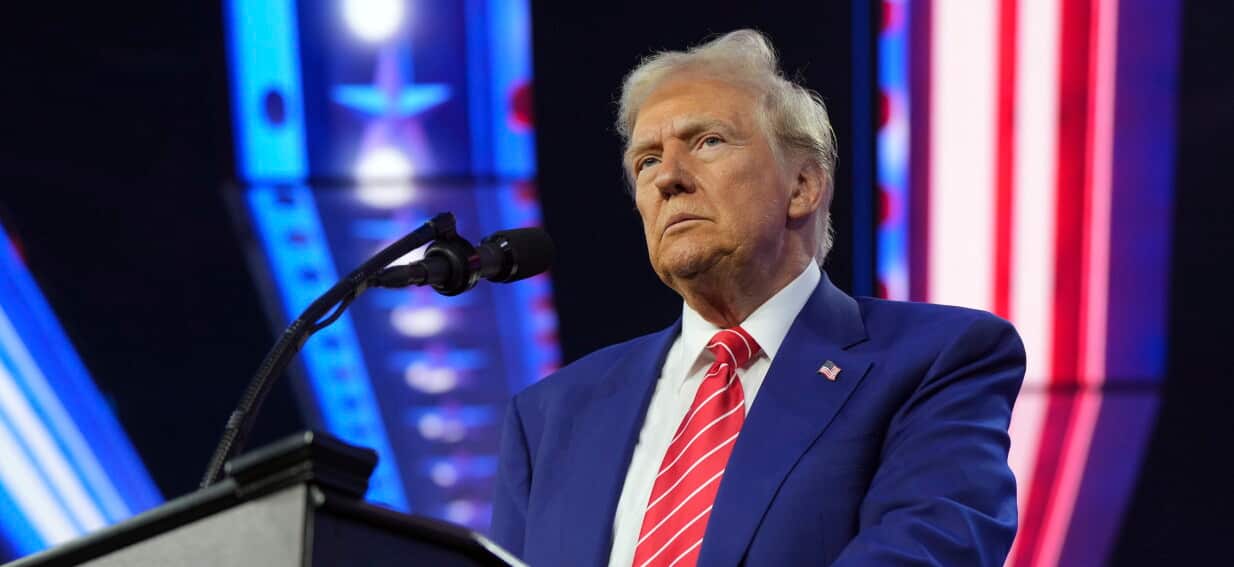
The political media class loves a simple narrative. Whenever a party holding the White House faces midterm headwinds, commentators rush to write the exact same lazy script: the incumbent president is a toxic liability, vulnerable lawmakers are running for the hills, and party leadership is driving straight off an ideological cliff. Look no further than the breathless handwringing over Trumpapalooza, the high-stakes, two-day convention in Dallas designed to anchor the upcoming midterms directly to Donald Trump’s record. Conventional analysts look at low presidential approval numbers, high-profile candidate absences, and a clash with the opening nights of the NFL season, and they diagnose a desperate, flailing blunder.
They are missing the point entirely.
Trumpapalooza is not a political risk. It is an aggressive stress test engineered to smoke out ideological cowards and force compliance within a fractured party. To understand why the establishment panic is entirely backwards, you have to stop looking at aggregate national polls and start looking at the mechanics of modern primary turnout and candidate survival.
The Myth of the Distancing Strategy
For decades, political consultants have peddled a comfortable falsehood to moderate candidates in competitive districts: separate your brand from the top of the ticket. Run as an independent-minded local servant who happens to share a party registration. In a low-information environment, that used to work. In the hyper-polarized media ecosystem of the mid-2020s, it is political suicide.
When a vulnerable incumbent lawmaker skips a massive party showcase like the Dallas gathering under the guise of local constituent work or family obligations, they aren't executing a clever triangulation strategy. They are broadcasting weakness. They are signaling to the most engaged, high-propensity primary voters—the precise people who show up in November—that their loyalty is conditional and their spine is flexible.
Data from multiple election cycles demonstrates that split-ticket voting is a dying relic. Voters do not care about your nuanced local policy papers when national tribal identities dictate the ballot box. By dragging the entire party apparatus into the arena for a direct confrontation, leadership is forcing candidates to pick a side. The narrative that vulnerable Republicans cannot afford to tie themselves to an unpopular sitting president assumes that voters who despise the administration can be wooed by a Republican who simply pretends the president doesn't exist. That is delusion. The opposition will tie every single congressional candidate to the White House regardless of whether they show up in Dallas or hide in their district. The only choice is whether you fight on that terrain with an energized base or apologize on it with a demobilized one.
The Economics of Massive Mobilization
Critics love to point out that the Dallas event coincides with the opening kickoff of the National Football League season, questioning the wisdom of putting political speeches up against America's prime-time favorite. This critique misunderstands the target audience. Midterm elections are not won by convincing the casual, disengaged sports fan who watches a September Thursday Night Football game. Midterms are won by turning out the zealots, the donors, the precinct captains, and the grassroots activists who will knock on doors when the weather turns cold.
The entry fees—ranging from twenty-five thousand dollars for basic access up to a quarter of a million for a private roundtable—serve a dual purpose. They fund the infrastructure, and they filter out tourists. This is a closed-loop capital-raising engine disguised as a convention. While mainstream outlets focus on the lawmakers who refused to pay the price of admission, they ignore the massive influx of liquidity that flows directly into ground-game operations in competitive suburban battlegrounds.
Imagine a scenario where leadership tried to appease every anxious incumbent by watering down the event, softening the rhetoric, and turning it into a bland, generic policy conference. Turnout would crater, donations would dry up, and the base would stay home out of sheer boredom. Energy is currency in politics. Say what you want about the polarizing nature of the spectacle, but nobody stays home out of indifference.
Exposing the Compliance Trap
The real genius of Trumpapalooza is diagnostic. By demanding that every major figure in the movement stand shoulder-to-shoulder under the bright lights of the American Airlines Center, the party leadership creates a permanent record of allegiance. In politics, ambiguity is a threat to stability. When a movement is fighting to retain control of Congress against daunting historical trends, internal friction is more dangerous than external opposition.
House Speaker Mike Johnson and other architects of this strategy understand a brutal truth: a smaller party that moves in absolute lockstep is infinitely more powerful than a sprawling, fractured coalition of nervous politicians trying to outrun their own shadows. The complaints about ticket prices and scheduling conflicts are just noise generated by politicians terrified of taking a definitive stand.
Stop mourning the candidates who skipped the trip to Texas. They were already liabilities waiting to crack under pressure. Trumpapalooza isn't a gamble on a falling approval rating; it is a brutal, necessary purge of ambiguity designed to find out who is actually willing to fight when the polls turn sour. If you cannot handle a loud, crowded arena in Dallas, you have no business surviving the legislative floor fights to come.
Trump's 'Trumpapalooza' Faces Embarrassing Snub As GOP Candidates Keep Their Distance
This video provides a look at the media narratives surrounding the attendance disputes at the Dallas convention.