Every time Washington and Beijing schedule a high-level sit-down, the media industrial complex loses its collective mind. Analysts dust off their clipboards, anchors furrow their brows, and markets hold their breath over whether Iran, Taiwan, or the latest trade tariff will trigger a global meltdown. It is the ultimate diplomatic soap opera. Both sides walk into the room, shake hands for the cameras, issue identically vague press releases about constructive dialogue, and walk out claiming a massive victory for their respective bases.
Nothing changes.
The lazy consensus is that these summits steer the Titanic away from the iceberg through sheer willpower and statesmanship. That is complete nonsense. I have sat across the table from enough trade negotiators and track-two diplomats to know that the real decisions are never made under the glare of flashbulbs. By the time two leaders sit down in front of a forest of national flags, every comma in every communiqué has been scrubbed raw by bureaucrats three levels down. The summit is not a negotiation. It is a broadcast.
To understand why these meetings matter so little on substance and so much on optics, we have to dismantle the three sacred cows of modern geopolitical commentary: the Taiwan flashpoint myth, the Iran proxy panic, and the trade war ledger.
The Taiwan Strait is a Managed Theatre Not a Countdown to War
The consensus narrative treats Taiwan like a ticking time bomb. Every briefing room in Washington operates on the assumption that Beijing is drafting an invasion timetable, ticking off calendar days until an amphibious assault mirrors Normandy. This view ignores basic economic reality and military geography in favor of sensationalism.
An amphibious landing across the Taiwan Strait is the single hardest military operation in the history of human conflict. The weather window is narrow, the geography is a defender’s dream, and the logistics make D-Day look like a weekend camping trip. More importantly, President Xi Jinping runs a regime obsessed with internal stability and economic survival. Beijing relies on semiconductor imports, global supply chains, and foreign capital. A kinetic strike on Taipei does not secure national glory; it triggers an immediate total economic blockade, asset freezes that dwarf Russian sanctions, and the instant evaporation of the middle class that legitimizes Communist Party rule.
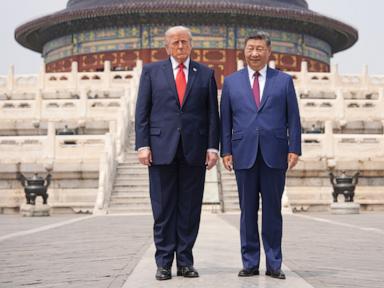
When Trump and Xi discuss Taiwan behind closed doors, they are not negotiating the surrender of a democracy. They are drawing red lines for domestic consumption. Washington needs a foreign boogeyman to justify defense budgets and semiconductor subsidies. Beijing needs a perpetual grievance to channel nationalist anger away from domestic real estate debt and youth unemployment. The status quo is messy, tense, and entirely stable because neither side can afford the alternative. The threat is real; the imminent danger is a phantom created by pundits who need ratings.
Iran is a Convenience Not a Cause
Then comes the Middle East. Every summit agenda tacks on Iran as a primary friction point, as if Beijing and Washington are locked in a mortal struggle for influence over Tehran's mullahs.
Look at the underlying incentives. China buys the vast majority of sanctioned Iranian oil at a steep, beautiful discount. They pay in yuan, clearing out their excess industrial production while keeping their energy costs low. To Beijing, Iran is a cheap gas station and a minor nuisance that keeps the United States bogged down in the sands of the Levant, burning through military resources and diplomatic capital that would otherwise be focused on the Indo-Pacific.
Washington knows this. Yet, American foreign policy orthodoxy insists on treating China's diplomatic footprint in the Middle East as a strategic displacement of American power. It is not. It is burden-shifting. When Beijing brokers a shaky handshake between Riyadh and Tehran, they inherit the headache of managing regional security without any of the historical goodwill. If a tanker gets hit or a proxy fires a rocket, the diplomatic fallout lands squarely on Beijing's doorstep, forcing them to choose between alienating their oil suppliers or looking like helpless paper tigers.
Trump understands transaction over ideology. If he returns to the negotiating table with Xi, he does not care about Tehran's uranium enrichment cycles beyond how they affect gas prices in Ohio. He cares about leverage. Xi knows this, which is why Iranian foreign ministers make frantic calls to Beijing only to receive polite, non-committal murmurs about regional stability. Nobody is going to war over the Strait of Hormuz for the sake of ideological alignment.
Tariffs are a Tax on Domestic Consumers Dressed Up as Toughness
Trade policy is where the delusion reaches its peak. For years, the narrative has been framed as a zero-sum death match between two economic superpowers. Slap twenty percent on solar panels, slap sixty percent on electric vehicles, and watch the manufacturing jobs flood back to the Rust Belt.
It is economic illiteracy disguised as patriotism.
Supply chains do not snap back into place because a politician signs an executive order in the Oval Office. They migrate along lines of least resistance, capital availability, and infrastructure maturity. When the United States places tariffs on Chinese goods, manufacturing does not magically return to Ohio. It moves to Vietnam, to Mexico, to India, or it stays in China while multinational corporations route components through third-party intermediaries, adding friction costs that American consumers ultimately pay at checkout.
Xi faces an equally brutal mirror-image problem. China's growth model is hopelessly addicted to overcapacity. They built too many factories, poured too much concrete, and accumulated too much debt. When the domestic consumer market stalled out, Beijing tried to export its way out of the hole by dumping cheap electric vehicles, batteries, and steel onto global markets. Tariffs from Washington and Brussels are not a blockade; they are a rejection invoice.
When Trump threatens new tariffs during these summits, he is using a blunt instrument to force a structural conversation about market access and intellectual property theft. But the numbers tell the true story. Bilateral trade volume between the US and China remains stubbornly high despite the political rhetoric. Capital flows through loopholes faster than customs agents can write regulations. The two economies are joined at the hip through financial codependency. Total decoupling is a political fantasy designed for television segments and campaign stump speeches.
The Real Power Dynamic Nobody Talks About
If you want to know what actually happens during a Trump-Xi summit, forget the geopolitical grand strategy. Watch the corporate balance sheets and the private equity flows.
The real game is technological self-reliance and data sovereignty. While pundits argue over soybean purchases and territorial waters, both superpowers are engaged in a quiet, ruthless race for foundational dominance in artificial intelligence, quantum computing, and advanced biotechnology. Here is the uncomfortable truth that neither administration will admit: China is winning the infrastructure race in physical hardware deployment and industrial engineering talent, while the United States maintains a decisive edge in algorithmic innovation and foundational venture capital depth.
Neither leader wants an outright collision because a technological Iron Curtain hurts both sides instantly. American chip designers lose their biggest market; Chinese hardware assemblers lose access to cutting-edge electronic design automation software. The summits serve as a pressure-relief valve. They agree on tacit rules of engagement: stay out of each other's core financial plumbing, keep the proxy conflicts contained, and let the domestic populations cheer for their respective strongmen while commerce quietly finds a way around the roadblocks.
Stop looking at these meetings as historical turning points. They are reality TV for policy junkies. The trajectory of the twenty-first century is not going to be decided by a handshake in Geneva or a banquet in Beijing. It is being forged in university labs, venture capital boardrooms, and semiconductor fabrication plants where politicians have zero control and even less understanding.
The next time a breaking news alert screams about a high-stakes summit, change the channel. The script was written months ago.