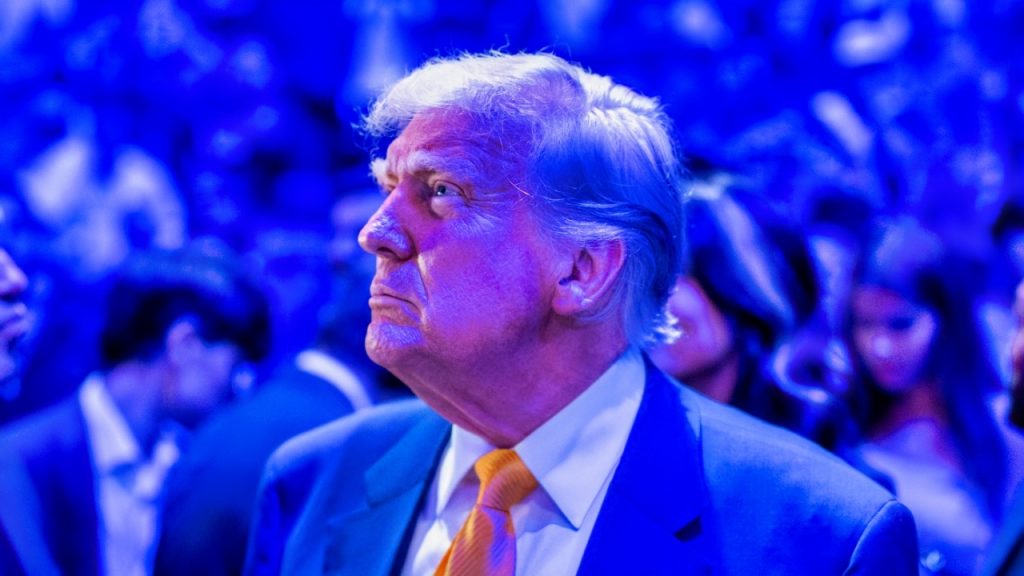
Indian foreign policy has a comfort food problem, and the latest Trump-Xi summit just knocked the plate right out of New Delhi's hands.
For years, South Block operated on a set of cozy assumptions. The favorite one went something like this: Washington and Beijing are locked in an irreversible cold war, so America will inevitably bend over backward to court India as its indispensable Asian counterweight. You didn't need to make hard choices. You could buy cheap Russian oil, keep high tariffs on American goods, slow-walk Quad security commitments, and still expect unconditional strategic backing from the White House.
That fantasy just hit a brick wall.
When Donald Trump and Xi Jinping sit across the table to hammer out transactional bilateral deals on trade, tariffs, and regional stability, New Delhi isn't in the room. Worse, India isn't even the main topic of conversation. If you've spent time tracking geopolitical shifts in South Asia, you know how quickly Washington's priorities pivot when a president decides direct deal-making with Beijing serves immediate domestic interests better than long-term ideological containment.
The Myth of Guaranteed Strategic Autonomy
Let's be honest about what "strategic autonomy" has actually meant in practice over the last decade. In theory, it's a smart, nimble doctrine that lets a rising power maximize its options without getting trapped in someone else's war. In reality, it often turned into a polite excuse for fence-sitting while expecting everyone else to carry the security burden.
Here is the uncomfortable truth. Strategic autonomy only works when the major powers need you more than you need them.
During the height of US-China friction, India held massive diplomatic leverage. Washington tolerated New Delhi's continued defense ties with Moscow and its notoriously protectionist trade policies because American strategists viewed India as the geographic linchpin of the Indo-Pacific. Every visiting US official praised the "defining partnership of the 21st century." New Delhi got used to hearing it.
Then the ground shifted. A transactional White House doesn't care about sentimental speeches on shared democratic values. It cares about trade deficits, tariff reciprocity, supply chain reshoring, and immediate geopolitical wins. When Trump engages Xi directly to manage friction or cut a grand bargain on bilateral trade, India's automatic value as a spoiler drops overnight.
Why Old Shibboleths Are Failing New Delhi
A shibboleth is a tired slogan people keep repeating long after the reality behind it has expired. Indian foreign policy is loaded with them right now, and clinging to them carries a steep price.
The Permanent Containment Illusion
Many commentators in Delhi assumed the bipartisan consensus in Washington against China meant America would never strike a pragmatic accommodation with Beijing. That was a massive miscalculation. Great powers always talk to each other when the costs of confrontation get too high. If Washington and Beijing establish a managed equilibrium—a "G2" light where both sides agree on rules of the road to protect their own economies—India finds itself isolated on a border where hundreds of thousands of troops remain locked in a freezing standoff along the Line of Actual Control.
The Non-Aligned Nostalgia Trap
You still hear echoes of the 1950s Non-Aligned Movement in how Indian diplomats talk about the Global South. Leading the Global South sounds great at international summits. It wins applause in multilateral forums. Does it help when you need advanced semiconductor manufacturing, jet engine technology transfers, or real-time intelligence sharing in the Himalayas? Not at all. Symbolic leadership doesn't deter a neighbor with an economy roughly five times the size of yours.
Protectionism Disguised as Self-Reliance
"Atmanirbhar Bharat" started as a sensible push to build domestic manufacturing capacity. Somewhere along the way, it morphed into steep import duties that annoy trade partners and keep Indian supply chains disconnected from global networks. You can't become the premier alternative to Chinese manufacturing while making it expensive and bureaucratic for Western companies to import components into your factories. Vietnam and Mexico understood this years ago. India is still arguing with itself over customs duties.
What a Brutal Reckoning Actually Looks Like
If New Delhi wants to stop reacting to bilateral summits between Washington and Beijing from the sidelines, the foreign policy establishment needs a cold shower.
First, India has to accept that transactional diplomacy requires putting real chips on the table. You can't expect preferential trade access or sensitive defense tech from the United States while slapping retaliatory tariffs on American products and dragging out bilateral trade negotiations for years. If Washington wants lower tariffs on specific agricultural or industrial goods, New Delhi needs to make calculated concessions rather than treating every trade negotiation like a zero-sum battle for national sovereignty.
Second, stop treating China as a problem that third parties will help solve. Bilateral talks with Beijing over border disengagement might lower the temperature temporarily, yet the structural imbalance remains glaring. China's defense budget, naval expansion in the Indian Ocean, and infrastructure buildup across Tibet aren't slowing down. Relying on diplomatic messaging while domestic economic reforms stall is a losing strategy. Economic growth at 6.5 percent isn't enough to close a multi-trillion-dollar gap. India needs 8 to 9 percent sustained growth, and that requires brutal domestic reforms in land, labor, and judicial enforcement—not just clever diplomacy.
Third, clarify what the Quad is actually for. For years, New Delhi kept the Quad focused on soft issues like vaccine distribution, climate finance, and maritime domain awareness to avoid provoking Beijing. That caution didn't stop Chinese aggression in Ladakh in 2020, and it won't stop Chinese submarine patrols in the Indian Ocean today. Either the Quad evolves into a hard-nosed security and technology coalition with real teeth, or it fades into another forgettable talking shop while Washington pursues bilateral tracks with Beijing.
The Cost of Waiting for a Multipolar World
Indian strategists love talking about the inevitable arrival of a multipolar world. It's a comforting narrative because it suggests time is automatically on India's side—all New Delhi has to do is wait out the current turbulence until its demographic dividend and GDP naturally elevate it to equal footing with the US and China.
That's wishful thinking.
Multipolarity isn't a law of nature. Right now, the world looks much closer to a messy bipolar contest between two superpowers, with everyone else scrambling to hedge their bets. If India spends the next few years hedging without committing, it risks ending up with the worst of both worlds—distrusted in Washington as an unreliable partner that won't pull its weight, and dismissed in Beijing as a regional rival lacking the economic heft to back up its rhetoric.
Look at how middle powers like Japan, Australia, and even European nations operate when facing direct pressure. They pick clear priorities, align their economic policies with their security needs, and accept that alliances involve mutual obligations rather than one-way favors.
New Delhi has the talent, the geographic position, and the market scale to shape Asian geopolitics for decades. None of that matters if foreign policy remains trapped in outdated slogans designed for a world that no longer exists. Ditch the comforting myths, drop the tariff walls that block supply chain integration, and start trading real strategic concessions for real geopolitical power.