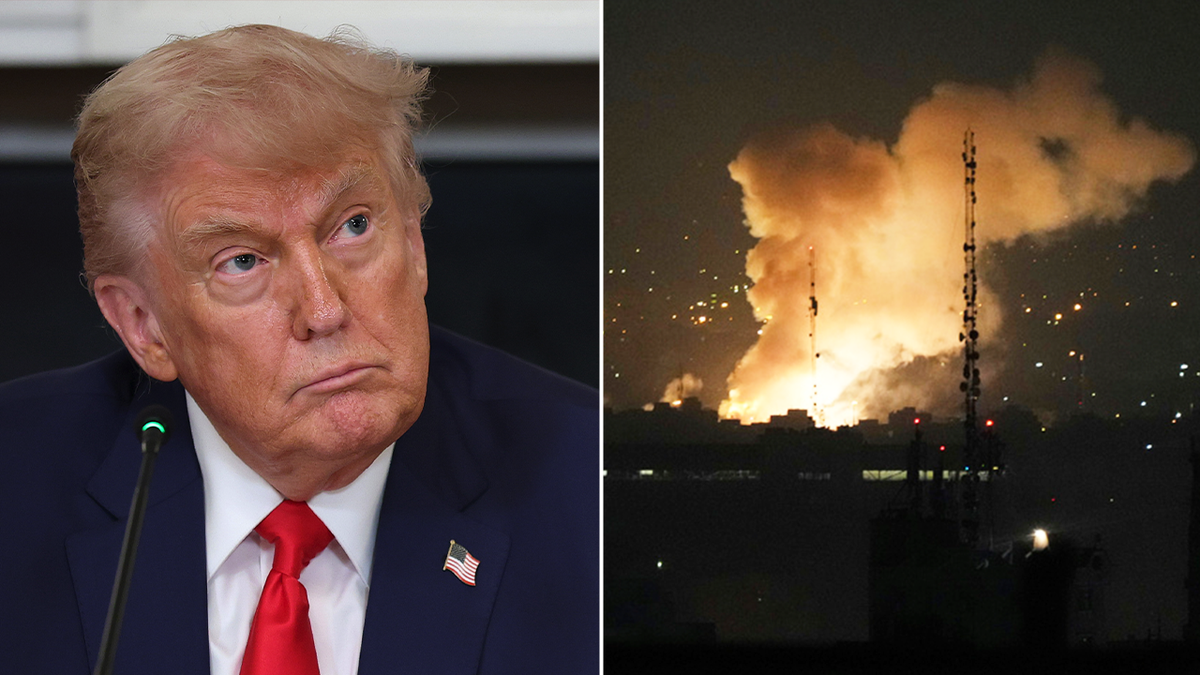
Donald Trump says the war with Iran will end "soon" because there's "practically nothing left" to hit. It's a classic Trump move: declaring victory while the smoke is still rising. He told Axios on Wednesday that American and Israeli forces have shredded the Iranian military so badly that he can flip the "off" switch whenever he feels like it. But if you look at the reality on the ground in Tehran and the chaos in the Strait of Hormuz, his "mission accomplished" moment feels a bit premature.
The logic behind the nothing left to target claim
Trump’s argument is basically a numbers game. According to Admiral Brad Cooper, the head of U.S. Central Command, coalition forces have hammered over 5,500 targets in less than two weeks. We're talking about the complete destruction of Iran’s conventional navy, including all four of their Soleimani-class warships. Just yesterday, the U.S. Navy reportedly sank 60 Iranian vessels in a single day.
From a 30,000-foot view, Trump isn't entirely wrong about the degradation. The "Epic Fury" operation—the official name for this campaign—has wiped out the command-and-control centers in Tehran. Supreme Leader Ali Khamenei is dead. His successor, Mojtaba Khamenei, is trying to lead a regime that has lost its eyes and ears. Trump’s logic is that once you’ve blown up the nuclear sites, the missile silos, and the leadership bunkers, there’s no point in staying.
But military experts are calling foul on the idea that there's "nothing left." While the shiny hardware is gone, Iran’s ground forces—the Artesh and the IRGC—are still massive. We’re talking about hundreds of thousands of soldiers. They aren't standing in neat lines waiting to be bombed; they’ve gone underground. They're waiting for the inevitable transition from an air war to a messy, long-term insurgency.
Why the White House is rushing the clock
Trump is facing a political clock that’s ticking much faster than the military one. The midterm elections are looming, and his poll numbers are taking a beating. Only about 30% of Americans think these strikes have actually made the U.S. safer. Most voters are terrified of two things: gas prices and another "forever war" with boots on the ground.
By saying the war will end soon, Trump is trying to soothe a nervous public. He’s essentially trying to "exit high" before the economic fallout becomes unbearable. Oil prices have been bouncing around $120 a barrel, and the Strait of Hormuz is a mess of mines and burning tankers. If he can declare a "total victory" now, he can pull back before the US economy feels the full weight of a global energy crisis.
The disconnect between Washington and Jerusalem
While Trump is looking for the exit, Israel's Defense Minister Israel Katz is singing a completely different tune. He’s been clear that there is "no time limit" on this operation. Israel doesn't just want to break Iran’s toys; they want to ensure the regime can never stand back up.
There’s a real risk of a strategic rift here. Israel wants a year to fully "de-Baathify" the Iranian system, whereas Trump seems satisfied with a two-week scorched-earth campaign. If the U.S. pulls its carrier groups and air support out next week, Israel will be left fighting a wounded but very angry regional power on its own.
What Iran still has in its back pocket
- The Mining Threat: Iran has only deployed a handful of mines so far, but they have a stockpile of 6,000. They can turn the Persian Gulf into a graveyard for tankers overnight.
- The "Axis of Resistance": Hezbollah and various militias in Iraq and Syria haven't fully committed their reserves yet.
- The Deep State: The IRGC’s "Pickaxe Mountain" facility is buried 100 meters under solid granite. Trump says we hit everything, but intel suggests this site might have survived the initial waves.
What this means for your wallet and security
If you're wondering when things "get back to normal," don't hold your breath. Even if Trump stops the bombing tomorrow, the Strait of Hormuz isn't going to magically open. The IRGC has already hit a Thai-flagged vessel and a Liberian ship this week. They're shifting to "asymmetric" warfare—using drones and small boats to keep the world economy in a chokehold.
You should expect gas prices to stay volatile through the summer. Most analysts believe the U.S. will have to start escorting commercial tankers, which means the military presence isn't actually going anywhere. It’s just changing from "attack mode" to "protection mode."
Don't buy the "it's over" narrative just yet. A regime that has been preparing for this fight for 47 years doesn't just disappear because you blew up their favorite buildings. Watch the Strait of Hormuz. If the mines keep appearing and the ships keep burning, the war isn't ending—it's just entering a new, uglier phase.
Keep an eye on the daily CENTCOM briefings for "vessel protection" updates. That's where the real story of the next few months will be written. If the U.S. starts a formal convoy system for oil tankers, you'll know we're settling in for the long haul, regardless of what the headlines say.