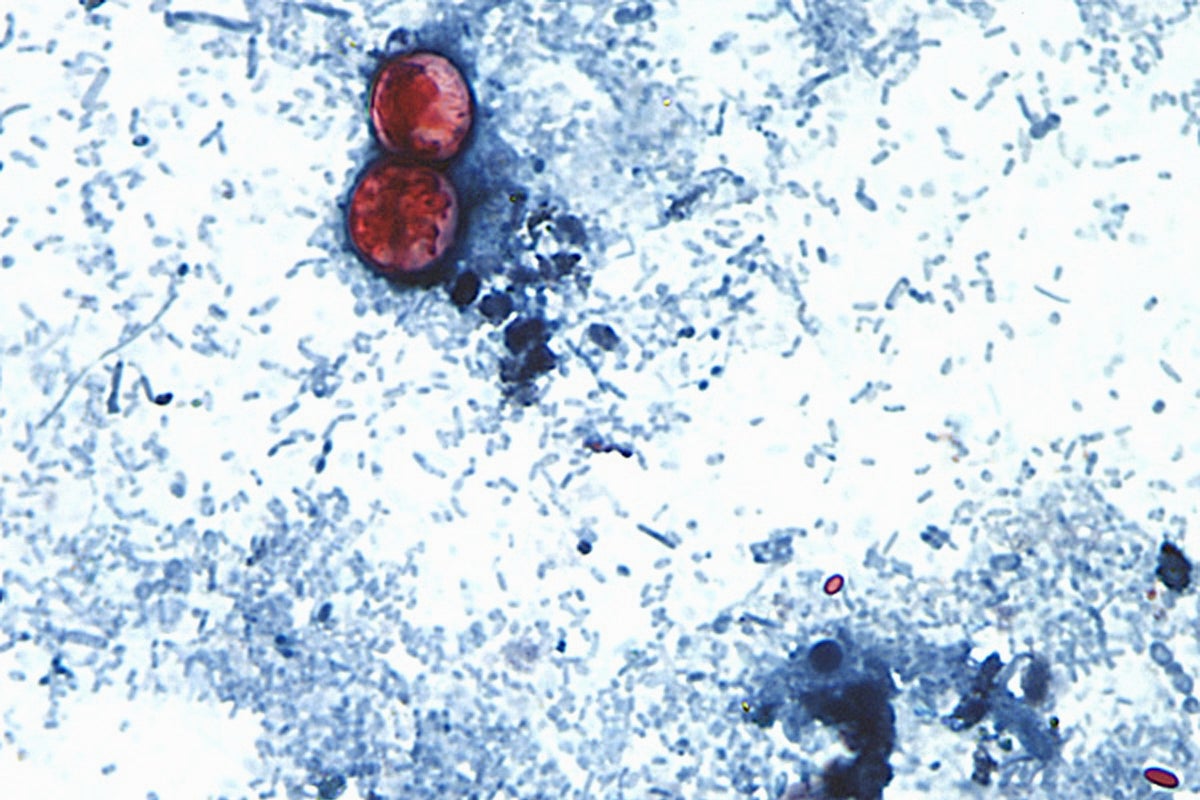
Thousands of Americans spent their summers dealing with a miserable, weeks-long ordeal: Cyclospora cayetanensis, a single-celled parasite that triggers severe, explosive watery diarrhea. As case numbers surged past 11,000 across 41 states, public health experts pointed fingers straight at Washington. The administration’s aggressive federal job cuts hollowed out the Food and Drug Administration and the Centers for Disease Control and Prevention just as a record-breaking foodborne illness wave hit the country.
When critical oversight infrastructure vanishes, outbreaks grow unchecked. You need to know how these bureaucratic rollbacks directly affected the food on your plate and why tracking the next major health threat has become significantly harder.
The Anatomy of a Massive Parasite Spike
Cyclosporiasis isn't your average stomach bug. It spreads when people ingest food or water contaminated with human feces containing parasite oocysts. Because these microscopic invaders are remarkably tough and resistant to standard kitchen disinfectants like vinegar or bleach, only thorough cooking or freezing can reliably kill them.
Most domestic outbreaks trace back to imported fresh produce picked by farmworkers who lack basic handwashing or sanitation facilities. This year, the devastation hit a new peak when contaminated iceberg lettuce distributed nationwide by Taylor Farms sickened thousands.
Yet, the biological mechanism of the parasite is only half the story. The real crisis lies in how federal agencies responded—or rather, how they failed to respond due to intentional staffing drains.
How Federal Layoffs Crippled Oversight
During President Trump's second term, federal agencies experienced historic attrition. The Food and Drug Administration lost over 20% of its workforce, while the Centers for Disease Control and Prevention saw cuts reaching 25%. Specialized teams vanished overnight.
Key closures and staff reductions stripped the government of its preventative shield:
- The CDC FoodNet Rollback: The Foodborne Diseases Active Surveillance Network scaled back its core monitoring requirements, making tracking for cyclospora optional rather than mandatory.
- Disbanded Advisory Panels: The USDA National Advisory Committee on Microbiological Criteria for Foods was dissolved entirely, erasing decades of institutional guidance on food defense.
- Decimated Tracking Teams: The CDC went from eleven specialized scientists tracking food parasites down to just three.
- Lost International Cooperation: Entire teams dedicated to coordinating safety protocols with Mexican agricultural counterparts were let go.
Critics within the administration, including Health and Human Services head Robert F. Kennedy Jr., defended the moves as the elimination of redundant surveillance. Former agency directors strongly disagree. Susan Mayne, who ran the FDA's food safety department from 2015 to 2023, noted that losing these experienced personnel destroyed the early-warning networks needed to trace contamination back to its source quickly.
What This Means for Your Grocery Cart
When federal tracking systems are underfunded and short-staffed, consumers shoulder the burden of risk. Traceback investigations take longer. Local health departments are left to guess at national trends. Packaged salad mixes distributed to major grocery chains and fast-food restaurants carry hidden hazards because fewer inspectors are visiting processing facilities.
Protecting yourself requires practical caution. Skip pre-washed bagged salads when large-scale contamination events hit the news cycle, as the mixing process can spread a small pocket of bacteria across an entire batch. Wash fresh produce thoroughly, but remember that standard washing won't eliminate hard-to-kill parasites like cyclospora. Stay informed on active CDC recall notices, and don't assume government safety nets will catch contaminated food before it reaches your local supermarket shelf.