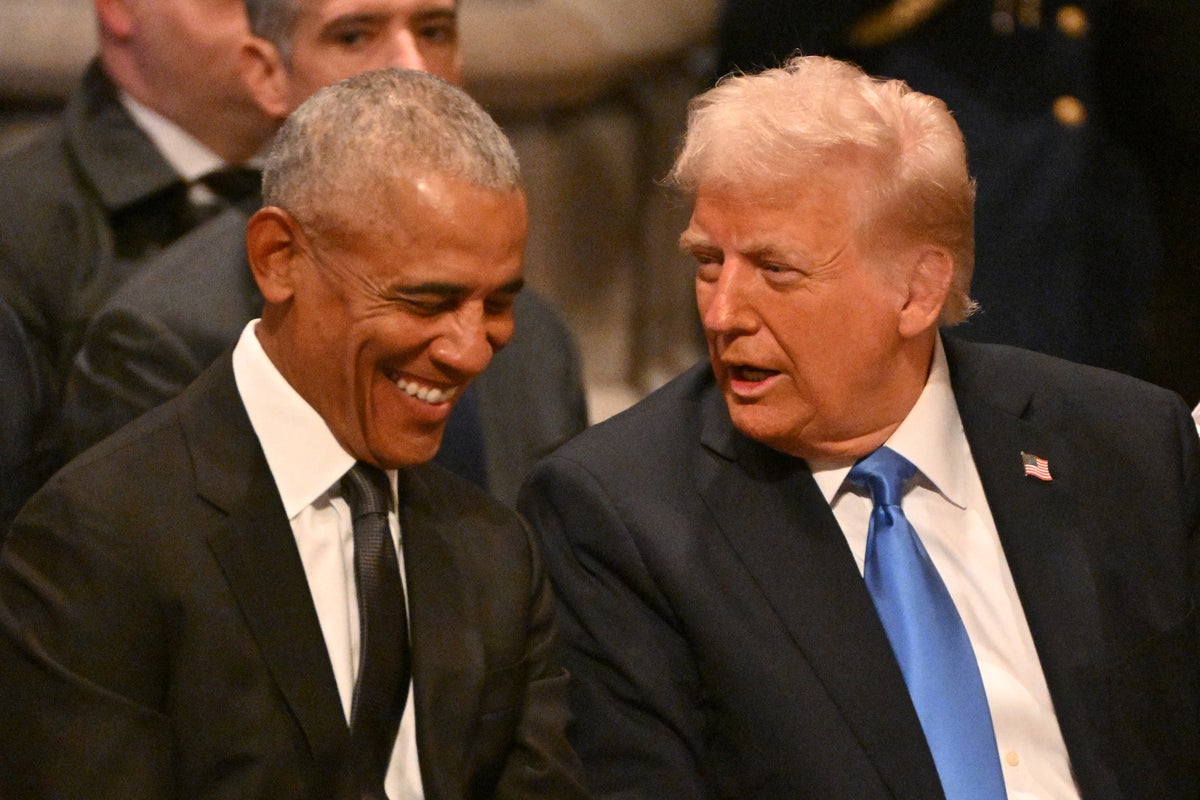
Donald Trump has a fixation problem, and its name is Barack Obama.
For over a decade, the real estate mogul turned president has kept his predecessor firmly at the center of his political worldview. It is a relentless, deeply personal focus that defies standard political logic. During high-profile campaign appearances, Obama finally addressed this persistent fixation directly. He called the constant focus on him "strange" and wryly observed that he obviously occupies a permanent piece of real estate inside Trump's mind.
This dynamic goes beyond typical partisan bickering. It exposes the psychological undercurrents driving modern American politics. To understand why Trump cannot stop talking about Obama, you have to look back at the moments that forged this rivalry. It is a story about status, validation, and a clash of fundamentally incompatible personas.
The Night That Sparked a Decade of Grievance
Every bitter political feud has a clear origin point. For this one, it was April 30, 2011. The setting was the White House Correspondents' Dinner.
Trump sat in a crowded ballroom filled with journalists, politicians, and celebrities. For months, he had fueled the conspiratorial "birther" movement, demanding that the sitting president release his birth certificate. Obama complied, making the long-form document public just days before the dinner. Then he took the stage.
What followed was a brutal, highly public humiliation. Obama spent several minutes systematically roasting Trump in front of the entire Washington establishment. He mocked Trump's decision-making on The Celebrity Apprentice. He joked about Trump focusing on conspiracy theories instead of real policy issues. The room roared with laughter. Trump sat there, face frozen, enduring the mockery.
Political analysts frequently point to that specific night as a turning point. It transformed Trump's interest in politics from a casual hobby into an intense, personal mission. Many observers believe that public embarrassment hardened Trump's resolve to run for office and systematically dismantle Obama's legacy.
Policy Destruction as a Primary Goal
When Trump won the presidency in 2016, his legislative agenda looked less like a traditional conservative platform and more like a targeted effort to erase his predecessor from the history books.
The strategy was consistent. If Obama built it, Trump wanted to tear it down. We saw this play out across multiple fronts:
- The Affordable Care Act: Repealing Obamacare became an absolute obsession for congressional Republicans, heavily driven by daily pressure from the Oval Office.
- The Iran Nuclear Deal: Trump withdrew from the Joint Comprehensive Plan of Action (JCPOA), a signature foreign policy achievement of the Obama administration, despite warnings from international allies.
- The Paris Climate Accord: Pulling out of this global climate agreement was one of Trump's earliest major international moves.
- Environmental Regulations: The administration systematically rolled back dozens of rules established by the Environmental Protection Agency under Obama.
This was not just about policy disagreements. It felt deeply personal. Trump frequently claimed that Obama's deals were the "worst in history," framing himself as the master negotiator who could fix the alleged mess.
The Battle of Two Political Icons
The enduring friction persists because both men represent completely opposite ideas of what American leadership should look like.
Obama relies on a cool, analytical, and highly structured approach. He uses deliberate language and values institutional norms. Trump thrives on chaos, raw emotion, and direct, unvarnished communication with his base. He views the political landscape as a zero-sum game of winners and losers.
By continually invoking Obama's name on the campaign trail, Trump reminds his supporters of the specific political establishment they despise. Obama serves as the ultimate foil. For Trump's base, attacking Obama is a shorthand way to reject the entire pre-2016 political order.
At the same time, Obama's enduring popularity among Democrats makes him an inevitable target. Trump measures success through crowd sizes, media attention, and personal loyalty. The fact that Obama still commands immense respect and can easily command the spotlight bothers Trump deeply.
Breaking the Silence
For years, Obama largely followed the unwritten rule that former presidents should stay out of the daily political fray. He kept his public criticisms measured and indirect. That era of restraint is over.
During recent campaign events, Obama shifted his approach. He began using sharp humor to counter Trump's rhetoric, specifically targeting Trump's fixation on crowd sizes and his constant stream of personal grievances. By leaning into the idea that Trump is obsessed with him, Obama flipped the script. He took away the power of the attacks by treating them as pathetic rather than threatening.
This shift indicates a broader strategy. Democrats realized that taking Trump's bait and getting angry does not work. Instead, they are using humor and dismissiveness to diminish his stature.
The Psychological Real Estate
When Obama stated that he owns a room inside Trump's mind, he captured a fundamental truth about this rivalry. Trump defines his own achievements by contrasting them with Obama's.
Even when running against other opponents, Trump frequently invokes Obama's name, sometimes confusing the two or implying that Obama is still secretly pulling the strings behind the scenes. This behavior shows how deeply ingrained the fixation has become. It is a political ghost that Trump simply cannot shake.
Moving forward, do not expect this dynamic to fade. As long as both men remain influential figures in their respective parties, the shadow of their 2011 clash will continue to influence American political discourse. The feud is no longer just about the two men. It has become a permanent feature of the deep cultural and political divide in the United States. Watch closely during the next campaign cycle to see how this psychological battle continues to shape the strategies of both major political parties.
For a closer look at how this rivalry plays out on the public stage, you can watch this breakdown of Obama roasting Trump's weird obsession. This video highlights the specific campaign moments where the former president chose to directly address and mock the relentless focus directed at him.