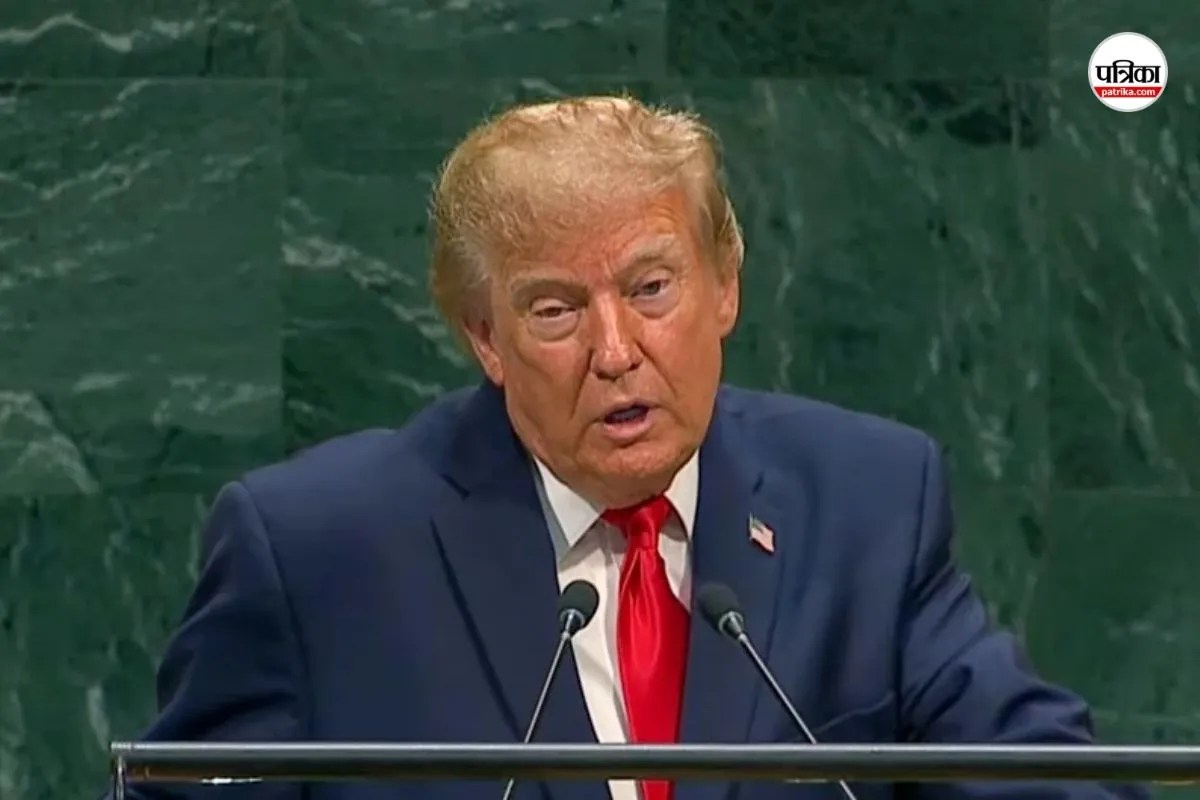
President Donald Trump signaled during his mid-November trip to China that Washington will wait until after January 1 to decide its next move in the conflict with Iran, remarking to Fox News that the country has been "nasty" while offering no concrete deadline. Strip away the headline theatrics and that comment reveals a calculated political stall rather than a sudden burst of patience. By punting major decisions into 2027, Trump is buying time after Republican losses in the November midterms, testing whether naval blockades and economic pressure can extract concessions without fresh strikes, and keeping allies and adversaries guessing while he meets with Xi Jinping and Vladimir Putin in Shenzhen.
The Real Reason January First Matters in Washington
Calendar dates in Washington rarely carry magic on their own. When a president picks a turning-of-the-year marker in the middle of a multi-month conflict, domestic math usually drives the clock. For a more detailed analysis into similar topics, we suggest: this related article.
In the weeks before the November 3 midterm elections, Trump repeatedly suggested that Iran might become more willing to negotiate once the voting ended. Instead, Republicans lost control of both chambers of Congress. A newly elected Democratic majority will take office in January, altering the legislative environment on Capitol Hill even after the outgoing Senate GOP majority recently rejected another measure aimed at curbing the war.
Waiting until after January 1 lets the administration ride out immediate post-election turbulence without locking itself into a rigid military timetable. Vice President JD Vance publicly distanced himself from the conflict after the party's political rout, and Trump shifted Vance away from Iran diplomatic efforts toward domestic issues. That internal recalibration shows how costly the war has become at home, even as officials insist their broader campaign is working. To get more information on this topic, extensive analysis can also be found at The Guardian.
Some analysts argue that delaying a decision projects indecision and invites Tehran to stall longer. That critique has real weight if diplomacy drags on without verification. Yet there is a counter-argument: rushing into another wave of strikes right after an election defeat carries heavy political and military risk, especially when U.S. forces are already reinforcing protective infrastructure across the region and returning carrier assets to the Middle East.
Why China Became the Backdrop for Iran Remarks
Delivering remarks about Iran while visiting China turns a regional standoff into a larger test of great-power leverage. Trump met with Chinese President Xi Jinping and Russian President Vladimir Putin in Shenzhen, while the joint statement issued after the summit left the Iran conflict unmentioned.
Silence in a joint communique is rarely an oversight. Beijing and Moscow have their own commercial and strategic equities in the Gulf and across Eurasia, and neither has volunteered to underwrite Washington's pressure campaign. Earlier in the conflict, Trump pressed major energy importers and partners over security in the Strait of Hormuz, pointing out how heavily China relies on oil flowing through that corridor compared with direct U.S. dependence.
In his interviews tied to the trip, Trump struck a defiant tone, saying he did not need help from Beijing or Moscow to reach a deal with Tehran. Saying you do not need help is one thing. Getting rivals to stop undermining sanctions, maritime restrictions, or backchannel diplomacy is another.
Blockades, Strikes, and the Limits of Coercion
Inside the administration and among close partners, two competing theories of pressure are colliding. One camp argues that economic squeeze and maritime restrictions have already battered Iran enough that major new combat operations are unnecessary. The other camp presses for decisive military force to break the deadlock.
Reports from late November highlighted how sharp that divide is. Israeli Prime Minister Benjamin Netanyahu has pressed Washington to join a multi-day campaign of airstrikes against Iran, and Israel's Mossad chief advocated in Washington for resuming joint strikes. At the same time, U.S. officials have pointed to tightened maritime curbs on ship-to-ship oil transfers and argued that sanctions are biting hard.
Consider a hypothetical scenario to see how fragile that calculus is. Suppose Tehran refuses to account for enriched material or accept strict inspections, while continuing harassment around Gulf shipping lanes. If economic pressure alone fails to force concessions by early 2027, Trump would face a stark choice between accepting a messy containment stalemate or ordering fresh strikes just as a new Congress prepares to scrutinize war powers.
Maritime chokepoints add another layer of volatility. Even when tanker crossings fluctuate and warships patrol nearby waters, incidents east of the Strait of Hormuz and missile or drone threats across the Gulf keep insurance rates, freight costs, and regional nerves elevated. Air power can hit hardened sites or missile launchers, yet naval policing and deterrence require sustained presence over months, not days.
Weapons Claims and Information Warfare
The rhetoric surrounding Iran has also expanded beyond nuclear enrichment into allegations involving unconventional weapons and covert plots. Asked about a report alleging an Iranian dirty bomb plot targeting Washington, Trump brushed off immediate alarm, while Secretary of State Marco Rubio likewise indicated there was no imminent threat to the U.S. capital.
Around the same time, Trump suggested intelligence pointed to Iranian interest in chemical or biological options because nuclear pathways had been blocked—a claim Tehran's foreign ministry swiftly rejected as a pretext designed to stoke fear and justify military action. Both sides know how high the stakes are whenever weapons allegations enter public debate. Unverified or contested claims can harden negotiating positions overnight, making face-saving off-ramps harder to find even if leaders privately want one.
What Tehran Weighs Between Now and January
From Tehran's perspective, Washington's "see what happens" line is a warning wrapped in ambiguity. Iranian officials face mounting economic strain from sanctions and maritime restrictions, yet acquiescing to sweeping demands on missiles, regional networks, and nuclear verification carries steep domestic and strategic costs for the leadership.
Tehran has consistently pushed back against demands that go beyond the nuclear file, viewing concessions on regional posture and missile capabilities as surrender of core security tools. Meanwhile, internal political tension inside Iran—visible in hard-line crackdowns and domestic unrest—shows a leadership wary of looking weak abroad while managing pressure at home.
For ordinary citizens and businesses across the region and beyond, the uncertainty is the real tax. Shipping companies price in mine and strike risks, allies watch whether Washington prioritizes restraint or escalation, and diplomats try to read a timeline that has already shifted once from the midterms to the new year.
Reading the Signal Behind the Delay
When a leader says "we'll see what happens after January 1," that is not a finished strategy. It is a placeholder while political leverage, military readiness, and economic pressure are tested against reality.
Anyone tracking the conflict over the next several weeks should watch concrete indicators rather than cable-news soundbites: enforcement of maritime oil-transfer restrictions, movement of U.S. air and naval assets in the theater, diplomatic signals from regional mediators, and whether Tehran tests Washington's restraint before the calendar turns to 2027.


