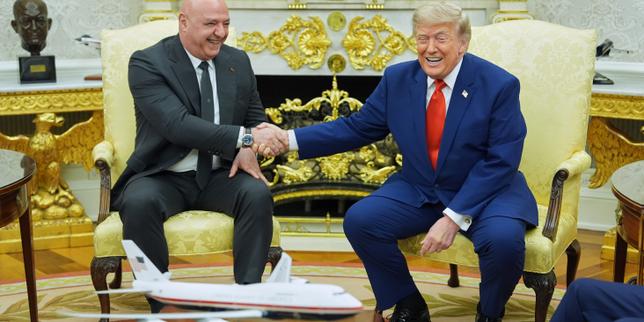
Donald Trump loves telling visiting foreign heads of state that he’s going to help them out. On Tuesday afternoon in the Oval Office, Lebanese President Joseph Aoun got the full VIP treatment. Trump looked at reporters, praised Aoun’s looks, and declared that Lebanon has been treated poorly for decades. He promised the United States would help the small Mediterranean nation "a lot" and ensure it gets treated with respect.
It was classic Trump theater. Honest, entertaining, and utterly devoid of specific details.
Behind the smiles and humor lies one of the most perilous security crises on the globe today. Aoun didn't fly to Washington just to get complimented by the American president. He came carrying a risky plan to disarm Hezbollah, clear out occupying Israeli troops from southern Lebanon, and rebuild a shattered economy. Getting a verbal vote of confidence from Washington is nice. Turning that confidence into real stability on the ground in Beirut is a totally different battle.
Oval Office handshakes meet brutal diplomatic reality
Aoun made history this week as the first sitting Lebanese president to step foot in the White House in seventeen years. The last guy to do it was Michel Sleiman back in 2009 during the Obama administration. That length of time shows you just how isolated Lebanon's government has been in recent years.
The timing of this visit couldn't be tighter. Lebanon and Israel signed a US-brokered framework agreement back on June 26. The deal outlines a path for Israeli forces to pull back from southern Lebanon while the Lebanese Armed Forces step in to disarm Hezbollah.
That sounds great on paper. In reality, it's a massive gamble.
During their sit-down, Trump dropped a few surprises. He casually suggested he'd be willing to talk directly to Hezbollah leaders if Aoun wanted him to. He even floated the bizarre idea of having Syria intervene to deal with Hezbollah. Anyone who knows Lebanese history knows that suggesting a Syrian military presence in Lebanon is political suicide for a president in Beirut. Aoun wisely didn't take the bait.
Trump also brushed off concerns about Israeli troops occupying Lebanese border towns. He simply stated that Israeli forces are in the process of redeploying. But on the ground in villages like Zawtar al-Gharbieh, local mayors and residents aren't seeing a smooth exit. They're seeing bulldozed roads, flattened houses, and ongoing gunfire.
Disarming Hezbollah sounds simple until you look at southern Lebanon
You can't talk about Lebanon without talking about Hezbollah. Founded with Iranian money and weapons back in 1982, the group built a state within a state. They operated an army stronger than the national military, built deep underground bunker networks, and held effective veto power over Lebanese politics.
The massive Israeli military offensives throughout 2024, combined with political chaos in Tehran and the fall of the Assad regime in Syria, weakened Hezbollah dramatically. That shift allowed Aoun—a former army commander—to take office on a platform centered on state sovereignty. His headline promise is simple. The state must hold a strict monopoly on weapons.
That sounds fine in a speeches. Implementing it without starting a civil war is almost impossible.
Hezbollah flatly rejects the US-sponsored framework agreement. They refuse to hand over their heavy rockets and artillery voluntarily. When Lebanese army units move into southern towns to clear out arms caches, they're walking a tightrope. Move too aggressively, and you provoke a bloody showdown with armed Shiite partisans. Move too slowly, and Israel uses it as an excuse to keep its troops inside Lebanese territory forever.
Aoun needs Washington to understand that disarming a entrenched militant group takes time. Secretary of State Marco Rubio met with Aoun over the weekend and voiced strong support, arguing that strengthening the central government is the only real way to replace Hezbollah. But replacing an entrenched political and military force requires more than high-level diplomatic support. It takes massive financial resources that Beirut simply doesn't have.
The pilot zone gamble and why Israeli troops are still on the border
To make the June 26 framework work, negotiators came up with the idea of pilot zones. These are small pockets in southern Lebanon where Israeli troops are supposed to pull back in stages, allowing the Lebanese army to take control and verify that no Hezbollah fighters remain.
The three original pilot villages are Froun, Srifa, and Zawtar al-Gharbieh. The Lebanese army officially started moving into these areas this week. Yet, hours before Aoun sat down with Trump, Lebanese soldiers reported that Israeli forces opened fire near deployment zones in Zawtar al-Gharbieh. The Israeli military claimed it was adjusting its posture, but local officials say the threat remains active.
This highlights the fatal flaw in the current framework.
- Israel demands full disarmament of Hezbollah before completely withdrawing its forces.
- Hezbollah refuses to hand over its weapons while Israeli troops occupy Lebanese soil.
- The Lebanese Army gets caught in the middle, lacking the heavy firepower to push Israel out or force Hezbollah to surrender its arsenal.
Aoun signed the June deal from a position of economic and military weakness. He knows it. His advisors know it. The deal contains no firm deadline for when Israeli troops must completely leave Lebanese soil. It leaves everything conditional on "security progress" that Israel gets to define. Without direct pressure from Trump on Israeli leadership, these pilot zones risk turning into permanent military buffer zones operated by foreign troops.
Why Washington money matters more than Trump verbal promises
Warm words in the White House don't fix bombed-out bridges or restore electricity to ruined towns. Lebanon has suffered catastrophic damages since fighting escalated earlier this year. Over four thousand people have lost their lives, a million citizens remain displaced, and essential infrastructure across the south lies in ruins.
On top of the war damage, Lebanon's banking sector collapsed years ago. The local currency lost almost all its value, wiping out life savings for millions of ordinary families.
Aoun came to Washington looking for concrete financial backing. He needs immediate cash injections to pay soldiers in the Lebanese Armed Forces, who earn tiny monthly salaries that barely cover groceries. If you want a state army to confront heavily armed militias, you have to pay them enough to feed their families.
Rubio acknowledged this during his meetings, pointing out that attracting foreign investment is just as important as military aid. But investors aren't jumping back into Beirut without firm security guarantees. The US Congress isn't eager to write huge blank checks either. Unless Trump pushes hard to secure formal aid packages, those promises of major help will remain empty political talk.
What Lebanon needs right now to avoid another civil war
If the US actually wants to stabilize Lebanon and limit Iran's influence for good, Washington has to move beyond soundbites. Here's what needs to happen immediately on the diplomatic front.
First, Washington must establish a hard timetable for Israeli military withdrawal. Leaving the timeline open-ended gives hardliners in Israel zero incentive to leave and gives Hezbollah every excuse to keep its arms.
Second, the US needs to lead an international reconstruction fund specifically earmarked for southern Lebanon. If the central government rebuilds homes and roads, it earns the trust of local populations who previously relied on Hezbollah for basic services.
Finally, the Lebanese army requires heavy logistics and transport equipment immediately. Sending troops into hostile territory without proper armored vehicles or communication gear guarantees failure.
Aoun’s trip to Washington proved that the world still cares about what happens in Beirut. But photographic moments inside the White House don't secure dangerous borders. Unless Trump turns his casual promises into binding diplomatic pressure on all sides, Lebanon risks sliding right back into chaotic conflict.