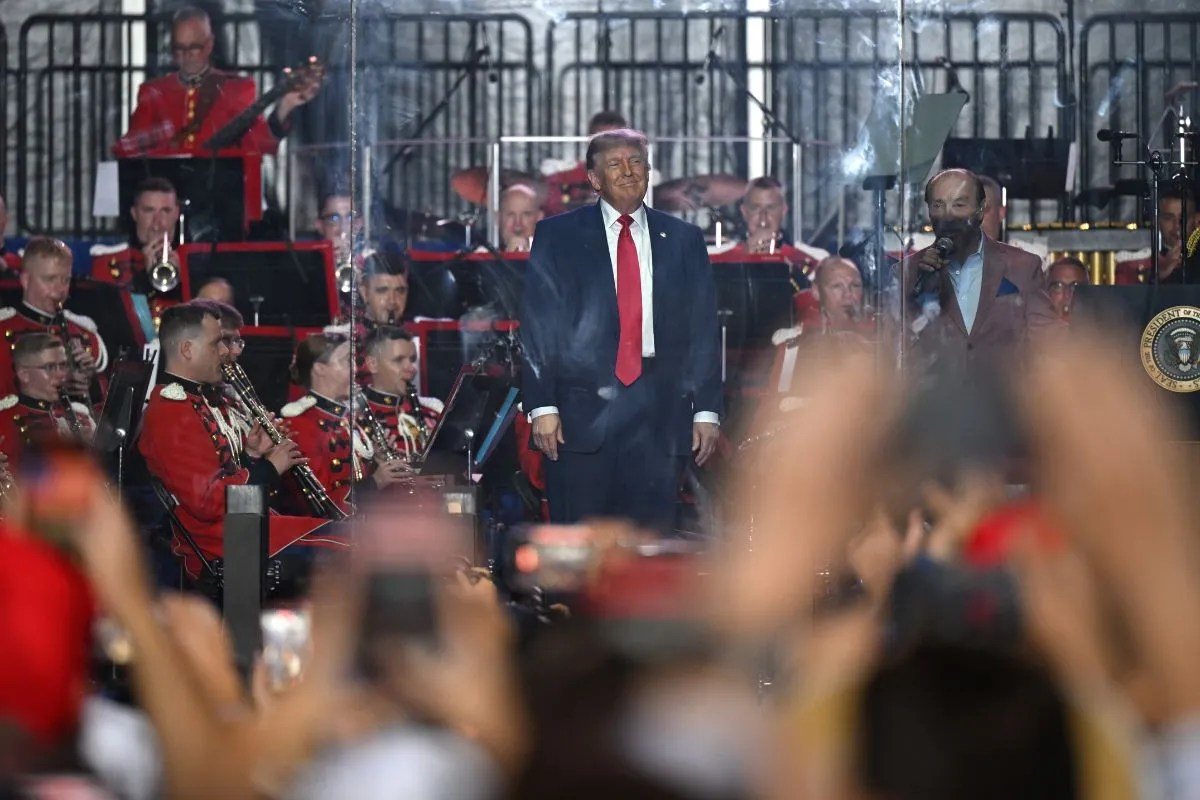
Donald Trump broke over a century of political tradition by announcing that the Republican Party will stage its first ever national midterm convention this September in Dallas. The unprecedented two-day gathering, scheduled for September 9 and 10, represents a high-stakes gamble to rescue the party's razor-thin congressional majorities. Historically, national party conventions are strictly reserved for presidential election cycles. By inserting himself into the center of the 2026 cycle, Trump is attempting to nationalize hundreds of local congressional races, a move born out of growing panic over historical midterm trends and sluggish economic approval ratings.
The official announcement came via Truth Social, with the administration framing the event as a celebration of the second-term achievements of the America First agenda. Party officials are calling the upcoming gathering a massive rally designed to feature manufacturers, entrepreneurs, and first responders. Behind the optics of celebration lies an urgent electoral calculation. The Republican establishment faces an uphill battle to retain control of the House and the Senate, where losing even a handful of seats would hand complete investigative and legislative blocking power to the Democrats for the remainder of Trump's term.
Breaking a Century of Political Tradition
Political parties in the United States have operated on a predictable four-year clock for generations. National conventions serve as the official launchpads for presidential nominees, drawing thousands of delegates to hammer out party platforms and present a unified front to prime-time television audiences. Staging a full-scale national convention during an off-year election has simply never been done in the modern era. It alters the traditional machinery of midterm campaigning.
The decision to break this precedent is not an act of strength. It is an acknowledgment of vulnerability. Midterm elections are notoriously brutal for the party occupying the White House. Voters frequently use the midterms to punish the sitting president’s party for economic anxieties, legislative gridlock, or unfulfilled campaign promises. By bringing the entire national party apparatus to Dallas, the administration hopes to manufacture the high-energy environment of a presidential election year without having the president’s name on the ballot.
Internal Republican National Committee rules had to be altered earlier this year to make this event legally and financially permissible. While Trump floated the idea late last year, many party strategists originally viewed it as an unworkable logistical nightmare. The approval of these rule changes indicates how deeply the party fears a collapse in voter turnout this November.
The Mathematical Terror of Slim Majorities
The legislative reality in Washington leaves no room for error. The Republican majorities in both chambers of Congress are extraordinarily fragile. A shift of just a few seats in the House or a single seat in the Senate would split the government, effectively ending Trump's ability to pass major legislation or secure conservative judicial appointments without intense compromises.
Historical data shows that the president’s party loses an average of twenty-six House seats and four Senate seats during their first midterm election. If those historical averages hold true this November, the Democratic Party will comfortably seize control of both chambers. A divided government would immediately trigger a flood of congressional investigations into the executive branch, stalling the administration's policy goals and shifting the political focus toward sub-committees, subpoenas, and oversight hearings.
To counter this mathematical threat, the administration is betting that a nationalized campaign will override local grievances. Midterms are usually won or lost on local issues, district-level dynamics, and the personal popularity of individual representatives. Trump’s strategy seeks to turn every single congressional race into a referendum on his national agenda. It is a strategy that forces voters to choose between total alignment with the White House or a return to divided government.
Why Local Candidates Are Secretly Terrified
While national party leaders echo praises for the upcoming Dallas event, the view from vulnerable congressional districts is far more anxious. Moderate Republicans running in suburban areas or districts that voted for Joe Biden in 2020 are finding themselves trapped. They need local independent voters to win. A massive, high-profile national convention centered around Trump makes it nearly impossible for these candidates to distance themselves from controversial executive actions or national policy battles.
The president's current approval ratings remain low, heavily weighed down by public dissatisfaction over persistent inflation and the handling of the broader domestic economy. In competitive districts across Pennsylvania, Michigan, and Arizona, Republican candidates have spent months trying to build localized, independent identities. A two-day national media blitz focusing exclusively on the Trump administration's record undoes much of that quiet, localized positioning.
Vulnerable incumbents face a difficult choice. Attending the convention risks alienating the moderate swing voters they need to survive in November. Skipping the convention risks infuriating the hard-core conservative base, whose enthusiasm is vital for voter turnout. This tension highlights the fundamental risk of the strategy. What energizes the national base can simultaneously poison the well for the specific moderate candidates who actually hold the keys to the congressional majority.
The Texas Showdown Forcing Trumps Hand
Choosing Dallas as the host city was not a random geographic coincidence. Texas has suddenly become the front line of the battle for the Senate, putting a direct spotlight on a high-stakes race that national Republicans cannot afford to lose. The state's Senate seat is currently contested between the Republican nominee, Attorney General Ken Paxton, and the Democratic nominee, State Representative James Talarico.
Texas has not elected a Democrat to a statewide office in decades, but recent polling indicates that the race has tightened into a legitimate toss-up. Paxton secured the Republican nomination after a bitter primary fight where he defeated long-serving incumbent Senator John Cornyn, largely due to a strong endorsement from Trump. Paxton’s candidacy, however, carries significant political baggage from years of legal and ethics controversies. Democrats view Talarico, a charismatic former teacher and Presbyterian seminarian, as their best shot in a generation to flip a Texas Senate seat.
By bringing the national convention to Dallas, Trump is attempting to flood the Texas media market with conservative messaging, shield Paxton from local controversies, and ensure that the state's conservative base turns out in historic numbers. It also serves as a defensive wall for the mid-decade congressional redistricting maps that Texas Republicans pushed through earlier, which are designed to maximize Republican seats but face ongoing legal challenges and shifting voter demographics in expanding suburban areas.
The Financial Drain of an Extra Convention
National conventions are immensely expensive operations. Security infrastructure, arena rentals, media staging, and delegate accommodations cost tens of millions of dollars. By staging an unscheduled convention in 2026, the Republican Party is committing a massive amount of capital toward a single two-day event, money that would otherwise flow directly into local television ad buys, digital campaigns, and field staff in battleground districts.
The Democratic National Committee has already stated it will not match the Republican move with a midterm convention of its own. Democratic strategists argue that the millions of dollars required to host a national convention are better spent on building local, precinct-level volunteer networks and funding targeted advertisements against vulnerable Republican incumbents. This creates a sharp divergence in campaign philosophy between the two major parties.
- The Republican Strategy: A centralized, top-down national media event designed to drive maximum media attention, nationalize the narrative, and shock the base into turning out.
- The Democratic Strategy: A decentralized, bottom-up ground game focusing heavily on localized issues, voter registration, and chipping away at vulnerable suburban districts.
This financial divergence means the Dallas convention must deliver a massive, measurable spike in national voter enthusiasm to justify its enormous cost. If the event fails to move the needle in national polling, it will have drained precious resources that local campaigns desperately need during the final, critical weeks of October.
The Unforgiving Calendar
The timing of the convention creates an incredibly compressed window for the final leg of the campaign. Holding a national event on September 9 and 10 means the party will be attempting to launch a synchronized national push just as early voting begins in several key states. It leaves very little time to adjust the strategy if the convention's messaging fails to resonate with the wider electorate.
The administration’s record will be laid bare under the brightest possible lights. Trump plans to use the stage to highlight achievements in manufacturing, border security, and deregulation. Opponents will use the exact same media window to highlight low approval ratings, economic anxieties, and controversial foreign policy positions. There will be no room to hide from the core issues facing the electorate.
Nationalizing a midterm election is a double-edged sword. If the public feels optimistic about the direction of the country, a nationalized race can carry vulnerable incumbents across the finish line on the president's coattails. If the public feels anxious or dissatisfied, nationalization turns the election into a giant, nationwide execution wall for the party in power. Trump has bet the entire future of his legislative agenda on the belief that he can defy the historical laws of political gravity through sheer force of personality and a prime-time television spectacle. The results in November will determine whether this unprecedented convention was a stroke of political genius or a desperate multi-million-dollar miscalculation.