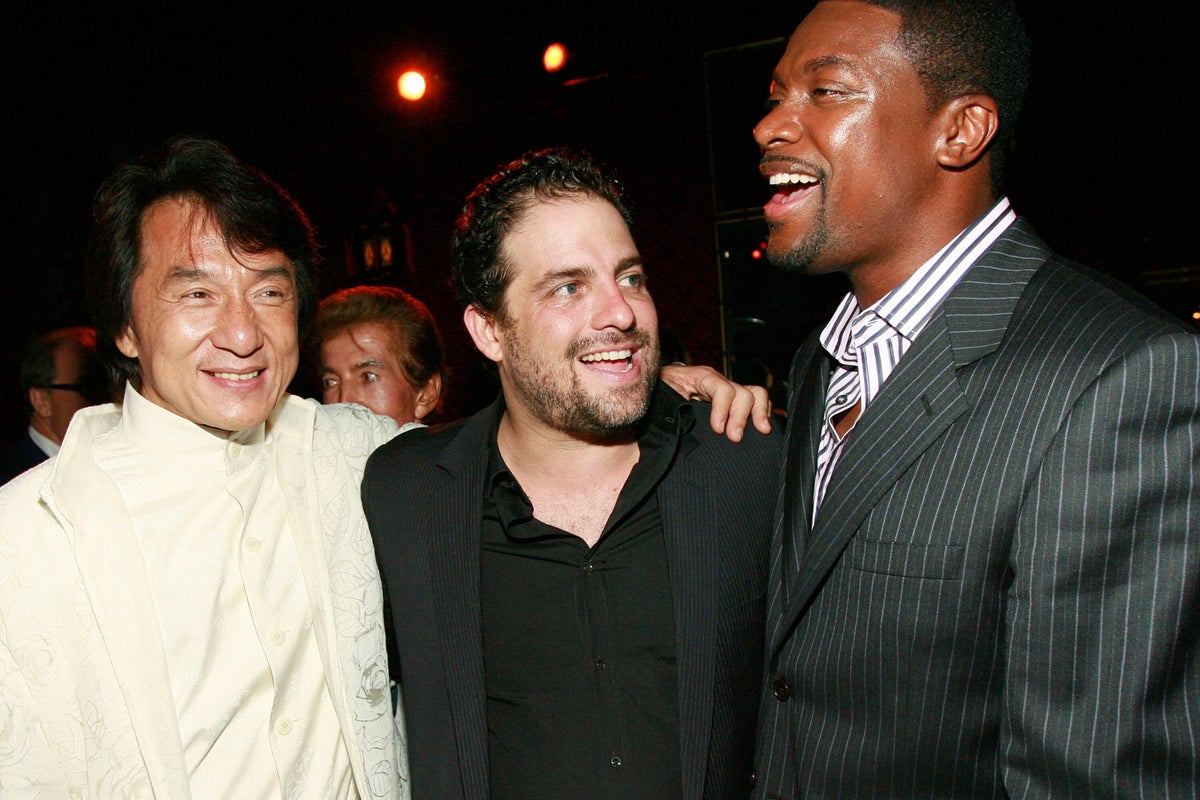
You don't usually see a Hollywood director rubbing elbows with Goldman Sachs execs on Air Force One, especially when that director is radioactive in his own industry. But Donald Trump isn't your usual president. When he touched down in Beijing for his 2017 state visit, the guest list for his business delegation raised more than a few eyebrows. Right there among the energy moguls and tech giants was Brett Ratner, the man behind Rush Hour and a brand-new documentary about Melania Trump.
It’s a bizarre optics play. Just days before the trip, several women came forward with serious allegations of sexual misconduct against Ratner. Hollywood was already distancing itself, yet there he was, flying across the Pacific on the taxpayer's dime. If you're wondering why a guy who makes buddy-cop movies was invited to a high-level trade summit with Xi Jinping, you have to look at the intersection of Chinese box office gold and Trump’s personal loyalty.
The China connection that made Ratner an asset
China isn't just another market for Hollywood; it’s the lifeline. Ratner wasn't on that plane to discuss steel tariffs or intellectual property rights for microchips. He was there because his Rush Hour franchise is legendary in mainland China. Jackie Chan is a national treasure there, and the films Ratner directed are some of the most recognizable American exports in the country.
Trump loves a deal, and he loves "winners." In his eyes, Ratner wasn't just a director; he was a guy who knew how to bridge the gap between American entertainment and Chinese cash. At the time, RatPac-Dune Entertainment (Ratner's company) was a major player in co-financing big-budget films. Bringing him along sent a message that the U.S. was ready to talk about the entertainment sector, a massive part of the trade deficit that usually gets sidelined in favor of soybeans and airplanes.
Why the Melania documentary changed the math
It’s not just about the movies, though. Ratner has spent years cultivating a relationship with the Trump family. He was tapped to direct a documentary about Melania Trump, a project that gave him unique access to the inner circle. When you’re that close to the First Family, the usual rules of political vetting often go out the window.
While the rest of the world was reeling from the reports in the Los Angeles Times detailing allegations from actresses like Olivia Munn and Natasha Henstridge, the White House stayed quiet. They didn't dump him from the manifest. They didn't issue a statement. They just flew him to China. It’s a classic Trump move: ignore the media storm and keep your friends close, especially if they’re helping tell your family's story.
The business delegation wasn't just for show
Most people assume these state visits are all about the photo ops. They’re not. The CEOs on that trip—heads of companies like Boeing, Goldman Sachs, and Qualcomm—were there to sign massive MOUs (Memorandums of Understanding). We’re talking about deals worth over $250 billion.
Ratner’s presence was a wild card in a deck of suits. While he didn't walk away with a quarter-billion-dollar contract for a new movie, his inclusion showed how much the administration valued the "soft power" of Hollywood. Ironically, as the #MeToo movement was gaining massive steam back home, Ratner was being treated as a VIP envoy in Beijing. It created a split-screen reality that perfectly encapsulated the Trump era.
What critics got wrong about the invitation
The outrage was predictable, but many missed the point. Critics argued that Ratner’s inclusion was a mistake or a vetting failure. It probably wasn't. Trump has a history of doubling down when his associates are under fire. Removing Ratner would have looked like a concession to the "fake news" media or the "Hollywood elite." By keeping him on the plane, Trump was signaling that he doesn't play by the rules of the traditional political establishment.
The fallout and the long game
Shortly after the China trip, the walls finally closed in on Ratner’s Hollywood career. Warner Bros. severed ties with RatPac. Major projects were scrapped. He eventually moved to Israel, largely disappearing from the American public eye. But for that one week in November 2017, he was at the absolute center of global power.
If you’re trying to make sense of why this happened, don’t look for a logical policy reason. Look at the personal ties. Ratner provided a bridge to a culture (China) that Trump wanted to conquer, and he was doing a favor for the First Lady. In the world of Mar-a-Lago politics, that’s more than enough to earn a seat on Air Force One.
If you're following how these business delegations are formed today, keep an eye on who is currently making documentaries or media projects for the family. History has a way of repeating itself, and the guest list for the next big state visit will likely be just as unconventional.
Rush Hour 4 and the Trump connection
This video provides the context regarding the allegations that surfaced against Brett Ratner right as this diplomatic trip was unfolding, highlighting the contrast between his professional troubles and his proximity to power.