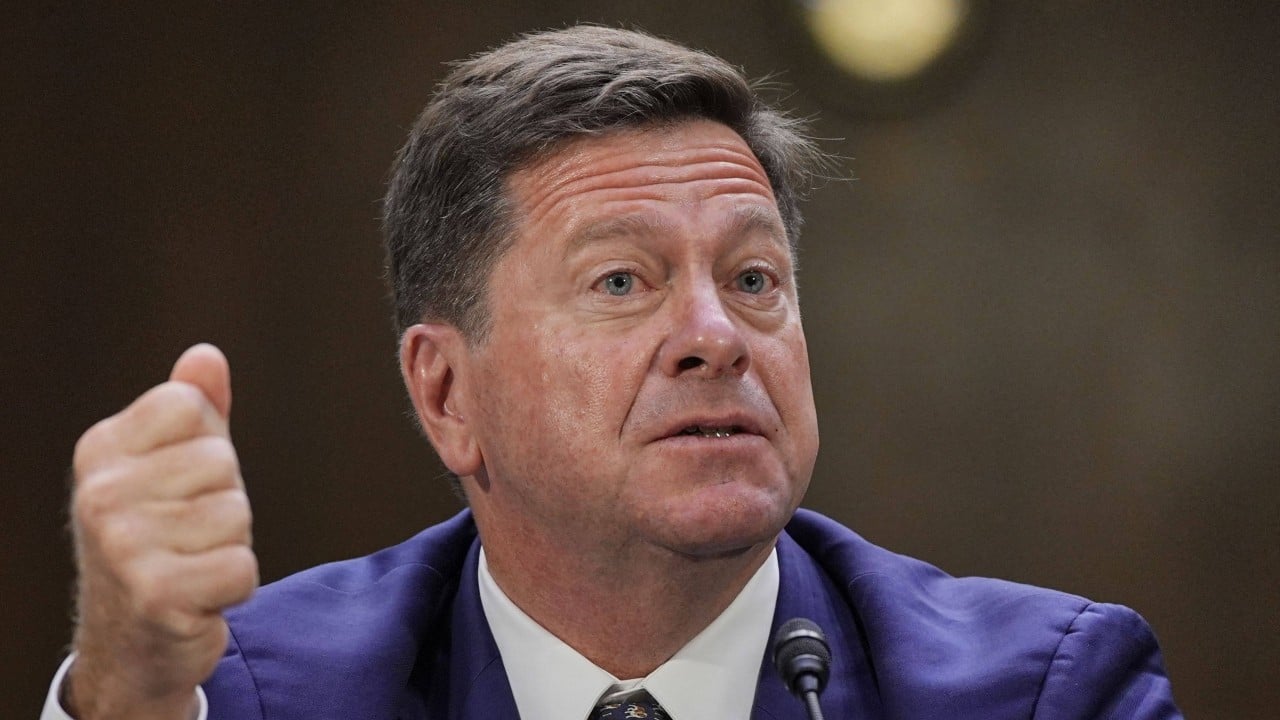
The pick of Jay Clayton to run the nation's intelligence apparatus raised plenty of eyebrows. He is a Wall Street lawyer and the former head of the Securities and Exchange Commission, not a seasoned spy. But during his Senate confirmation hearing, Clayton laid out exactly why his financial background makes him the perfect fit for a new era of cold war.
National security is no longer just about satellites, stealth fighters, and boots on the ground. It is about capital flows, supply chains, and economic coercion. Clayton told lawmakers that his experience at the SEC will allow him to be extremely helpful in using economic strategies against America's toughest adversaries, with China sitting right at the top of that list.
This signals a massive shift in how the United States intends to handle its intelligence priorities. For years, the intelligence community treated economic espionage as a secondary concern, a sideshow to military threats. Under Clayton, Wall Street logic is moving directly into the situation room.
Spies and Balance Sheets
During his testimony before the Senate Intelligence Committee, Clayton made a simple but powerful point: the most formidable threat actors are the ones with the deepest pockets.
"Adversaries don't just look for traditional ways to harm Americans. They look for economic ways to do it."
For decades, the Director of National Intelligence oversaw an apparatus designed to count nuclear warheads and intercept military communications. Today, the battlefield is the global financial system. When Beijing weaponizes its control over rare earth elements, or when Chinese state-backed firms acquire sensitive Western technology companies, the threat is purely economic. Yet, the fallout is entirely geopolitical.
Clayton argued that the intelligence community must get better at predicting the financial consequences of national security decisions. If the White House slaps a massive tariff on an adversary, what is the countermove? If a Chinese company is blacklisted, where will they divert their capital? These are questions that a career intelligence officer might struggle to answer, but they are second nature to a corporate lawyer who spent years policing public markets.
Why a Financial Cop Fits the Intel World
Skeptics argue that Clayton lacks the operational espionage background needed to run seventeen distinct intelligence agencies. They worry he will get lost in the weeds of covert operations and military intelligence.
But that misses the broader trajectory of global conflict.
China does not just rely on traditional spies. They use state-subsidized corporations, venture capital, and joint ventures to extract intellectual property and build dominance in critical sectors like artificial intelligence and green energy. To counter this, Washington needs to understand the plumbing of global finance. Clayton spent his career analyzing balance sheets, tracking corporate ownership structures, and monitoring illicit capital flows. He knows how to follow the money.
His appointment shows that the Trump administration views economic defense as a core pillar of national security, not just a tool for the Treasury Department.
Fighting Back on the Economic Front
So, what does this look like in practice?
We can expect a much more aggressive use of financial intelligence to block Chinese investments in critical infrastructure. Under Clayton, the intelligence community will likely work hand-in-glove with bodies like the Committee on Foreign Investment in the United States (CFIUS) to spot Trojan horse investments before they happen.
We will also see a push to expose how Beijing uses state capital to distort global markets and fund its military expansion. Clayton wants the intelligence community to provide clear, actionable data on these financial maneuvers so policymakers can craft targeted sanctions and export controls that actually bite.
It is a high-stakes gamble. Treating the global economy as a permanent intelligence battleground carries real risks of collateral damage for American businesses. But in a world where economic power is the ultimate weapon, leaving Wall Street expertise out of the intelligence loop is a luxury the U.S. can no longer afford.
Keep a close eye on how Clayton restructures the DNI office once confirmed. The traditional divisions between economic policy and national intelligence are about to vanish entirely.
For a deeper dive into the geopolitical shifts currently reshaping Washington's approach to Asian security and trade, you can watch this analysis on how China's rise is shaping strategy. This video provides crucial context on the shifting balance of power and why economic deterrence has become the frontline of the modern geopolitical arena.