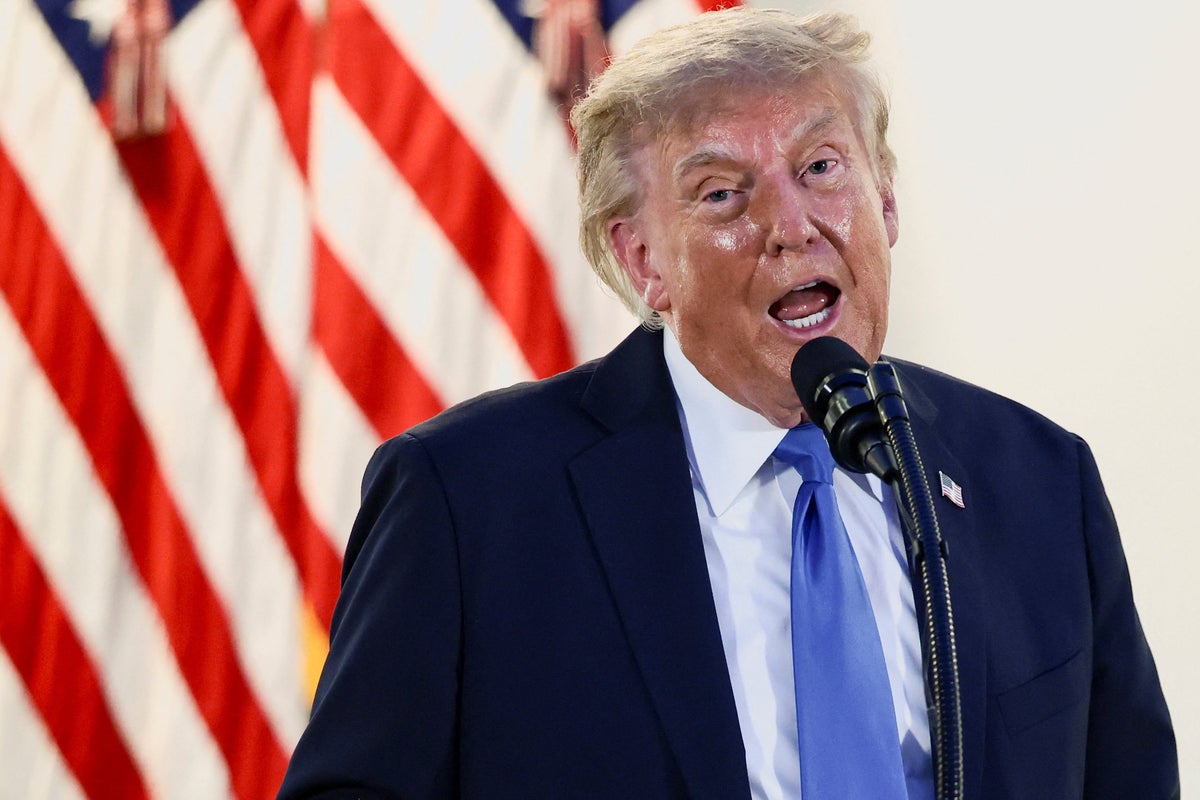
The media went hysterical when Donald Trump shrugged off a fresh wave of military strikes as a mere love tap. Pundits clutched their pearls on cable news, screaming about reckless rhetoric, diminished diplomatic norms, and the degradation of serious geopolitical discourse. They missed the mark entirely.
Strip away the vulgarity and the characteristic hyperbole. Look at the cold mechanics of modern deterrence theory. Trump did not minimize the violence out of ignorance or callousness. He exposed the dirty secret of modern superpower conflict that nobody in Washington wants to admit out loud.
We live in an era where kinetic exchanges between nuclear-armed states and regional hegemons are no longer measured by total war outcomes. They are measured by bandwidth, message discipline, and controlled escalation. Calling a strike a love tap is not a joke. It is a calculated signaling mechanism designed to reset the psychological baseline of the adversary.
Standard commentary treats every missile launch as a step on an inevitable escalator toward total annihilation. That is lazy thinking. It assumes a linear progression of violence where actor A strikes, actor B retaliates harder, and soon the world burns. Real-world crisis management does not work like that. Deterrence operates on thresholds of pain, communication channels, and calculated ambiguity.
When a commander-in-chief labels a multi-million-dollar bombing campaign a love tap, he is sending a specific message to Tehran. He is saying your defenses failed, our reach is absolute, and yet we still have massive amounts of untapped capacity left in reserve. It communicates strength by demonstrating restraint, wrapped in language designed to humiliate the recipient while keeping them off balance.
For decades, the foreign policy establishment operated under the comforting delusion of predictable escalation ladders. War games at the Pentagon assumed neat little steps: diplomatic protest, economic sanctions, warning shots, limited strikes, and total war. This academic model is completely broken. Modern hybrid conflict operates in a perpetual grey zone.
Imagine a scenario where a state actor continuously tests the boundaries of engagement through proxy networks, cyber attacks, and targeted sabotage, knowing that the defender is paralyzed by the fear of crossing an arbitrary escalation threshold. That is the trap Washington has been stuck in for twenty years. The conventional playbook says you respond proportionally to avoid rocking the boat. Proportionality in a grey zone is a losing strategy. It invites attrition.
Trump’s blunt framing shatters that paralysis. By trivializing the scale of the strike, he effectively lowers the psychological value of the adversary's retaliatory options. If the attack was just a love tap, then any proportionate retaliation by the other side looks petty, weak, and disproportionately hysterical. It flips the narrative script.
The establishment hates this because it bypasses their centuries-old diplomatic vocabulary. Career diplomats rely on vague euphemisms like kinetic action, targeted response, and proportional measures to obscure the brutal reality of state violence. When someone cuts through the diplomatic grease with crude language, it threatens the entire apparatus of institutional self-justification.
Let us look at the data from recent flashpoints. When strikes are framed with massive solemnity and moral weight, the adversary feels compelled to save face with a massive counter-strike to match the rhetorical gravity. When strikes are mocked or minimized by the aggressor, the adversary faces a bizarre psychological dilemma. Do they escalate over an event that the other side insists is trivial, thereby proving the other side's point about their weakness, or do they swallow the hit and look impotent to their domestic base?
That is not diplomatic malpractice. That is applied psychology on a geopolitical scale.
Critics argue that this style of communication erodes international norms. Which norms? The ones that allowed endless proxy wars to drain American blood and treasure for two decades while keeping defense contractors fat and happy? The rules-based international order has been a convenient fiction used to justify perpetual interventionism without clear objectives.
The traditional defense analyst will tell you that stability requires predictable signaling and strict adherence to established protocols. History shows the exact opposite. Stability occurs when the cost of defiance becomes painfully, unpredictably high.
Look closely at how Tehran reacted behind closed doors compared to their public pronouncements. Publicly, they vowed crushing revenge. Privately, they scrambled to secure new backchannels to prevent the next wave. Why? Because unpredictable actors terrify bureaucratic autocracies. Bureaucracies plan for rational actors who follow predictable rules. They freeze when confronted with a leadership style that treats high-stakes military strikes with the casual disdain of a bad Yelp review.
This brings us to the core misconception dominating foreign desk coverage right now. The belief that rhetoric shapes reality in these conflicts. It does not. Reality shapes rhetoric, and rhetoric is deployed as a weapon. Trump’s phrasing was not a slip of the tongue. It was a strategic asset designed to degrade the adversary's ability to manufacture a proportional outrage cycle.
When you strip away the institutional hand-wringing, you realize that the most effective deterrents often look chaotic to the observers who have a vested interest in order. The foreign policy commentariat wants a clean, orderly war where everyone plays by the rules written in Georgetown seminar rooms. War has never been clean. It is an exercise in raw will, deception, and psychological dominance.
Stop looking at modern geopolitical crises through the lens of institutional etiquette. Start looking at them as high-stakes negotiations where the rules are written in real-time by whoever is willing to break the table.
The next time a major power exchange happens, ignore the pearl-clutching headlines dissecting the tone of the commander-in-chief. Pay attention to what the adversary stops doing the morning after. That is where the actual metric of success lives.
Everything else is just noise designed to keep the pundit class employed.


