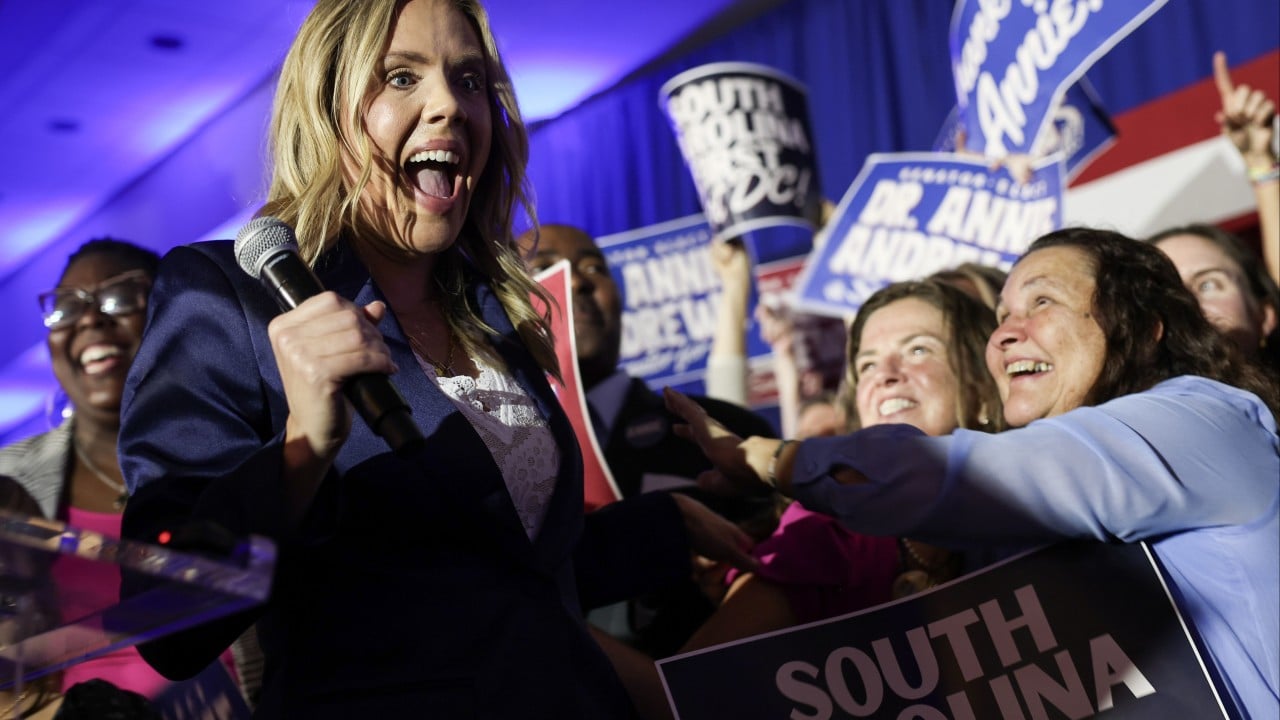
Troy Jackson defeated five-term Republican Senator Susan Collins in Maine’s 2026 Senate race, ending a three-decade political streak and expanding the Democratic majority in the upper chamber. The former Maine Senate President, a fifth-generation logger from Aroostook County, toppled one of Washington's most entrenched institutionalists by flipping rural, working-class towns that had kept Collins insulated from national partisan waves since 1996.
For thirty years, political analysts treated Susan Collins as an electoral anomaly. She survived blue waves, red waves, and a brutal 2020 challenge from Sara Gideon by relying on a simple formula: combine suburban moderates in southern Maine with fiercely loyal, ticket-splitting voters in the state's Second Congressional District. In 2026, that coalition finally fractured. Jackson did not beat Collins by running up the score in Portland, though he certainly did that. He beat her by dismantling her firewall in the north, stripping away the exact blue-collar voters who had long viewed her as a reliable hometown advocate.
The Myth of the Invincible Moderate
To understand how Collins lost, you have to look at why she won for so long. For decades, her brand rested on the concept of the appropriations powerhouse. As a senior member, and eventually chair, of the Senate Appropriations Committee, Collins delivered billions of federal dollars to Maine—funding Bath Iron Works destroyers, rural broadband, and small-town infrastructure. Voters overlooked her controversial votes, such as her 2018 confirmation of Supreme Court Justice Brett Kavanaugh, because they believed her seniority translated directly into local paychecks.
That transactional relationship corroded over time. By 2026, the gap between federal earmarks and household economic reality had grown too wide for press releases to bridge. Voters in mill towns and farming communities watched the cost of heating oil, healthcare, and housing outpace wage growth. When Collins pointed to her committee seniority, Jackson countered with a message rooted in immediate economic survival.
Jackson’s biography did the heavy lifting that millions of dollars in negative attack ads never could. In 2020, Democrats spent roughly $70 million trying to paint Collins as a partisan loyalist, yet Sara Gideon—a polished, affluent former House Speaker from coastal Freeport—struggled to connect with voters north of Augusta. Collins easily framed Gideon as an out-of-touch southern liberal backed by out-of-state cash.
That attack bounced right off Troy Jackson. You cannot credibly call a man from Allagash—a town of fewer than 300 people near the Canadian border—a coastal elite. Jackson still drives a pickup truck, still knows the price of diesel and pulpwood, and speaks with the unvarnished cadence of northern Maine. When he criticized corporate consolidation in the timber and healthcare industries, voters heard a neighbor, not a focus-grouped talking point.
The Two Maines Strategy Collapses
Maine politics is famously divided into two distinct worlds. The First Congressional District encompasses the wealthier, faster-growing southern coast, stretching from Kittery through Portland to Midcoast. It votes reliably Democratic. The Second Congressional District covers the vast, rural interior and northern woods—a sprawling territory larger than the rest of New England combined. It voted for Donald Trump three times.
Collins’s political survival depended on a delicate balancing act between these two regions. She needed to lose the First District by a manageable margin while winning the Second District decisively.
| Region | Traditional Collins Formula | The 2026 Breakdown |
|---|---|---|
| Southern Coast (CD-1) | Lose by 10 to 15 points; hold suburban moderates in Cumberland and York counties. | Suburban voters drifted further left over reproductive rights and judicial appointments, widening the Democratic margin. |
| Rural North and Interior (CD-2) | Win by 15 to 20 points; dominate Aroostook, Penobscot, and Washington counties. | Jackson eroded her rural lead, winning his home turf in Aroostook and cutting deep into her margins across former mill towns. |
| Midcoast and Central (Kennebec/Knox) | Split the ticket-switchers; rely on personal brand recognition and local constituent services. | Economic populism on healthcare and labor issues pulled independent voters toward Jackson. |
The math stopped working for Collins once Jackson locked down the blue-collar populist lane. Throughout his tenure in the Maine Legislature, Jackson built a record that defied neat ideological categorization. He championed aggressive labor protections, lower prescription drug prices, and collective bargaining rights for loggers and agricultural workers—issues that resonated deeply in conservative towns. At the same time, he broke with national Democratic orthodoxy on several rural land-use and firearm measures, inoculating himself against standard Republican culture-war attacks.
Republicans spent heavily trying to tie Jackson to national Democratic leadership in Washington. It fell flat. Voters in places like Millinocket, Rumford, and Presque Isle knew Jackson's record intimately because they had watched him fight paper companies and insurance giants in Augusta for twenty years.
Healthcare and the Rural Hospital Crisis
If there was a single policy issue that broke the back of the Collins campaign, it was the deteriorating state of rural healthcare access. Between 2020 and 2026, Maine saw a wave of maternity ward closures, shrinking emergency services, and acute nursing shortages across its rural counties. Residents in towns like Calais and Machias faced two-hour drives for basic specialized care.
Collins campaigned heavily on her efforts to secure federal grants for rural clinics. Jackson argued that patchwork grants were meaningless while private equity firms and massive hospital conglomerates consolidated care and shuttered local facilities. He framed healthcare not as a budget line item to be managed in Washington, but as an existential threat to rural survival.
For elderly voters—a massive demographic in the nation's oldest state by median age—this hit home. Many seniors had voted for Collins six times. They liked her constituent service offices, which were famously efficient at sorting out lost Social Security checks and Medicare paperwork. Yet when local clinics closed their doors, constituent service felt like a band-aid on a severed artery. Jackson’s push for aggressive Medicare expansion, lower insulin and prescription caps, and strict oversight of hospital mergers gave longtime Collins loyalists a concrete reason to switch sides.
Why Institutional Seniority Lost Its Leverage
The 2026 race also exposed a broader shift in how American voters value political tenure. For generations, states with small populations—like Maine, Alaska, and West Virginia—clung to long-serving senators regardless of party. The logic was straightforward: in a body governed by seniority, throwing out a chair of a major committee meant voluntarily disarming your state in federal budget fights.
Collins leaned hard on this argument. Her campaign warned that replacing her with a freshman Democrat would cost Maine millions in defense contracts for Bath Iron Works and Portsmouth Naval Shipyard, as well as agricultural subsidies for blueberry and potato farmers.
Voters called her bluff. Two structural realities undermined the seniority pitch:
- The Shift to Formula Funding: Modern federal infrastructure and energy spending increasingly flows through automated formulas and competitive agency grants rather than traditional congressional earmarks. Voters recognized that Maine would still receive federal highway and Medicaid funds regardless of who sat on the Appropriations Committee.
- Nationalized Polarization: In an era of razor-thin Senate majorities, voters increasingly view a senator's primary job not as bringing home pork, but as determining which party controls the chamber's agenda, judicial confirmations, and committee chairs.
When Collins voted with Republicans on key procedural hurdles or judicial nominees, southern Maine voters punished her for enabling the GOP agenda. When she broke with Republicans on high-profile bipartisan bills, conservative voters in the Second District viewed her as unreliable. By 2026, attempting to stand in the middle of the road simply meant getting hit by traffic from both directions.
The Ground Game That Outlasted Out-of-State Money
National Democratic strategists learned a painful lesson in 2020 when they flooded Maine with outside consultants, glossy mailers, and generic television spots. That campaign alienated independent Mainers who pride themselves on retail politics and resent outside interference.
Jackson’s 2026 operation deliberately rejected that playbook. While national fundraising still poured into the race—making it one of the most expensive per-capita Senate contests in American history—the campaign's operational control stayed firmly in Maine hands. Jackson relied heavily on organized labor unions, local county committees, and peer-to-peer organizing rather than expensive television saturation.
Union halls became the backbone of the Democratic turnout machine. Paperworkers, teachers, nurses, and building trades members ran thousands of local canvassing shifts. Because Jackson had spent years walking picket lines alongside these exact unions, their endorsement was not a transactional press release; it was a mobilized army of neighbors knocking on neighbors' doors.
Meanwhile, the campaign utilized ranked-choice voting to its full strategic advantage. Maine’s electoral system requires a candidate to win an outright majority. If no candidate clears 50 percent on the first ballot, the last-place finisher is eliminated and their votes are redistributed until someone crosses the threshold. In 2020, Collins cleared 50 percent on the first round, rendering ranked-choice voting moot. In 2026, a crowded field that included prominent independent candidates siphoned away disillusioned moderates and conservatives. When second-choice preferences were tabulated, independent voters broke decisively toward Jackson, pushing him past the 50 percent mark and sealing Collins’s defeat.
What Jackson’s Victory Means for the Senate Majority
For Senate Democrats, picking up Maine is more than a symbolic trophy; it provides crucial structural breathing room. Throughout the preceding congressional session, a razor-thin margin meant that a single absent senator or reluctant centrist could stall judicial confirmations, cabinet appointments, and budget reconciliation bills. Adding Jackson expands that buffer, insulating the caucus from the kind of intra-party gridlock that repeatedly derailed legislative priorities over the past six years.
Yet Jackson will not be a quiet backbencher who simply rubber-stamps leadership memos. His entire career in Augusta was defined by a willingness to clash with governors of both parties—including Democratic Governor Janet Mills—whenever he felt executive branch policies ignored working-class Mainers. He veto-overrode his own party's governor on labor bills, utility regulations, and agricultural protections.
Democratic leadership in Washington is gaining a reliable vote on judicial nominees, voting rights, and union protections, but they are also inheriting an unapologetic economic populist who views corporate trade deals and Wall Street deregulation with deep hostility. On issues ranging from timber tariffs to pharmaceutical pricing, Jackson is far more likely to align with the chamber's progressive wing than with its corporate-friendly moderates.
The extinction of the old-school New England Republican is now nearly complete. With Collins gone, the GOP loses its last Senate foothold in the region—a party tradition that once produced giants like Margaret Chase Smith, Olympia Snowe, and William Cohen. Collins tried to keep that moderate tradition alive inside a national Republican Party that no longer had any use for it, and inside a state that finally decided authenticity mattered more than seniority.