The glow of a dual-monitor setup at 2:00 AM has a specific, sterile quality. It bleeds a cold blue light onto empty desks, discarded coffee cups, and the tired face of an engineer trying to hit a deadline. For Sarah, a mid-level software developer at a logistics firm in Ohio, that glow was her lifeline. She was staring at a wall of broken code, a critical shipping algorithm that refused to cooperate. Under immense pressure from executives who only cared about the morning launch, she did what thousands of American workers do every single day. She copied the broken script, pasted it into an open-source artificial intelligence tool, and pressed enter.
Within seconds, the AI spit out a flawless fix. Clean. Efficient. Beautiful. Sarah blinked in relief, merged the code into her company's main repository, shut her laptop, and went home to sleep. Read more on a connected subject: this related article.
She had no idea she had just handed a piece of critical American infrastructure over to a server in Beijing.
Sarah is not a spy. She is not a saboteur. She is a hard-working American trying to survive a brutal corporate landscape. Yet, her midnight shortcut represents the exact flashpoint currently triggering panic alarms in the halls of Congress. Lawmakers are suddenly waking up to a stark reality: while the United States debated how to regulate Silicon Valley, Chinese artificial intelligence models quietly became the invisible nervous system of American business. Additional journalism by Engadget explores comparable perspectives on this issue.
The Open Source Backdoor
The congressional scrutiny focusing on this phenomenon is not about overt cyber warfare or cinematic espionage. It is about something far more subtle. Capitalist efficiency.
Building advanced AI models requires an unimaginable amount of money, computing power, and specialized chips. For an average American enterprise—whether a regional bank, a hospital network, or a manufacturing plant—developing a proprietary large language model from scratch is financially impossible. They need off-the-shelf solutions.
Silicon Valley offers these solutions, but they come with hefty price tags and restrictive licensing agreements. Meanwhile, Chinese tech giants and research institutions have taken a radically different approach. They are giving their most advanced models away for free.
Through open-source platforms, models developed by companies like Alibaba, Tencent, and the state-backed Beijing Academy of Artificial Intelligence are readily available to anyone with an internet connection. They are not clunky imitations. In many benchmark tests tracking coding ability, multilingual processing, and mathematical reasoning, these Chinese models match or outright outperform Western equivalents.
To a corporate chief technology officer looking at a quarterly budget, it looks like a miracle. High-end AI capabilities with zero licensing fees.
But in the digital world, when the product is free, the currency is something far more valuable than cash. It is data.
Consider the mechanics of how these models function. An AI is not a static piece of software like a calculator. It is a living, learning system that requires constant feeding. Every time Sarah logs a piece of proprietary corporate code into one of these systems to troubleshoot an error, or every time a financial analyst uploads a spreadsheet to summarize market trends, that information is digested. It trains the next iteration of the model.
The real anxiety gripping Washington stems from China's National Intelligence Law of 2017. Under this legislation, any domestic organization or citizen is legally mandated to support, assist, and cooperate with state intelligence work. If Beijing requests the data flowing through these models, Chinese companies have no legal mechanism to say no.
We are not talking about stolen credit card numbers. We are talking about the structural blueprints of our economy. The proprietary logistical routes of shipping firms. The internal diagnostic patterns of healthcare systems. The foundational code of financial trading platforms.
The Illusion of the Local Machine
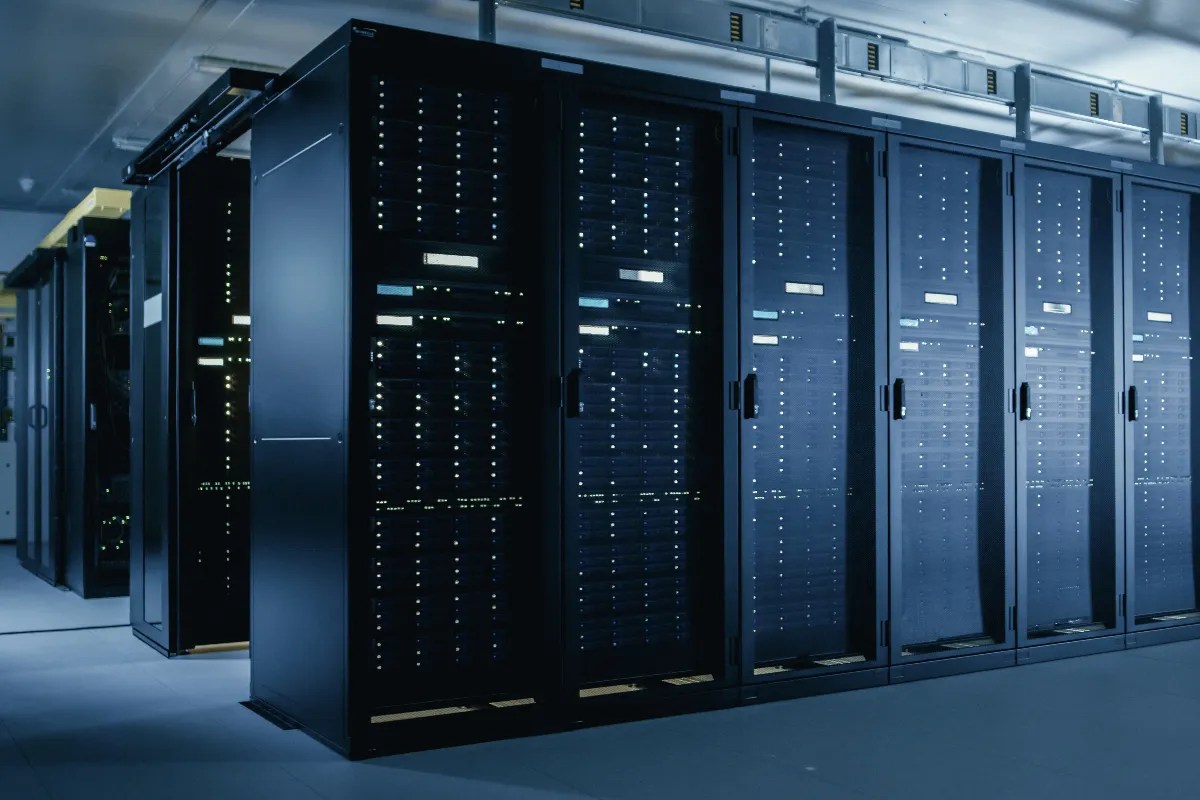
When confronted with these risks, corporate tech leaders often point to a defense mechanism known as local deployment. They argue that they do not use public web interfaces. Instead, they download the open-source weight files of Chinese models and run them internally on their own private servers, effectively cutting off the outside world.
It sounds airtight. It feels safe. It is largely an illusion.
Modern software is a chaotic web of dependencies. An AI model running on a local server still requires regular updates, security patches, and fine-tuning datasets. Sophisticated code can possess hidden vulnerabilities—intentional or accidental—that trigger telemetry call-outs, sending micro-packets of diagnostic data back to original servers under the guise of routine performance metrics.
Even without malicious backdoors, the cultural and ideological alignment embedded within these models poses a systemic risk. AI models are not objective arbiters of truth; they are mirrors of the data used to train them. A model trained under strict state censorship carries specific biases regarding historical events, geopolitical boundaries, and economic philosophies.
When American corporations rely on these systems to automate compliance, write corporate policy, or filter hiring pools, they are subtly importing a foreign regulatory framework into American decision-making structures. The software shapes the thought process of the company using it.
The Regulatory Blind Spot
Washington is currently scrambling because our existing defensive playbook is entirely obsolete. For decades, export controls and trade sanctions were designed to stop physical things from moving. We stopped advanced microchips from entering China. We restricted the sale of sensitive hardware.
How do you enforce a trade sanction against a file that can be downloaded via a VPN in thirty seconds?
Lawmakers are realizing that the traditional tools of economic statecraft are useless against the gravity of open-source software. If Congress bans American companies from using specific foreign AI models, they risk crippling the competitiveness of smaller businesses that depend on those free tools to survive against massive conglomerates. If they do nothing, they allow a quiet, deep-seated integration of foreign-controlled software into the bedrock of domestic commerce.
The tension is palpable inside congressional hearing rooms. On one side sit national security experts warning of systemic vulnerability. On the other sit economic pragmatists pointing out that American innovation is currently running on borrowed code.
The Code We Keep
The solution cannot be found in a simple ban. The internet does not work that way, and neither does modern business.
To solve this, American enterprises must move away from the dangerous allure of convenient ignorance. We need a fundamental shift in how we view digital infrastructure. Software cannot be treated as a disposable utility, like electricity or water, where the origin does not matter as long as the lights turn on.
Companies must implement strict software bill of materials protocols, tracking the lineage of every algorithm they employ with the same scrutiny a pharmaceutical company uses to track chemical ingredients. We must invest heavily in domestic open-source alternatives, ensuring that the free tools available to the next generation of engineers do not carry hidden geopolitical strings.
The stakes are entirely invisible, which makes them incredibly dangerous. There are no smoke stacks, no marching armies, and no dramatic sirens. There is only Sarah, sitting in her quiet office, staring at a screen that tells her exactly what she wants to hear, unaware of who is listening on the other side.