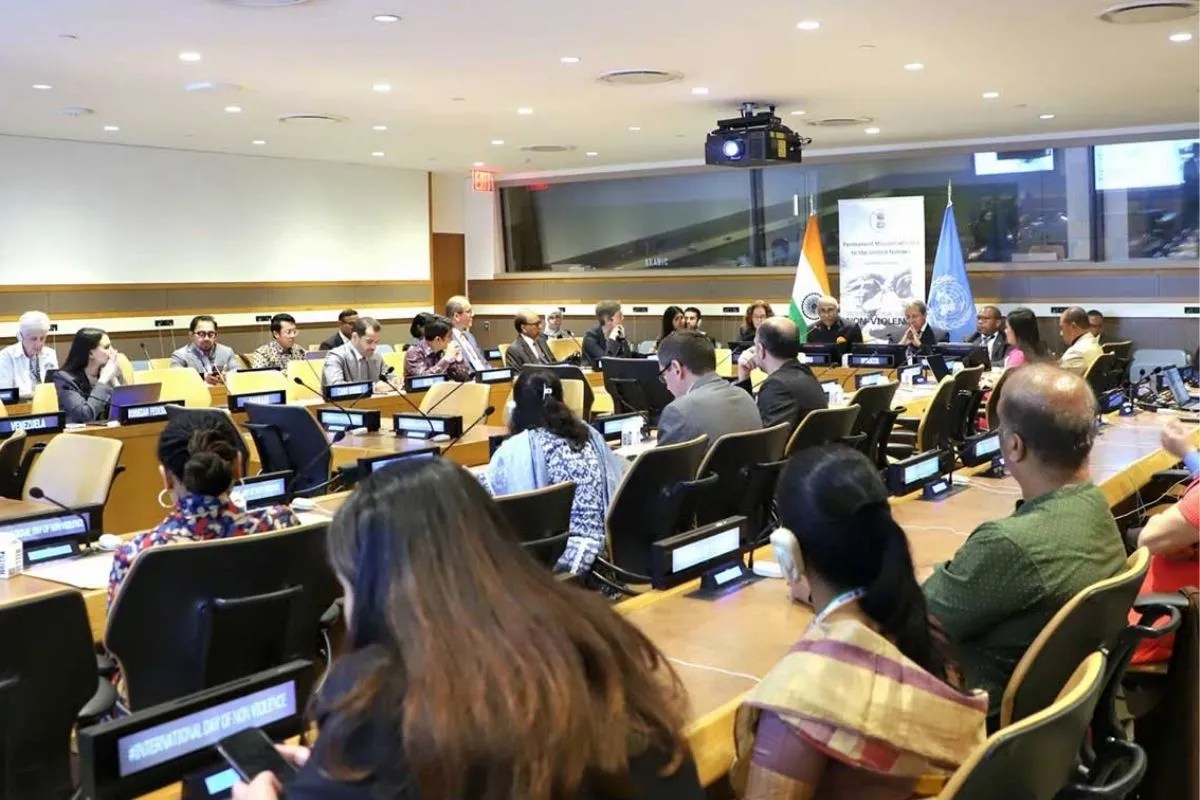
We love our heroes packaged neatly for a twenty-second news cycle. Give us a pilot, a diplomatic nod at the United Nations, a mention of high-stakes prime ministerial phone calls, and an inspiring headline about the pinnacle of non-violence. It makes for fantastic television. It strokes collective pride. And it completely misses why modern peace operations actually fail or succeed.
Let us strip away the emotional varnish of the recent diplomatic applause surrounding Captain Smit Machhar and look at the raw mechanics of international intervention. The lazy consensus tells us that individual acts of extraordinary composure in high-risk zones validate the entire architecture of global peacekeeping. That is a comforting fairy tale. The truth is much colder: tactical heroism is almost always a symptom of systemic failure. If a pilot or a blue helmet has to rely on razor-thin margins of situational grace to avert catastrophe, the strategic machinery upstream has already broken down.
I have spent enough time dissecting operational debriefs from conflict zones to know the dirty secret of modern security mandates. When politicians praise restraint, they are often papering over structural ambiguity. We treat restraint as a proactive strategy when it is frequently just a defensive reaction to unclear rules of engagement.
The Comforting Myth of Clean Interventions
The standard narrative around United Nations deployments leans heavily on the mythology of moral authority. The idea is simple: wave a blue flag, project neutrality, and hostile actors will automatically lower their weapons out of sheer respect for international law.
Ask anyone who has actually managed logistics in a contested airspace or a volatile buffer zone how long moral authority lasts when the opposing factions run out of patience. It evaporates the second economic interests or tactical survival overrides optics.
When public discourse reduces complex geopolitical friction to a Hollywood-style vignette about a single captain's cool head, it performs a disservice to actual risk management. It encourages a culture of complacency. We start believing that superior national values can substitute for redundant communications channels, hard intelligence, and unambiguous deterrence.
Why Restraint is Often a Strategic Luxury
Let us redefine the concept of peace through strength. True deterrence is rarely cinematic. It is boring, expensive, and relentlessly methodical. It involves thousands of hours of joint drills, ironclad communication protocols between hostile command centers, and zero ambiguity about what happens if a red line is crossed.
When we celebrate a near-miss or a tense standoff resolved by last-minute diplomacy as a triumph of ahimsa, we are romanticizing brinkmanship. We are saying that running right up to the edge of an international incident and pulling back at the eleventh hour is a best-case scenario. It is not. It is a catastrophic failure of early-stage de-escalation.
Imagine a scenario where supply lines are choked, local militias are testing the perimeter, and political leadership back home is paralyzed by domestic optics. In that environment, telling a pilot or a commander to simply display maximum restraint is a recipe for a body bag. Restraint without leverage is just surrender delivered slowly.
Dismantling the Protocol Paradox
People always ask whether international bodies should expand mandates or pull back entirely. That is the wrong question. The real issue is the profound disconnect between political theater and tactical reality.
Political leaders treat peace missions as diplomatic messaging boards. Troop-contributing nations treat them as professional development for their officer corps or diplomatic bargaining chips. Meanwhile, the personnel on the ground are left navigating shifting mandates written by bureaucrats who have never slept within five miles of a contested mortar range.
If we want to honor the professionalism of people like Captain Machhar, we need to stop using their survival as proof that the system works. The system is leaky, reactive, and chronically under-resourced for actual threat mitigation. We rely on individual excellence because our collective frameworks are terrified of institutional accountability.
The Uncomfortable Trade-Offs
Adopting this perspective means abandoning our emotional attachment to feel-good headlines. It means admitting that international diplomacy often works best when nobody is watching, and fails hardest when it becomes a prime-time performance.
The downside of this hardheaded view is obvious: it strips away the comforting illusions that make public support for international missions easy to sustain. People do not mobilize for institutional redundancy and redundant satellite uplinks the way they mobilize for a patriotic profile of a brave pilot.
Stop confusing good PR with good strategy. Until we fix the architecture, every near-miss is just borrowed time.