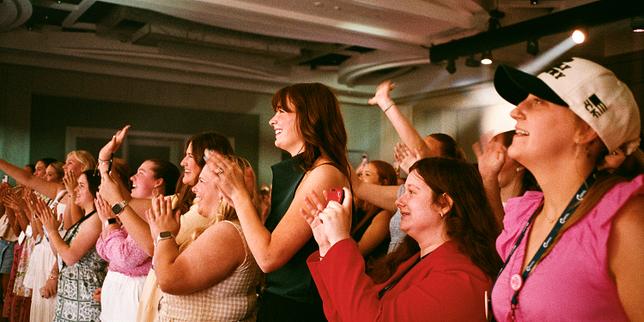
The media is obsessed with the San Antonio "tradwife" convention for all the wrong reasons.
Mainstream commentators look at women gathering to discuss submissiveness, home-cooked meals, and biblical marriage, and they see a dangerous regression. They write breathless exposes painting these women as victims of a patriarchal cult or brainwashed agents of far-right political agendas. They look at the linen dresses and sourdough starters and diagnose it as collective delusion.
They are completely missing the point.
The tradwife movement isn’t a retreat into the 1950s. It is a highly rational, hyper-modern opt-out strategy from the exhausting reality of late-stage corporate capitalism. It is a labor strike disguised as domesticity.
The Lazy Consensus of the Dual-Income Trap
For decades, the dominant cultural narrative promised that the path to female liberation required entering the corporate hierarchy. Success meant a 40-hour workweek, climbing the ladder, and outsourcing domestic labor to underpaid gig workers.
But let’s look at the actual data. Sociologists like Elizabeth Warren long ago identified the "two-income trap." When dual incomes became the baseline expectation, housing markets, childcare costs, and general inflation adjusted accordingly.
The Reality Check: Having both partners work didn't double a family's discretionary wealth; it simply raised the financial floor required to survive.
Today’s standard deal for women is grueling:
- Perform 40 to 50 hours of emotional and intellectual labor for a manager who views you as an expendable line item.
- Commute through soul-crushing traffic.
- Pay up to 40% of your take-home pay to a childcare facility to raise your kids.
- Return home to execute the "second shift" of cooking, cleaning, and administrative life management.
When a woman looks at that spreadsheet and decides to withdraw her labor from the corporate market, the media labels her "regressive." In any other context, refusing to participate in a system that extracts maximum energy for minimum real return is called a labor strike. The tradwife movement is exactly that—a total rejection of the corporate grindset.
Dismantling the "People Also Ask" Delusions
If you search for information on this movement, the questions clogging the search engines reveal a profound misunderstanding of human psychology and economics. Let’s correct the premise of these questions brutally.
"Are tradwives setting feminism back 70 years?"
This question assumes that feminism is a linear monolith where the only valid destination is a corporate cubicle. True autonomy means having the agency to choose your domain of mastery. If a woman decides her peak utility and happiness come from managing a private estate rather than optimizing a corporate supply chain, that is an exercise of choice. Forcing women into the labor market under the guise of liberation is just a different flavor of coercion.
"How do tradwives afford to live on one income?"
The mainstream media treats this as a financial impossibility or proof of hidden trust funds. It isn’t. It requires a radical restructuring of consumption. It means replacing the expensive conveniences of the dual-income lifestyle—prepared foods, outsourced childcare, premium convenience services—with intense, insourced domestic production. It’s an economic trade-off: trading market wages for massive cost mitigation.
"Is the movement safe for women financially?"
Here is where we must admit the genuine downside. Relying entirely on a spouse’s income is a high-risk financial strategy. If the marriage dissolves, the stay-at-home partner faces severe economic vulnerability due to a resume gap. I’ve seen women left entirely stranded because they treated dependency as a romance instead of a legal partnership. The smart women at these conventions know this; they manage the household finances like a CFO, ensuring assets are joint and protections are legally binding. It’s not about blind submission; it’s about risk management.
The Content Creation Hustle: Monetizing the Matriarchy
Let's strip away the romanticized nostalgia. The women leading the San Antonio convention aren't passive June Cleavers sitting in quiet isolation. They are savvy, hyper-connected digital entrepreneurs.
Step back and look at the mechanics. A top-tier tradwife influencer filming herself baking bread from scratch is operating a sophisticated media enterprise. She is scriptwriting, lighting, editing, and distributing content to millions of viewers. She is leveraging affiliate links for kitchenware, securing brand sponsorships, and driving traffic to monetized newsletters.
[Domestic Labor] ➔ [Aesthetic Content Capture] ➔ [Platform Distribution] ➔ [Monetization via Ad Revenue/Sponsorships]
This isn't a return to pre-industrial dependency. It is a highly modern pivot to the creator economy. They have successfully monetized the aesthetics of opting out. They are using the tools of the modern digital landscape to fund a lifestyle that rejects the modern corporate landscape. To call these women oppressed or unempowered is to completely misunderstand the nature of modern digital leverage.
The High Cost of the Corporate Opt-Out
Opting into this lifestyle requires a level of privilege and ruthless discipline that the aesthetic videos completely gloss over.
Insourcing your life means you are the janitor, the chef, the educator, and the daycare provider. The labor hour requirements are massive. The isolation can be paralyzing. When your workplace is your home, you never truly leave the office.
But for a growing cohort of women, that trade-off is vastly superior to the alternative. They would rather expend their life force building a stable, beautiful private sanctuary for people they love than burning their youth to help a tech company scale its quarterly revenue by 3%.
Stop viewing the San Antonio convention as a political regression or a vintage cosplay event. It is a symptom of a deep, systemic exhaustion with the modern workplace. It is an indictment of a corporate culture that demands everything and gives back nothing.
The tradwives aren't losing the plot. They looked at the corporate ladder, realized it was leaning against a burning building, and decided to walk away entirely.