Trademarking a voice does not stop a deepfake. It gives lawyers a nice invoice.
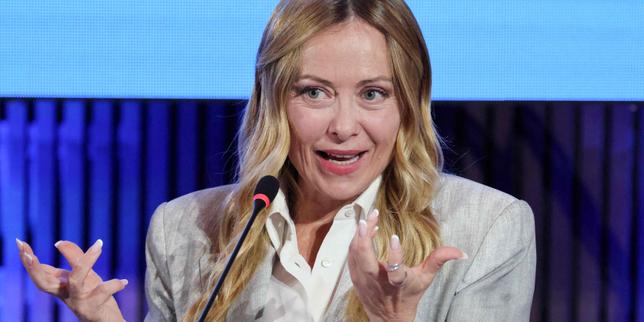
Read the standard coverage around Giorgia Meloni turning her vocal signature into intellectual property in Italy and you will see the exact same lazy consensus repeated everywhere. Politician registers voice as a trademark. Deepfakes are getting dangerous. Therefore, trademarking the voice protects against synthetic impersonation.
That logic is backwards. A trademark is a commercial source identifier. It tells consumers who made a product or who stands behind a commercial offering in the marketplace. It is not a cryptographic lock. It is not a technical filter. And it certainly does not stop a bad actor sitting on a laptop in another jurisdiction from running a speech synthesis model trained on ten seconds of press conference audio.
I have spent years watching executives, celebrities, and public figures throw money at legal wrappers thinking IP registrations equal security. I have seen companies blow six figures on defensive trademark filings and takedown retainers while ignoring how modern audio models actually work. When a synthetic clip goes viral at 8:00 AM on a Tuesday, a trademark certificate from an intellectual property office does not pull the audio out of people's ears by 8:05 AM.
If you want to understand why voice branding in politics is both smarter than critics claim and weaker than defenders pretend, you have to strip away the headlines and look at the mechanics.
Why Trademarking a Voice Sounds Smart and Still Misses the Threat
On paper, a vocal trademark looks like a tidy legal hook. Under European Union and Italian trademark rules, non-traditional marks such as sounds or vocal signatures can qualify for protection if they are distinctive and can be represented clearly on a register. When a high-profile leader puts a commercial or public-facing claim around their voice, they gain a structured right to police unauthorized commercial use in registered classes.
That creates real leverage in specific situations. Suppose a brand drops an ad using a cloned voice to pitch running shoes, energy drinks, or crypto tokens in Italy. Instead of arguing purely over defamation, right of publicity, or vague consumer confusion, the rightsholder already holds a registered mark tied to specific goods or services. Cease-and-desist letters hit harder when backed by a registration number. Platform compliance teams move faster when a clear trademark claim is on the table.
Here is where the lazy consensus goes off the rails. Most commentators treat commercial impersonation and political disinformation as the same problem. They are not.
A brand running a fake endorsement wants profit or attention attached to a product. That leaves a commercial trail, a target entity with assets, and a clear link to trademark classes. A disinformation account pushing a fabricated diplomatic statement, a doctored phone call, or a synthetic scandal wants chaos, outrage, or voter manipulation. Those actors rarely care about trademark infringement in Nice Classification classes. Many operate anonymously. Many sit outside national courts. By the time a trademark dispute clears procedural hurdles, the clip has already been clipped, translated, memed, and weaponized.
A trademark gives you a sword in court. Deepfake audio spreads in feeds. A court order after the damage is done is like locking the barn door after the horse has already bought a plane ticket.
What People Actually Get Wrong About Voice Cloning and Deepfakes
Whenever a story like this breaks, the same questions pop up in search bars and group chats. Almost all of them start from a flawed premise.
"Can trademarking a voice stop someone from making a deepfake of you?"
No. Trademark law regulates how marks are used in commerce and protects against likelihood of confusion regarding commercial origin. Making a synthetic voice file on your own hardware or posting a parody clip on a fringe forum does not magically become impossible because a trademark exists. Even when a claim is legally valid, enforcement happens after creation and distribution, not instead of them.
"Does a voice trademark cover political speech, satire, or news?"
Usually not cleanly, and often not at all. Free expression, satire, parody, and reporting on public officials sit right in the tension zone of speech and IP law. Turning a voice into a trademark does not hand a politician a magic veto over every unflattering imitation, satirical sketch, or commentary piece. Courts draw sharp lines between commercial exploitation and expressive or political speech. Anyone claiming a vocal trademark silences political mockery is selling a fairy tale.
"Isn't an audio watermark or AI detection tool better than a trademark?"
Better at what? Each tool solves a different piece of a messy puzzle.
Audio watermarks—such as imperceptible signals embedded during generation—help trace origin when compliant model providers use them. Detection models analyze spectral patterns, breathing cadence, micro-pauses, and acoustic artifacts to flag likely synthesis. Cryptographic provenance standards, like those championed by the Coalition for Content Provenance and Authenticity (C2PA), attach signed metadata to media files so downstream platforms can verify where content came from.
None of those are silver bullets either. Watermarks can be stripped or degraded by compression, background noise, or re-recording through a speaker. Detectors produce false positives and false negatives, especially on heavily edited clips or low-bitrate phone audio. Provenance tags get stripped the moment someone screen-records a video or uploads it through a pipeline that discards metadata.
Law without technical verification is slow. Tech without legal accountability is toothless. Pretending one replaces the other is amateur hour.
The Real Game Is Provenance, Leverage, and Speed
If you are a public figure, an executive, or a brand leader, asking "How do I stop deepfakes?" is the wrong question. You cannot stop every synthetic file from being generated. The right question is: How do I raise the cost of forgery, speed up takedowns, and make fake audio easy to discredit?
Think about how zero-shot voice cloning works today. Modern neural audio systems—built on concepts popularized by research teams at institutions like Meta, Microsoft, and specialized speech labs—can capture vocal timbre and prosody from remarkably short audio samples. Once a public figure has spoken on television for a decade, their acoustic signature is already out in the world. Treating a vocal trademark as the primary shield against synthesis ignores that reality.
Imagine a scenario where a fake audio clip circulates claiming a head of state privately threatened a neighboring country's central bank. Within twenty minutes, traders react, pundits argue, and clips spread across messaging apps. If the press office relies on a trademark filing, nothing useful happens in those critical twenty minutes. If the press office publishes official audio and video directly from verified channels tied to cryptographic provenance standards, maintains rapid-response channels with major platforms, and pairs clear legal notices with factual rebuttals, the forgery loses oxygen much faster.
Even then, there is a catch. Even a real recording can be falsely labeled a deepfake—the "liar's dividend," a concept highlighted by legal and information scholars like Danielle Citron and Bobby Chesney. When fake audio floods the zone, bad actors can dismiss genuine leaks or embarrassing recordings as AI fakes, while legitimate speakers struggle to prove authenticity in noisy environments.
My Unconventional Playbook for Protecting a Voice
I am going to say something unpopular in legal and PR circles: stop treating a voice trademark as a security strategy, and start treating it as a narrow commercial tripwire.
If you want real protection—whether for a political leader, a founder, or a media brand—do this instead:
- Register narrow, high-value commercial rights only where commercial confusion actually threatens you. Do not burn budget filing across dozens of irrelevant categories just to look tough in press releases. Focus on merchandise, media appearances, endorsements, and commercial services where copycats actually try to cash in.
- Build a pre-cleared rapid-response pipeline before a crisis hits. Have legal counsel, communications leads, and direct platform trust-and-safety escalation paths lined up ahead of time. Speed beats grandiosity every single time.
- Invest in cryptographic signing and official distribution channels. Publish official statements through verified accounts and formats that support provenance verification so audiences know what came straight from the source.
- Train your audience on skepticism without breeding total nihilism. Tell people what to look for, show how hoaxes get debunked, and avoid crying "deepfake" over every awkward moment. If you cry wolf too often, nobody believes you when a real synthetic attack lands.
- Pair legal remedies with platform accountability and statutory rules. Civil IP claims help against commercial infringers, while targeted rules on non-consensual impersonation, fraud, and election manipulation address harms that pure trademark law was never built to handle.
The Downside of Being Right About This
My contrarian stance comes with real trade-offs, and I will not pretend otherwise.
First, technical defenses and rapid-response workflows are unglamorous. "Prime Minister registers vocal trademark" makes a punchy headline. "Government updates media signing protocols and refines platform escalation workflows" puts people to sleep. Leaders often chase symbolic moves because symbolism travels fast in news cycles.
Second, relying heavily on platform takedowns and provenance standards creates its own dependencies. Major tech platforms change moderation policies, enforcement teams fluctuate, and bad actors adapt faster than compliance manuals. A legal right registered in one jurisdiction does not automatically bind every server hosting a clip overseas.
Third, pushing back too hard against legal tools can make organizations under-invest in deterrence. There is real value in making commercial impersonators think twice before slapping a recognizable voice onto an unauthorized ad. The mistake is confusing a commercial deterrent with a complete shield against information warfare.
A voice trademark is a fence post, not a fortress. Build the fence where it makes sense—and then go build the real walls somewhere else.