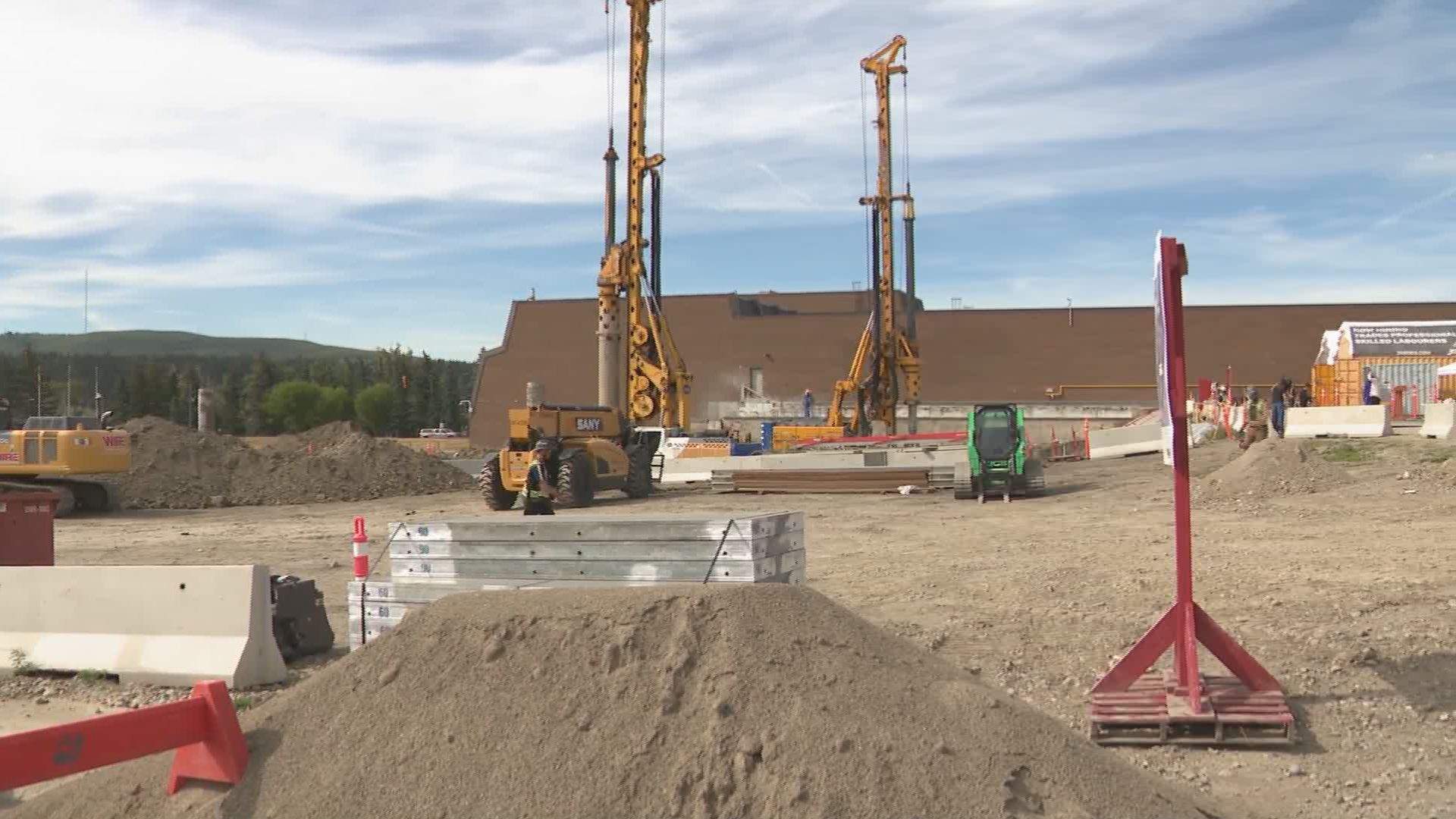
Another day, another shiny press conference standing in front of heavy machinery. Ottawa steps up. A cheque for twenty-nine million dollars gets handed over for the North Calgary Water Servicing project. Local politicians smile for the cameras, talking about growth, community resilience, and modern civilization miracles. Everyone claps. Everyone breathes a sigh of relief.
It is all a distraction. If you liked this piece, you might want to read: this related article.
Pouring federal cash into more miles of buried steel and concrete does not fix a broken municipal asset management model. It just subsidizes the city's ongoing refusal to price water honestly or hold developers accountable for the true cost of suburban expansion. Throwing money at pipe projects while ignoring the underlying math is municipal malpractice disguised as infrastructure investment.
The Consensus Trap
The lazy media narrative around these funding announcements follows a predictable script. Rapid population growth puts strain on old pipes. Pipes break. Politicians panic. Higher levels of government rescue the municipality with a multimillion-dollar check. Everyone treats the cash infusion as a triumph of cooperative federalism. For another angle on this development, refer to the recent update from Reuters.
Look past the feel-good quotes. The North Calgary Water Servicing project is designed to pump an extra one hundred million litres of daily drinking water to northern bedroom communities by 2029. It connects reservoirs like Top Hill and Big Hill East while expanding the Mountain View Pump Station. It sounds impressive.
It also enables more low-density sprawl on the absolute edges of the city.
Every new subdivision tacked onto the northern fringe requires exponential increases in linear infrastructure. More pipe miles per capita mean more maintenance liabilities down the road. When those pipes inevitably reach the end of their design life thirty or forty years from now, today's taxpayers will foot an even bigger replacement bill. Ottawa's check does not solve this structural deficit. It pours jet fuel on the fire.
The Economics of Buried Infrastructure
Municipalities treat water like an infinite, cheap utility because water rates are politically managed rather than economically rational. When water is artificially underpriced, consumption rises, and conservation incentives disappear. More importantly, capital replacement costs are hidden from the people buying homes in newly minted sprawling communities.
Let us define what is actually happening. Civil engineering asset management relies on a simple metric: lifecycle cost per connected user. In dense urban cores, a single main serves hundreds of multi-family units, spreading replacement and maintenance liabilities across a massive tax base. On the suburban fringe, a massive feeder main stretches miles across empty prairie to service a handful of low-density detached homes with large lawns.
When that pipe ruptures—as Calgary learned painfully with the Bearspaw feeder main disasters over the past couple of years—the repair bill hits the entire municipal tax base. The people living in the low-density fringe are not paying a proportional share of that long-term catastrophic risk. They are subsidized by downtown and inner-city neighborhoods whose infrastructure was paid off decades ago.
Injecting twenty-nine million dollars of federal cash into this loop preserves a failing status quo. It signals to city hall that they never have to balance their infrastructure ledger. Whenever expansion outpaces common sense, you just wait for an election cycle, secure a federal grant, and call it progress.
Imagining a Rational Alternative
Imagine a scenario where municipal leaders stopped treating water servicing as an endless growth subsidy.
What if every new dollar spent on water infrastructure required a corresponding increase in localized density targets? If a developer wants the city to run a new feeder main north, let them pay one hundred percent of the capital cost upfront, paired with mandatory graywater recycling systems and high-density zoning that actually covers the sixty-year lifecycle maintenance liability of that pipe.
Instead, cities rely on off-site levies that notoriously under-collect for long-term replacement costs. They build out fast, claim economic vitality, and leave future generations holding a multi-billion-dollar infrastructure deficit.
The federal Build Communities Strong Fund is marketed as a nation-building initiative. In practice, it often acts as a bailout mechanism for poor municipal balance sheets. It rewards sprawling land-use patterns that bankrupt cities across North America.
The Real Fix
Real leadership requires telling voters uncomfortable truths. Water is heavy. Moving it uphill costs immense amounts of energy. Keeping pressurized pipes from bursting requires relentless, unglamorous maintenance budgets funded by realistic user fees.
Stop celebrating capital grants that expand the footprint without securing the core. Demand that every new infrastructure dollar is tied to densification and financial self-sufficiency. Until Calgary prices water and growth honestly, another twenty-nine million dollars is just a down payment on the next crisis.