Silence.
That is the first thing you notice when a two-minute drill collapses in front of seventy thousand freezing people in East Rutherford, a heavy, suffocating quiet that swallows the stadium whole before the boos even have time to gather in the throats of the faithful. Don't forget to check out our earlier coverage on this related article.
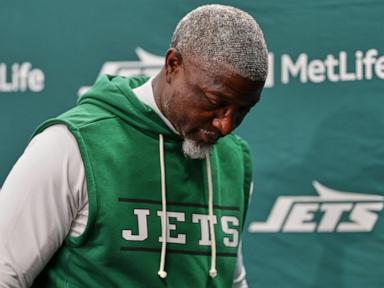
I have sat in the upper deck at MetLife Stadium in November with wind slicing off the Meadowlands marsh like a straight razor, watching grown men weep into cheap domestic beer because an offense burned thirty-eight seconds on a four-yard checkdown in the middle of the field with zero timeouts left. You do not forget that cold. It settles into the marrow of your bones and stays there until Tuesday morning, turning every Monday commute into a silent autopsy of what went wrong. For decades, New York Jets fans have treated football not as entertainment, but as a slow-motion study in heartbreak, and right now, the culprit wearing the headset is Aaron Glenn.
When the Jets handed the keys to Glenn, a beloved former cornerback who bled green and white during the Parcells era before cutting his coaching teeth under Dan Campbell in Detroit, the promise was visceral toughness. We were told this would be a team that bit kneecaps, dictated tempo, and imposed its will on opponents until they broke. What nobody mentioned during the introductory press conference was that grit cannot buy you an extra timeout when the play clock is bleeding down to zero in the fourth quarter. If you want more about the background of this, CBS Sports provides an excellent breakdown.
The Anatomy of a Slow-Motion Car Crash
To understand why clock management issues and two-minute troubles are giving Aaron Glenn and the Jets a tough time, you have to strip away the Xs and Os and look at human neurology under extreme duress. Picture a hypothetical Sunday afternoon—let us call it a composite of every agonizing fourth quarter we have endured this season. There is 1:54 remaining on the game clock. The Jets trail by four points, sitting on their own twenty-eight-yard line, staring at ninety-two yards of turf and a defense dropping seven men into coverage.
In theory, the math is simple. Every play takes roughly six seconds to run, meaning the offense has time for maybe twelve to fourteen snaps if they get out of bounds or spike the ball efficiently.
Reality is infinitely messier.
Down on the sideline, the headset crackles with static and competing voices. The offensive coordinator is screaming a twenty-word play call into the quarterback's helmet—a formation shift, a motion tag, a protection adjustment, and three route concepts—while eighty thousand decibels of crowd noise rattle the quarterback's teeth. By the time the huddle breaks, eleven seconds have evaporated into the autumn air. The quarterback steps under center, sees a disguised blitz, and checks to a run play up the gut to exploit a light box. It gains five yards. Nice play. Terrible math.
Because the tackle happened in bounds, the clock keeps churning. Nobody sprints to the line. Wide receivers jog back to their splits like they are running errands on a Tuesday afternoon, looking over to the sideline for signals that arrive three seconds too late. Twenty-six seconds vanish between snaps. Within two plays, a manageable ninety-second march has mutated into a desperate Hail Mary prayer from midfield.
This is where the transition from defensive coordinator to head coach reveals its sharpest teeth. For years, Aaron Glenn's entire professional existence revolved around stopping the clock—or rather, stopping the man trying to beat it. As a defensive play-caller in Detroit, his job was chaos creation, throwing exotic pressures at opposing quarterbacks to force bad throws and stalled drives. Being a head coach requires the exact opposite temperament during the final two minutes of a half. You are no longer the arsonist; you are the air traffic controller trying to land three planes on one runway during a thunderstorm while the fuel gauges flash red.
Why Smart Coaches Panic When the Red Numbers Blink
Critics love to scream at their televisions when a coach burns a timeout before a third-and-seven in the third quarter, or hoards all three timeouts like rare gold coins until there are nineteen seconds left and the game is already out of reach. I used to be one of those screamers. Honestly, sometimes I still am. When you are watching from your couch with a clear overhead broadcast angle and a digital yellow line telling you exactly where the first down is, NFL clock management looks like elementary school arithmetic.
Down on the grass, it feels like trying to solve a Rubik's Cube while someone hits you with a padded shield.
Consider what happens next when a rookie or first-year head coach feels the game slipping away. Football coaches are control freaks by nature; they spend eighty hours a week scripting the first fifteen plays of a game down to the exact footwork of the left guard. The two-minute drill is the violent death of that script. Suddenly, scripting is dead, improvisation is mandatory, and the head coach has to trust twenty-two exhausted, concussed, adrenaline-soaked athletes to execute procedural mechanics without a huddle.
When a staff lacks a unified, ironclad system for endgame scenarios, hesitation creeps in like fog off the Hudson River. Should we spike it here, or run a quick outs concept to steal eight yards? Do we call timeout now to save forty seconds, or hold it in case we get tackled in bounds inside the twenty? A two-second pause in Aaron Glenn's decision-making loop creates a domino effect down the chain of command:
- The offensive coordinator delays sending in the personnel grouping, forcing players to sprint on and off the field in confusion.
- The quarterback loses precious pre-snap seconds reading the coverage, leading to rushed throws into double coverage or panicked checkdowns over the middle.
- The sideline operations break down, resulting in illegal formation penalties or wasted timeouts just to avoid a five-yard delay-of-game flag.
In the NFL, the margin between a playoff contender and a seven-win also-ran is roughly four possessions a year. Give away thirty seconds at the end of the first half because you mismanaged your timeouts, and you just surrendered a field goal attempt. Give away forty seconds at the end of the fourth quarter because your two-minute offense moves like wet cement, and you just handed the opponent a victory they did not earn.
The Ghost of Parcells and the Weight of the Green Jersey
If you want to understand why this specific flaw feels so existential in New York, you have to look at the ghosts haunting the building in Florham Park. Every Jets coach is measured against the standard of Bill Parcells, a man who treated the game clock like a personal weapon and drilled situational football until his players could execute a two-minute drill in their sleep while blindfolded.
Glenn played for Parcells. He knows the standard. That is what makes watching these late-game stumbles so excruciating—you can see the fierce intelligence in Glenn's eyes on the sideline, the sheer force of will he tries to project onto his roster, clashing violently against the cold, mechanical incompetence of their late-game execution.
Take a look at the historical pattern of defensive-minded head coaches taking over struggling franchises. From Todd Bowles to Robert Saleh, the Jets have repeatedly fallen in love with brilliant defensive tacticians who build ferocious front sevens, only to watch their teams suffocate offensively whenever the clock dips below two minutes. Bowles routinely bled clock in the fourth quarter like a man trying to run out the string on a blow-out loss even when his team was trailing by a touchdown. Saleh stood on the sideline with a stoic, thousand-yard stare while his offense burned through timeouts in the first and third quarters like kindling, leaving nothing in the chamber when the game actually hung in the balance.
Aaron Glenn was supposed to break that cycle. He came from Dan Campbell's laboratory in Detroit, a place famous for aggressive fourth-down gambles and relentless offensive tempo. Yet watching the Jets try to navigate the final 120 seconds of a half right now feels like watching a sprinter trying to run in combat boots. The intent is violent; the execution is heavy, slow, and agonizingly predictable.
The Invisible Tax on a Locker Room
People assume clock mismanagement only costs points on the scoreboard. That is a naive reading of human psychology. The real damage happens in the locker room on Monday morning, and it spreads like rust through steel.
Imagine you are a veteran defensive tackle—let us call him Marcus—who has spent three and a half quarters getting double-teamed by three-hundred-thirty-pound guards, your ribs bruised, your ankles taped so tightly your toes are numb. You hold an elite opposing offense to seventeen points. With two minutes left, you limp off the field, collapse onto the bench, and suck oxygen out of a green canister, trusting the guys on the other side of the ball to go get four points and reward your sacrifice.
Instead, you watch the offense take twenty-eight seconds between snaps. You watch them burn a timeout on a second-and-four because the personnel package was wrong. You watch a wide receiver catch a six-yard slant, fight for two meaningless extra yards while three defenders wrap him up in the middle of the field, and burn twenty seconds off the clock while the offense scrambles to line up.
Game over. Loss.
How many times can you ask Marcus to wreck his body in the trenches before a tiny, poisonous seed of doubt takes root in his chest? When players realize the coaching staff is failing the basic math of endgame management, trust erodes. Not loudly. Not with players screaming at reporters in front of their lockers. It happens quietly, in the half-second hesitation before a safety dives for a loose ball, or the subtle drop in energy during Wednesday walkthroughs. A head coach can survive bad talent. He can survive injuries. He cannot survive the perception that he is getting out-coached in the moments that decide men's livelihoods.
Fixing the Broken Metronome
So how does Aaron Glenn pull the Jets out of this quicksand before it swallows his tenure whole? You do not fix two-minute troubles by yelling louder about toughness or demanding more effort from guys who are already redlining their heart rates. You fix it through ruthless, boring, repetitive simplification.
Think of a pit crew at the Daytona 500. When a race car screams down pit road at fifty-five miles per hour, the guy changing the front left tire does not stop to ask the crew chief what kind of lug nuts they are using today. Every movement is choreographed, stripped of wasted motion, and practiced ten thousand times until muscle memory overrides panic.
Right now, the Jets' two-minute offense has too much noise and not enough rhythm. To cure it, Glenn and his offensive staff need to overhaul three foundational habits immediately:
- Slash the verbiage in half. When the clock hits two minutes, the playbook must shrink to a laminated index card of five core concepts with one-word calls. If the quarterback has to recite a paragraph in the huddle, the play is dead before the ball is snapped.
- Appoint a dedicated "Game Management Czar" in the booth. A head coach cannot simultaneously call defensive adjustments, manage player substitutions, argue with officials, and track timeout math in real time. Glenn needs an analytical voice in his ear whose sole job on Earth is screaming "Timeout now!" or "Four-down territory, save the clock!" before the emotional heat of the moment clouds his judgment.
- Treat the middle of the field like lava. Unless the offense has at least two timeouts remaining and sits inside the opponent's thirty-five-yard line, throwing short routes between the hash marks is football suicide. Every receiver needs a burning internal clock: get the first down, get out of bounds, or get the ball straight to the referee immediately so he can spot it.
There is no glamour in practicing hurry-up alignment drills on a rainy Thursday afternoon in New Jersey. Nobody makes highlight reels out of sprinting thirty yards downfield to hand the football to the umpire so the center can snap it four seconds faster.
Yet that is where seasons live and die in the National Football League.
I think back to that freezing November afternoon in the upper deck at MetLife, watching seventy thousand people stare in disbelief as the zeroes bled onto the scoreboard with a timeout still sitting unused in the Jets' pocket. A guy two rows in front of me slowly took off his green knit beanie, folded it neatly in half, placed it on his plastic seat, and walked up the concrete steps without saying a single word to his son beside him.
The clock does not care how hard you hit, how much you love the game, or how fiercely you believe in your culture. It just ticks, relentless and indifferent, waiting to see who blinks first.