The Structural Drivers of European Pyric Vulnerability
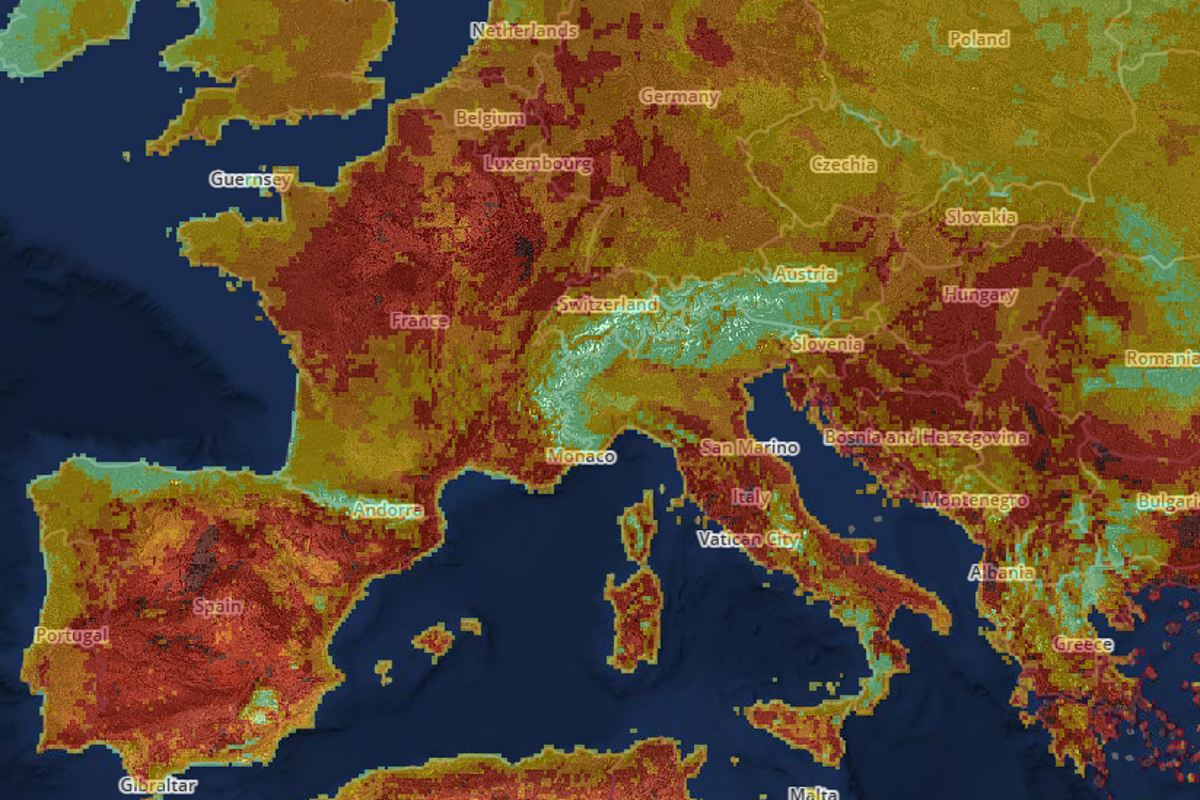
Southern Europe faces an escalating fire regime driven by convergent atmospheric anomalies and moisture deficits. When surface temperatures in regions like France and Spain breach forty-two degrees Celsius, the environmental system transitions past a linear tipping point. Vegetation moisture drops precipitously, transforming standard biomes into highly volatile fuel arrays. Standard meteorological reporting often treats these heatwaves as isolated weather anomalies, but systemic risk analysis reveals a structural vulnerability rooted in fuel accumulation, prolonged meteorological drought, and rapid microclimate desiccation.
Understanding the mechanics of modern wildfire propagation requires breaking down the phenomenon into three distinct operational phases: pre-conditioning, rapid ignition, and convective feedback loops.
During the pre-conditioning phase, winter precipitation deficits and sustained spring temperatures establish the baseline root-zone soil moisture. As atmospheric vapor pressure deficit increases, plants close their stomata to conserve water, halting transpiration and drying out fine fuels. When ambient temperatures peak at forty-two degrees Celsius, relative humidity drops into single digits, creating an environment where dead litter and live canopy fuels ignite with minimal thermal energy input.
[Atmospheric High Pressure]
       │
       ▼
[Vapor Pressure Deficit Spikes]
       │
       ▼
[Plant Stomata Close & Transpiration Halts]
       │
       ▼
[Fuel Moisture Reaches Critical Lower Limit]
       │
       ▼
[Ignition Threshold Achieved via Minimal Energy Input]
Regional Hazard Differentiation: France Versus Spain
While both nations share Mediterranean climatic pressures, their topographical and forestry structures create divergent risk profiles.
In Spain, extensive afforestation policies over past decades combined with rural depopulation have left large tracts of continuous, unmanaged biomass. The absence of traditional grazing and low-intensity forestry allows fuel continuity to span entire administrative zones. When ignition occurs via lightning or anthropogenic vectors, the continuity of the fuel bed permits rapid lateral spread before initial attack vectors can be deployed.
France faces a different structural bottleneck, particularly in the southwestern departments such as the Gironde. Here, intensive maritime pine plantations present a high-density, resinous fuel profile. The geometry of these stands, combined with sandy soils that drain water rapidly, accelerates the onset of extreme drought stress. The primary vulnerability in the French model lies in the interface between dense forestry and expanding wildland-urban interfaces, where residential expansion complicates tactical suppression operations.
The Economic and Operational Cost Function of Suppression
Suppressing high-temperature, high-velocity wildfire events requires an exponential increase in resource allocation. The cost function of wildfire management follows a non-linear trajectory. Initial attack containment is capital-efficient, requiring localized ground crews and light aerial assets. However, once a fire breaches the containment threshold and enters the crown fire propagation phase, suppression costs scale exponentially due to the requirement for heavy rotary and fixed-wing air tankers, extended supply lines, and large-scale civilian evacuations.
Resource scarcity introduces a critical bottleneck during synchronized multi-basin outbreaks. When extreme heat affects both the Iberian Peninsula and southern France simultaneously, cross-border resource sharing via European civil protection mechanisms faces capacity constraints. Aerial firefighting fleets cannot be multiplied instantaneously, forcing regional commanders to triage assets based on asset protection hierarchies rather than purely ecological containment priorities.
Atmospheric Feedbacks and Microclimate Alteration
Fires of sufficient magnitude generate their own local weather systems, decoupling them from broader regional meteorological forecasts. Pyrocumulonimbus cloud development introduces extreme instability, causing erratic wind shifts that render tactical ground planning obsolete within minutes. These convective columns inject particulate matter and thermal energy into the mid-troposphere, altering local albedo and sustaining atmospheric blocking patterns that prolong the underlying heatwave.
This feedback loop explains why high-temperature wildfire events are self-reinforcing. The thermal output from active fire lines reinforces the upper-level ridge responsible for the baseline heatwave, suppressing convective rainfall and maintaining the dry atmospheric conditions required for secondary ignition events.
Tactical Resource Deployment and Strategic Positioning
Effective mitigation in high-risk zones demands a transition from reactive suppression to preemptive structural hardening and fuel load management. Strategic deployment models must abandon uniform coverage in favor of dynamic risk-weighted positioning, utilizing real-time satellite telemetry to track fuel moisture indices and vapor pressure deficits down to the square kilometer.
Forest management strategies must incorporate biological diversity as a firebreak mechanism. Monoculture timber stands amplify fire velocity, whereas mixed-species forests with varying moisture retention profiles disrupt the continuity of crown fires. Infrastructure planning must mandate defensible perimeters around all wildland-urban interfaces, restricting combustible building materials and establishing enforced clearance zones that function independently of active human intervention during peak thermal events.
Resource allocation frameworks must prioritize pre-positioning aerial and ground units in high-probability ignition corridors prior to red-flag meteorological warnings, neutralizing the time lag inherent in traditional emergency mobilization.