Materials engineering under extreme thermal stress is constrained by a fundamental metallurgical trade-off: mechanical strength at ambient temperatures inversely correlates with microstructural stability at ultra-high temperatures. When exposed to environments exceeding two thousand degrees Celsius, conventional superalloys experience rapid phase transformation, oxidation cascade failure, and catastrophic creep. The recent development of ultra-high temperature refractory metal high-entropy alloys by Chinese research groups represents a structural shift in how thermal barriers are engineered. This analysis deconstructs the underlying material science, the operational bottlenecks of extreme thermal protection systems, and the systemic implications for aerospace engineering.
The Thermodynamic Bottleneck of Conventional Superalloys
Nickel-based superalloys form the backbone of modern turbine and aerospace applications. Their performance relies on a gamma-prime precipitation-strengthened matrix that maintains structural integrity up to approximately eleven hundred degrees Celsius. Beyond this threshold, the lattice coherence breaks down, leading to dislocation climb and rapid plastic deformation.
[Ambient High Strength] ---> (Thermal Stress > 1200°C) ---> [Precipitate Dissolution] ---> [Creep Failure]
Exceeding two thousand degrees Celsius introduces three distinct degradation mechanisms:
- Oxidation and Volatilization: Protective oxide scales, such as chromia or alumina, either melt, vaporize, or spall off due to thermal expansion mismatches.
- Phase Segregation: Multi-element alloys tend to decompose into distinct thermodynamic phases at elevated heat, destroying the homogeneous stress distribution required for load-bearing applications.
- Recrystallization and Grain Growth: High thermal energy accelerates grain boundary sliding, drastically reducing yield strength and creep resistance.
To bypass these limitations, material scientists have abandoned single-base solvent systems in favor of multi-principal element alloys, commonly designated as high-entropy alloys. By mixing five or more metallic elements in near-equimolar ratios, entropy of mixing stabilizes the solid solution phase and impedes atomic diffusion.
The Architectural Mechanics of Ultra-Resistant Compositions
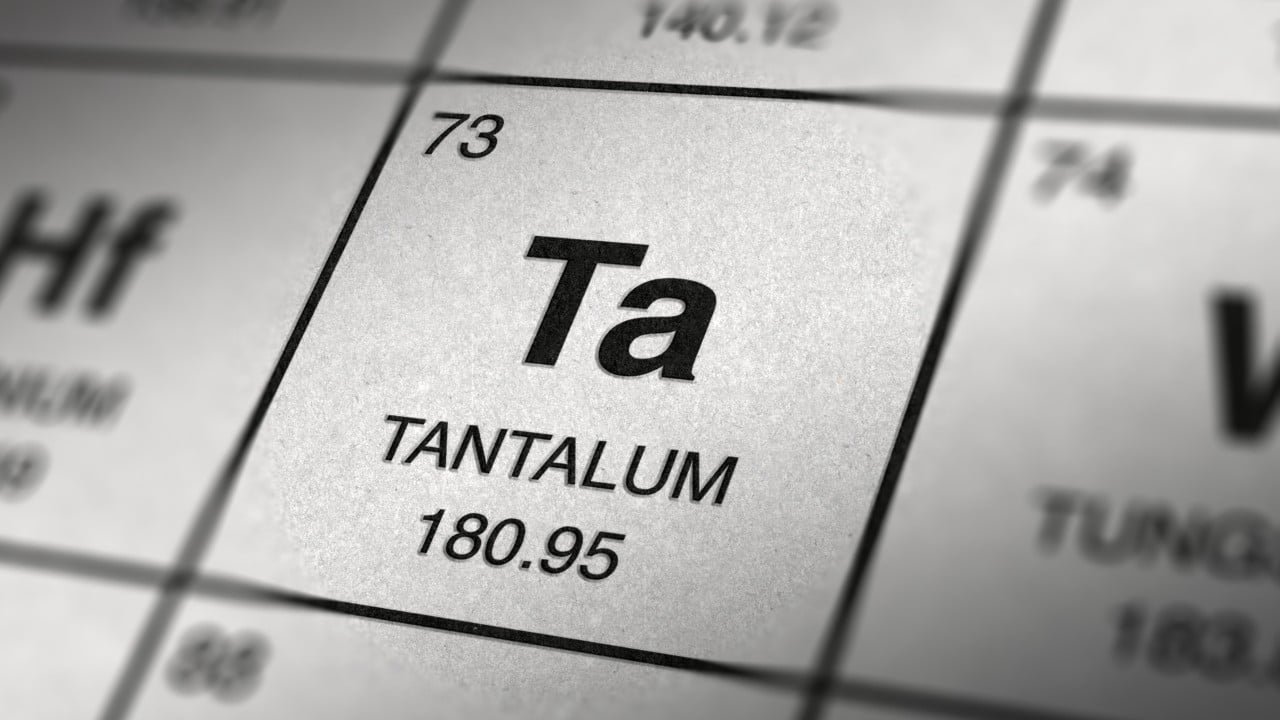
The alloy developed for extreme thermal survival relies on refractory elements such as tungsten, tantalum, niobium, molybdenum, and hafnium. These constituents share high melting points, strong atomic bonding energies, and sluggish diffusion coefficients.
The Core Stabilization Vectors
- High Configurational Entropy: The thermodynamic drive to form complex solid solutions rather than brittle intermetallic compounds prevents early-stage phase decomposition.
- Sluggish Diffusion Kinetics: Heavy refractory atoms migrate at significantly lower rates under extreme thermal gradients, suppressing grain growth and high-temperature creep.
- In-Situ Oxide Scale Engineering: Controlled doping with select elements promotes the formation of self-healing, high-melting-point complex oxides that act as a diffusion barrier against oxygen ingress.
The integration of these vectors alters the damage progression curve. Rather than suffering sudden catastrophic failure, the material exhibits a predictable, linear degradation rate, expanding the operational safety margin for hypersonic flight structures and atmospheric re-entry vehicles.
Manufacturing Constraints and Scalability Limits
Translating laboratory-scale samples of refractory high-entropy alloys into functional geometric components exposes severe manufacturing bottlenecks.
Powder metallurgy and vacuum arc melting are standard fabrication routes, yet both present distinct liabilities. Melting high-melting-point constituents with vastly different vapor pressures leads to compositional inhomogeneity. Volatile elements evaporate during the melt phase, leaving behind micro-voids and localized stress concentrators.
Additive manufacturing, specifically laser powder bed fusion, offers geometric freedom but introduces steep thermal gradients during processing. These steep gradients induce severe residual stresses, resulting in micro-cracking due to the inherent brittleness of refractory systems at ambient temperatures. Pre-heating the build plate to elevated temperatures mitigates cracking, but increases energy requirements and restricts production volume.
The Systemic Impact on Hypersonic Propulsion and Aerospace Design
The introduction of structural materials capable of enduring twenty-four hundred degrees Celsius removes a primary design constraint in aerospace engineering. Traditional thermal protection systems rely on ablative tiles that sacrifice mass to dissipate heat through phase change. These systems are single-use and degrade aerodynamic profiles during flight.
Load-bearing refractory alloys allow for active cooling channel integration within the skin of hypersonic vehicles. By functioning simultaneously as the structural chassis and the thermal barrier, these materials eliminate dead weight, improve payload ratios, and enable sustained atmospheric cruise at speeds exceeding Mach 5.
The structural integration requires a redesign of joining technologies. Traditional welding techniques fail because of brittle interfacial phases formed during solidification. Diffusion bonding and brazing with specialized high-temperature interlayers currently provide the only viable pathways for assembly.
Strategic Implementation Roadmap
Deploying ultra-high temperature refractory systems demands a phased engineering approach focused on risk mitigation rather than immediate full-scale replacement.
[Powder Synthesis] ---> [Hot Isostatic Pressing] ---> [Diffusion Bonding Assembly] ---> [In-Service Thermal Monitoring]
- Refine Powder Synthesis: Standardize gas atomization parameters for multi-principal refractory elements to ensure spherical morphology and chemical homogeneity.
- Optimize Consolidation: Apply hot isostatic pressing to eliminate internal porosity and achieve full theoretical density without inducing phase segregation.
- Implement Non-Destructive Evaluation: Utilize high-energy computed tomography to detect internal micro-fissures before components undergo thermal cycling qualification.
- Validate Thermal Fatigue Boundaries: Subject assembled components to cyclic plasma wind tunnel testing to map oxidation kinetics under dynamic pressure differentials.