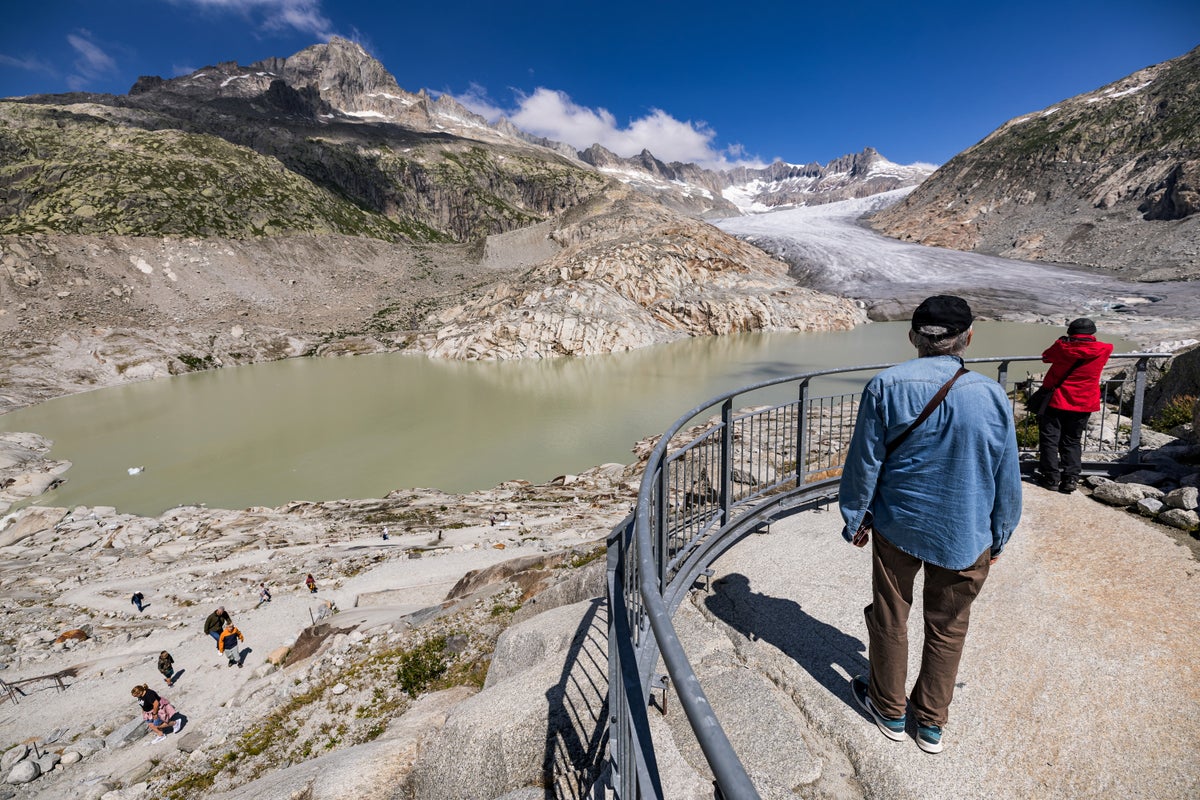
Switzerland just hit a milestone that should terrify anyone who relies on fresh water, alpine stability, or the predictable rhythms of our planet. On June 29, 2026, Swiss glaciers officially reached Glacier Loss Day.
That means every single flake of snow accumulated over the previous winter has completely vanished. It melted away under the glare of a brutal early summer heatwave. Now, the bare, dark ice underneath sits exposed to the burning sun, and it will keep shedding mass until at least October.
This is the second-earliest date for Glacier Loss Day on record. The absolute worst was June 26, 2022. Normally, this tipping point waits until mid-August. Reaching it in June means the Alps are three months ahead of schedule in a race nobody wants to win.
The Protective Blanket is Gone
Glaciers survive the summer because of a simple physics trick. Winter snow acts like a giant reflective shield. Fresh white snow reflects the vast majority of solar radiation back into space. Glaciologists call this the albedo effect. As long as that snow covers the glacier, the ancient ice underneath stays protected.
But this year, the defense line cracked early.
A combination of factors created a miserable scenario for the high peaks. First, winter brought disappointing snowfall across the Alps. The snowpack was roughly 25% below the ten-year average. Second, Saharan dust blew across Europe in March, coating the mountains in a gritty, tinted layer. Darker surfaces absorb heat faster. That dust acted like a heating pad, accelerating the spring melt before summer even started.
Then came May and June. Temperatures skyrocketed past 30°C in the lowlands and stayed brutally high at high altitudes. Within just two weeks of intense heat, the famous Konkordiaplatz on the Great Aletsch Glacier went from a sweeping white snowfield to a stark, bare sheet of dark ice.
The Math of a Melting Mountain
Matthias Huss, the head of Glacier Monitoring Switzerland (GLAMOS), tracked the destruction in real time. At one specific monitoring site on the Rhone Glacier, an astonishing 1.5 meters of vertical ice melted away in a single ten-day stretch.
Think about the sheer volume of water leaving the mountains right now. During the peak of the June heatwave, Swiss glaciers lost enough meltwater to fill an Olympic-sized swimming pool every six seconds. That rate of destruction matches the catastrophic record-breaking summer of 2022.
Many people look at rushing mountain streams and assume everything is fine because the rivers look full. That is a dangerous misunderstanding. You are watching a bank account drain. While the high volume of meltwater temporarily cushions low river levels in the valleys, it represents a permanent loss of Europe's largest natural water towers.
Over the last 50 years, Switzerland has already lost 1,200 glaciers. Only about 1,300 remain. Between the years 2000 and 2024, the total volume of Swiss glaciers shrank by a staggering 38%. If the current trajectory continues, scientists predict we will be looking at mere remnants of ice by the turn of the century.
Real Consequences Far Beyond the Peaks
The collapse of alpine ice is not just bad news for ski resorts or postcard companies. It impacts the entire European continent.
Major rivers like the Rhine and the Rhone rely heavily on glacier melt during hot, dry summer months. When the glaciers shrink past a certain threshold, those rivers will experience dramatic drops in water levels during late summer. That threatens shipping lanes, agricultural irrigation, and the cooling systems of nuclear power plants downriver.
Mountain ecosystems face an immediate crisis too. Species adapted to freezing alpine waters cannot survive as stream temperatures climb. Habitats are shifting higher up the peaks, forcing localized populations into intense competition for shrinking territory.
Moving Forward in a Warmer World
We cannot patch up the glaciers with blankets or wish the heatwaves away. The ice we lose this summer took centuries to build up, and it will not come back in our lifetimes.
If you want to track this unfolding situation or understand the data yourself, you can follow the official field updates from GLAMOS or look at the open-source satellite imagery provided by the European Copernicus program. Seeing the weekly change in ice cover from space offers a clear, unfiltered view of what is happening to our water security.
Support local climate adaptation strategies that focus on water conservation and infrastructure stability. As the mountains lose their icy glue, rockfalls and landslides will become more common, meaning alpine communities must rethink how they build and protect their towns. The era of predictable mountain ice is over. We have to start planning for the dry summers ahead.


