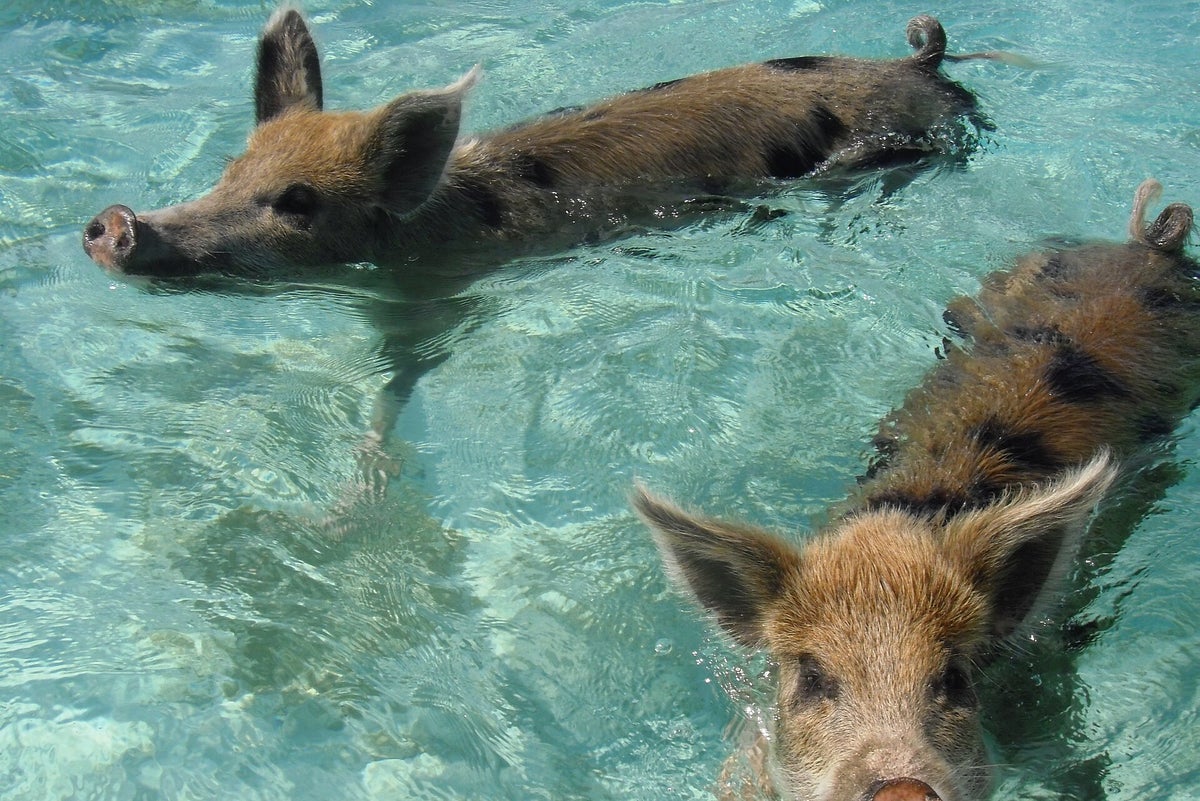
Social media makes swimming with pigs in the Bahamas look like a clean, peaceful tropical dream. Reality hits a bit differently when a massive, hungry feral animal decides your finger looks like a snack. A cruise passenger found this out the hard way, sparking a legal battle and terrifying medical scares that rarely make it onto vacation brochures.
When you book a shore excursion through a major cruise line, you expect a curated, safe experience. You picture cute piglets paddling through crystal-clear turquoise waters. What you actually get at some of these commercialized stops—particularly the high-volume knockoff spots near Nassau rather than the original remote Exumas cays—is an entirely different story.
The Reality Behind the Instagram Filter
Those famous swimming pigs aren't domesticated pets. They are heavy, unpredictable farm animals living in cramped tourist hotspots, often surrounded by floating waste and murky water. When dozens of tourists crowd the shoreline waving food scraps, the animals get aggressive.
A nip or a full-on bite from one of these hogs isn't just a minor scratch. It is a direct ticket to a bacterial infection. Worse yet, legal filings and passenger accounts reveal a terrifying secondary concern: the frantic scramble for rabies post-exposure treatments.
Most local excursion operators won't answer basic health questions about whether their animals are vaccinated. When a tourist gets bitten, local staff frequently brush it off, hand over a cheap bandage, and push the victim back onto the transport boat to avoid liability.
What Happens After the Bite
Medical staff on cruise ships are equipped for basic seasickness or minor cuts, but they rarely stock specialized immunoglobulins or multi-dose rabies series. Passengers are often left scrambling to find emergency care the moment the ship docks, facing a grueling series of shots because wild mammals can carry deadly pathogens.
Lawsuits stemming from these excursions usually highlight a massive disconnect between how cruise lines market these activities and the actual conditions on the ground. Brochures use glossy photos of pristine environments, omitting the reality of crowded pens, sanitation issues, and the unpredictable nature of hungry wildlife.
If you're planning a Caribbean cruise, skip the animal tourist traps. Stick to snorkeling reefs or exploring historic ports on your own terms. Wild animals belong in the wild, not performing tricks for vacation selfies.
Pig Swim Excursion Ends in Medical Nightmare
This video explores how popular animal excursions in the Bahamas can quickly turn into stressful health ordeals for unsuspecting travelers.
http://googleusercontent.com/youtube_content/1