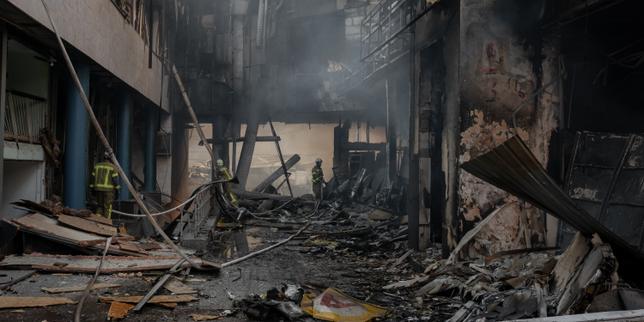
Russia just reminded the world that total war doesn't take weekends off. On Sunday, a massive wave of Russian bombardments tore through Kyiv, leaving a trail of destruction that shatters any illusion of a frozen conflict. We aren't talking about stray missiles or intercepted debris merely cracking windows. This was a targeted, deliberate attempt to paralyze the Ukrainian capital.
The latest official assessments paint a grim picture. Two people lost their lives. Nearly 90 others suffered injuries ranging from severe shrapnel wounds to trauma from collapsing structures. Over 300 civilian infrastructure buildings took direct hits or sustained critical damage. Homes, power grids, and local businesses are now in ruins.
If you think this is just another routine update from the front lines, you're missing the bigger picture. This specific strike signals a dangerous escalation in Kremlin strategy. It forces Western allies into a corner where passive support is no longer a viable option.
The Reality Behind the Kyiv Bombardments
Air defense teams worked overtime on Sunday. Ukraine's military confirmed they downed a significant percentage of incoming cruise missiles and attack drones. Yet, sheer volume overwhelmed local defenses. When 300 infrastructure points get hit in a single day, it means the strikes penetrated deep into the municipal heart of Kyiv.
This isn't collateral damage. It's infrastructure terror.
The targets tell the real story. Russia targeted civilian housing and energy nodes. They want to make Kyiv unlivable. They want to break the psychological resolve of the population. Local emergency services deployed hundreds of first responders to dig through rubble in multiple city districts, pulling survivors from burning apartment blocks. The high number of injuries—hovering around 90—strains local hospitals already dealing with wartime resource constraints.
Why Current Air Defense Packages Fall Short
Many Western observers look at military aid packages and assume Kyiv is completely shielded. That's a myth. Patriot missile batteries, NASAMS, and IRIS-T systems are elite engineering marvels. They save thousands of lives daily. But they face a simple math problem.
Stockpiles are dwindling. Russia knows this.
By launching mixed swarms of cheap Iranian-designed Shahed drones alongside expensive ballistic and hypersonic missiles, Moscow forces Ukraine to burn through its limited supply of air defense interceptors. You can't protect 300 different buildings when you have to choose between saving a power plant or saving a residential neighborhood.
Military analysts from institutions like the Institute for the Study of War have repeatedly pointed out this systemic vulnerability. Ukraine needs a continuous, uninterrupted pipeline of interceptor missiles, not just sporadic shipments tied to political debates in Washington or Brussels.
The Immediate Steps Europe and the US Must Take
We need to stop treating the war in Ukraine like a distant news broadcast. The Sunday strikes prove that Russian forces retain the logistics and the political will to devastate major European cities. To counter this, Western strategy requires an immediate pivot.
First, the restriction on deep strikes inside Russian territory needs to vanish entirely. Ukraine cannot win a defensive war by simply catching arrows; it has to eliminate the archer. The bombers that launched Sunday's missiles took off from airfields deep within Russia. Preventing Ukraine from targeting those airfields with Western-supplied long-range weapons is actively costing civilian lives in Kyiv.
Second, the mobilization of industrial manufacturing for air defense must accelerate. European defense contractors must transition to a wartime production footing. Relying on existing stockpiles is a strategy for defeat.
If you want to support Ukraine effectively, contact your local political representatives. Push for aggressive, unconditional military aid packages that prioritize air defense systems and long-range strike capabilities. Donate directly to verified Ukrainian logistical funds like Come Back Alive, which supply frontline units with the technical equipment needed to track incoming aerial threats before they reach civilian centers. The time for hesitant diplomacy died under the rubble in Kyiv this Sunday.