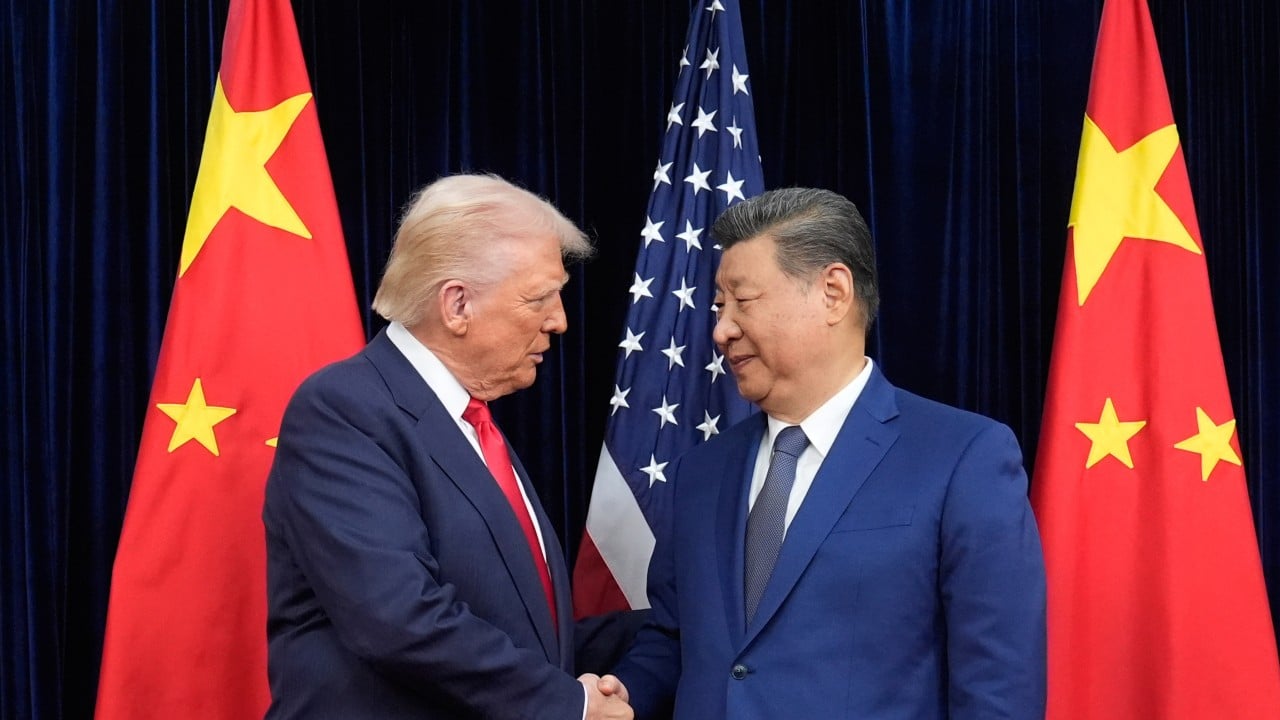
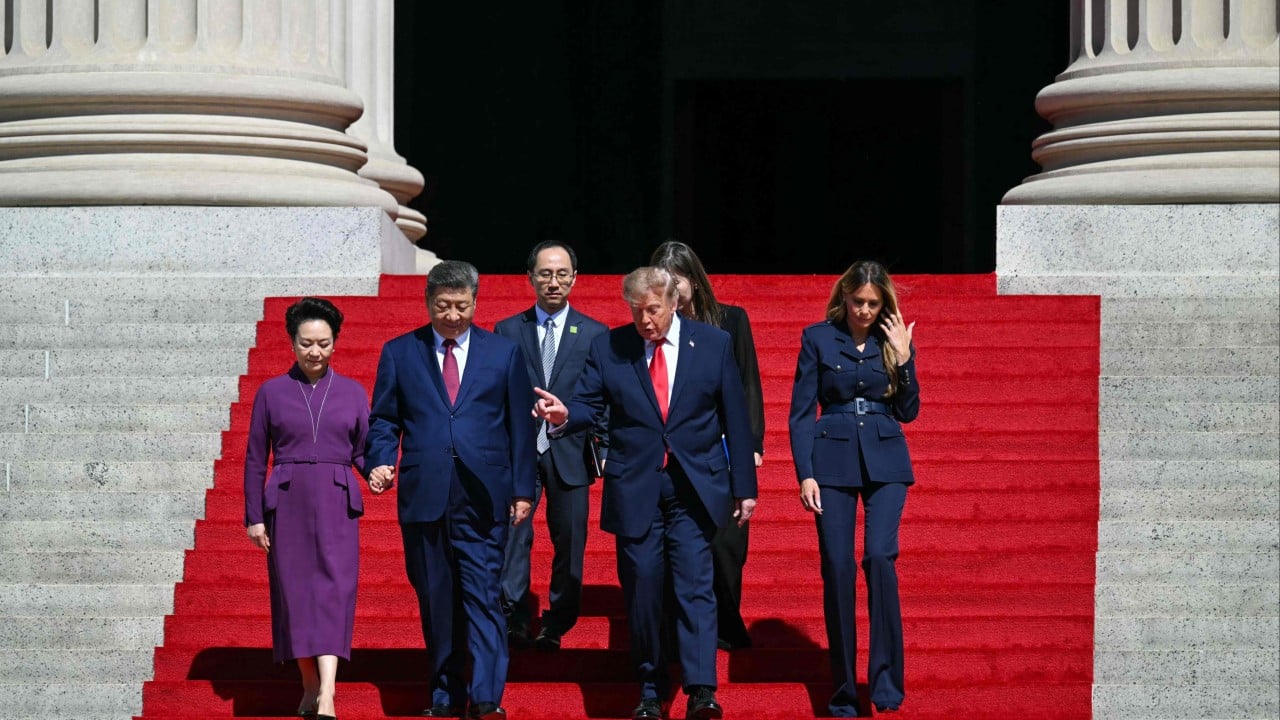
High-level statecraft between rival hegemons routinely collapses into theatrical cordiality masked as strategic dialogue. When executive leadership attempts to resolve structural asymmetries through personal rapport without altering underlying institutional incentives, the resulting communiques invariably produce optical stabilization while leaving material frictions untouched.
This dynamic defines contemporary engagement between Washington and Beijing. The mechanics of these interactions reveal a recurring pattern: immediate friction points are temporarily shelved to preserve macroeconomic stability, while foundational disagreements over security architecture, technological dominance, and territorial control are systematically deferred.
The Trade Truce and Asymmetric Commitment Compliance
Bilateral economic negotiations operate under a persistent enforcement deficit. When executive branches agree to provisional trade truces, compliance is dictated by domestic industrial policy rather than mutual enforcement mechanisms.
The structural disconnect is visible in agricultural procurement metrics and technological supply chain controls. One party consistently lags behind pre-negotiated purchasing targets for agricultural commodities, while the other maintains systemic export restrictions on critical inputs, such as rare-earth elements and semiconductor manufacturing equipment.
The transactional nature of these agreements creates a recurring enforcement bottleneck. Because neither administration possesses a self-executing mechanism to compel domestic industries or state-directed enterprises to absorb financial losses for diplomatic expediency, trade metrics fluctuate according to market capacity rather than political edicts.
Technology Governance and the Control Divergence
Artificial intelligence and advanced computing infrastructure represent a zero-sum competition over future economic productivity and military capability. Diplomatic communiques often frame this domain as an area for cooperative risk management, but operational realities point in the opposite direction.
The divergence centers on the locus of control. One side pursues a strategy of technological decoupling and export containment, treating computing architecture as a national security asset that must be walled off from strategic rivals. The counter-strategy emphasizes human-centric governance frameworks designed to preserve state oversight while preventing foreign-imposed technical monopolies.
[Containment Strategy] <---> [Strategic Divergence] <---> [State-Led Governance]
        (Hardware Access Restrictions)                  (Centralized Oversight Models)
Because these philosophies proceed from incompatible premises regarding national sovereignty and market access, bilateral talks on digital governance cannot yield convergence. They function primarily as a signaling mechanism to reassure domestic technology sectors and international markets that worst-case systemic decoupling remains managed rather than absolute.
The Geopolitical Pricing of Territorial Integrity
Security flashpoints, particularly the status of Taiwan and maritime navigation rights in the Western Pacific, resist transactional bargaining because they involve core political legitimacy for both state actors.
In diplomatic engagements, language regarding these regions follows a rigid protocol. One side issues warnings against provocation and demands adherence to historical communiques, while the other maintains strategic ambiguity coupled with structural economic interdependence.
The analytical error made by external observers is assuming that diplomatic pleasantries signal a softening of red lines. In practice, the assertion of friendly personal relationships between heads of state serves as a diplomatic shock absorber. It provides both leadership cadres with the political cover necessary to manage domestic nationalist pressures while avoiding an immediate military escalation. The foundational security dilemma remains entirely unpriced in these summits. Each side views the other's defensive preparations as aggressive posture, creating an action-reaction cycle in military modernization that diplomatic communiques cannot reverse.
Institutional Exhaustion and the Domestic Cycle
The operational bandwidth for sustained bilateral resolution is structurally constrained by domestic political calendars. Executive administrations operate under short electoral horizons, while centralized party apparatuses plan across multi-decade policy horizons.
This asymmetry limits the durability of any diplomatic breakthrough. When leadership engagement lacks institutionalized bureaucratic follow-through, agreements depend entirely on the political will of individual executives. As domestic political pressures mount or electoral cycles turn, the inertia of systemic competition invariably reasserts itself over the personal rapport established at the summit level.
To alter this trajectory, future engagements would require moving past high-level communiques to establish binding, verifiable enforcement mechanisms across industrial policy, data governance, and maritime safety protocols. Absent such institutional architecture, bilateral summits will continue to produce tactical pauses disguised as strategic progress.