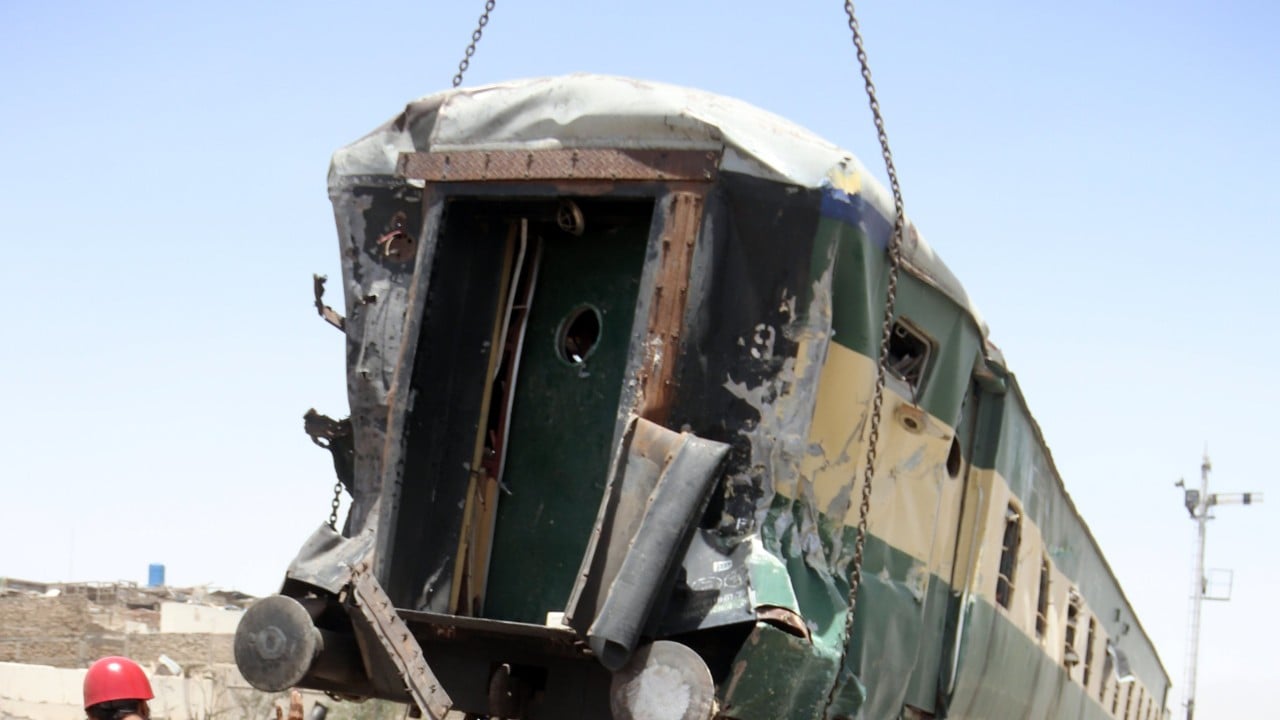
The collapse of a nine-storey structure in the Philippines represents a failure of the built environment that can be quantified through three distinct vectors: structural integrity degradation, the physics of the "void space" survival window, and the logistical bottlenecks of urban Search and Rescue (USAR). When a multi-storey building fails, the conversion of potential energy into kinetic force results in a "pancake" or "soft-story" collapse pattern. This transformation dictates the probability of life preservation, moving from a medical emergency to a recovery operation as the thermodynamic and physiological limits of the trapped occupants are reached.
The Triad of Structural Vulnerability
In high-density urban environments within the Pacific Ring of Fire, buildings are subject to a specific cost-function of safety versus economic constraint. The failure of a nine-storey asset usually stems from a breakdown in one of three foundational pillars.
- Material Compounding Errors: Substandard concrete-to-aggregate ratios reduce the compressive strength of load-bearing columns. In tropical climates, "concrete cancer" or carbonation can accelerate the oxidation of internal rebar, causing it to expand and crack the surrounding masonry from within.
- Seismic or Geotechnical Instability: If the local soil strata undergo liquefaction or shifting—often exacerbated by heavy rainfall or proximity to active fault lines—the foundation loses its ability to distribute the dead load of nine floors.
- Lateral Load Deficiencies: While many structures are designed for vertical (gravity) loads, they often lack the shear walls or moment-resisting frames necessary to withstand lateral forces. Once a single floor’s support system reaches its ultimate limit state, the resulting impact on the floor below exceeds that floor's safety factor, triggering a progressive collapse.
The Physics of the Rubble Environment
The report of "voices heard" within the debris is a qualitative indicator of "void space" formation. A void space occurs when structural elements—beams, floor slabs, or large furniture—wedge against one another, preventing total compaction.
The survivability of the 21 missing individuals depends on the Golden 48 Hours, a window defined by the intersection of three physiological variables:
- Air Exchange: Dust and particulate matter from pulverized concrete create an immediate risk of respiratory failure or "dust pneumonia."
- Hydration Limits: In the humid, high-temperature environment of the Philippines, the metabolic rate of trapped individuals increases, accelerating dehydration.
- Crush Syndrome Mechanics: When a limb is compressed for more than 4-6 hours, the release of pressure during extraction can cause a sudden influx of toxins (myoglobin and potassium) into the bloodstream, leading to renal failure. This necessitates that medical intervention occurs before the debris is moved.
Operational Constraints in Urban Search and Rescue (USAR)
The transition from hearing voices to physical extraction involves a complex logistical sequence that a standard news narrative fails to capture. Rescuers utilize a "layered" search methodology.
Technical Search Phase
Rescuers deploy acoustic sensors and seismic microphones capable of detecting minute vibrations or rhythmic tapping. This is supplemented by thermal imaging and "snake cameras" inserted through boreholes. The primary constraint here is "noise pollution"; urban environments often require total silence in a 500-meter radius to calibrate sensors effectively.
Structural Stabilization
The act of removing debris can inadvertently shift the "load path" of the remaining rubble pile, causing secondary collapses. Rescuers must employ "shoring"—temporary timber or mechanical supports—to stabilize the tunnel as they move inward. This creates a trade-off: speed of entry versus the safety of the rescue team.
The Weight of Debris
A nine-storey building generates thousands of tons of concrete. In the absence of heavy-duty cranes or when the site is too unstable for machinery, debris must be moved by hand in a "bucket brigade." This creates a linear progression that is fundamentally slower than the exponential decay of victim health.
The Economic and Regulatory Gap
The frequency of these events in the region highlights a systemic failure in the Regulatory Feedback Loop.
- Permit-to-Build Variance: There is often a disconnect between the engineering blueprints submitted for approval and the actual "as-built" structure.
- Informal Retrofitting: Adding floors or heavy equipment to a building not designed for that specific live load shifts the center of gravity and increases the "P-Delta effect," where a small displacement leads to a massive increase in internal stress.
The financial incentive to cut costs on high-tensile steel or to bypass soil testing creates a hidden "risk tax" paid by the occupants. When 21 people go missing, the liability usually extends beyond the property owner to the civil engineers and the local building officials who signed off on the structural integrity certificates.
Technical Mitigation and Future Proofing
To prevent the recurrence of such failures, the focus must shift from reactive rescue to proactive structural health monitoring (SHM).
- Accelerometers and Tiltmeters: Installing low-cost IoT sensors on load-bearing elements can provide real-time data on structural "sway" or settling, allowing for evacuation before a catastrophic breach.
- Non-Destructive Testing (NDT): Regular audits using ultrasonic pulse velocity or ground-penetrating radar can identify internal voids or rebar corrosion in older nine-storey assets before they reach the point of failure.
The immediate priority for the site in the Philippines is the deployment of heavy lifting equipment synchronized with acoustic mapping to localize the 21 individuals. Strategic efforts must pivot to a "Vibration-Controlled Extraction" to ensure that the removal of the upper layers of the nine-storey pile does not crush the lower-level void spaces where voices were detected. Any delay in the arrival of hydraulic breakers or specialized "shredding" tools for rebar directly translates to a decrease in the survival probability curve.
Engineers on-site must immediately calculate the "Angle of Repose" for the current rubble pile to determine if the surrounding structures are at risk of a sympathetic collapse. The operation is now a race between the structural settling of the debris and the metabolic limits of those trapped beneath it.