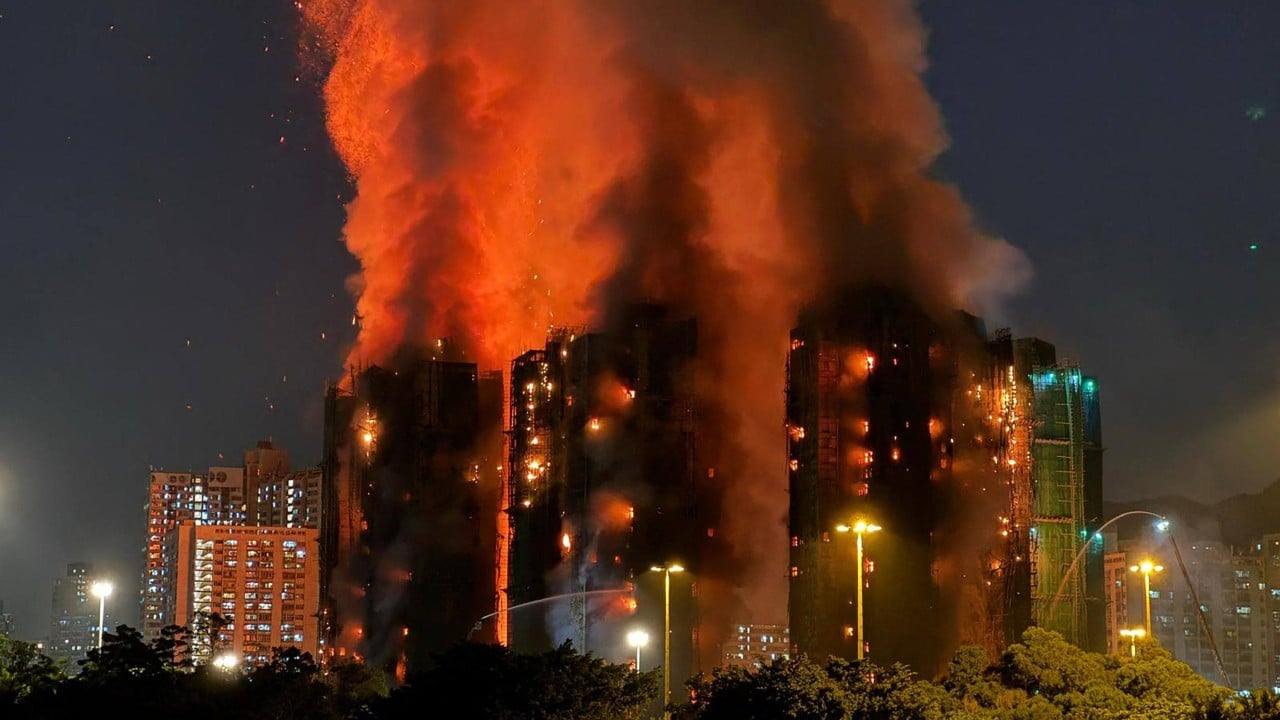
Regulatory reforms enacted in the wake of major urban fires fail to prevent recurrences because they target surface-level code compliance rather than the underlying economic incentives, spatial constraints, and enforcement bottlenecks that drive hazard accumulation. When analyzing the aftermath of the Tai Po fire in Hong Kong—a tragedy rooted in the intersection of aging building stock, subdivided units, and dense commercial-residential zoning—the standard policy response focuses on tightening statutory fire safety ordinances and increasing maximum penalties. This approach misunderstands the operational reality of urban risk. Statutory tightening without corresponding shifts in capital allocation, inspection capacity, and tenant relocation mechanics merely drives non-compliance underground, creating a wider gap between written law and physical reality.
To understand why legislative mandates consistently underperform in high-density environments, fire safety must be analyzed as a complex socio-technical system governed by three interlocking variables: the capital expenditure deficit of aging infrastructure, the principal-agent problem in property management, and the mathematical limits of reactive inspection regimes. For another perspective, see: this related article.
The Economics of Deferred Maintenance and the Capital Expenditure Deficit
High-density urban centers characterized by rapid mid-20th-century development face a structural cliff in building lifecycle management. Residential and composite buildings constructed between the 1950s and 1980s were engineered to fire safety standards that are obsolete by modern metrics, lacking automated sprinkler systems, pressurized escape stairwells, and compartmentalized smoke barriers.
Upgrading these structures requires massive capital expenditure (CapEx). In fragmented ownership models—such as the multi-owner strata titles common across Hong Kong's older districts—executing a comprehensive fire safety retrofit requires coordinating dozens or hundreds of individual owners with divergent financial capacities and risk tolerances. Similar reporting on this matter has been shared by The Guardian.
This creates a severe collective action problem:
- Asymmetric Financial Burden: Owner-occupiers on fixed incomes often lack the liquidity to fund mandatory structural upgrades, leading them to vote against maintenance assessments within owners' corporations.
- Split Incentives: Absentee landlords extracting yield from subdivided flats view fire safety retrofits as pure sunk costs that do not increase rental valuation, incentivizing delay tactics and litigation to stall statutory orders.
- Transaction Cost Friction: The administrative and legal costs required to organize fragmented owners, secure engineering consultations, and tender contracts frequently exceed the financial tolerance of the building's management committee, resulting in indefinite paralysis.
When reforms mandate hardware upgrades—such as installing fire-rated doors, emergency lighting, or hose reels—without resolving the financing mechanism, the mandate collides with economic reality. A building owner cannot comply with a statutory order using capital they do not possess. The result is an accumulation of unfulfilled Fire Safety Directions, where properties remain in a state of chronic, documented non-compliance for years.
The Subdivided Unit Paradox and Spatial Compression
The proliferation of subdivided units (SDUs) in districts like Tai Po is not a rogue criminal phenomenon; it is a market response to severe housing supply inelasticity and affordability deficits. However, from a fire engineering perspective, subdividing a single residential flat into multiple micro-units fundamentally alters the building's risk profile in ways that standard regulatory reforms fail to address.
A standard residential floor plate is designed with specific occupant load factors, egress widths, and fire load limits. Subdividing a unit disrupts every parameter of this baseline design:
- Compartmentation Breach: Original load-bearing and fire-rated walls are frequently altered or penetrated to route unpermitted plumbing and electrical conduits. These breaches destroy the building's passive fire protection, allowing smoke and toxic gases—the primary causes of fire fatalities—to migrate rapidly across multiple units.
- Electrical Load Multiplication: A single domestic electrical circuit designed for one household is suddenly forced to support four to six independent living spaces, each operating high-draw appliances such as air conditioners, induction cookers, and water heaters. This drives sustained thermal stress on aging wiring insulation, exponentially increasing the probability of an electrical fault ignition.
- Egress Bottlenecks: Partition walls create labyrinthine internal corridors that double or triple the travel distance to the primary exit while narrowing the clear width below the minimum threshold required for emergency evacuation or firefighter ingress.
Reforms that simply criminalize illegal subdivisions or increase fines for landlords fail because they do not alter the supply-and-demand equilibrium of the low-income rental market. If enforcement actions successfully shut down non-compliant SDUs without providing immediate, affordable alternative housing, displaced tenants are forced into even more precarious, concealed accommodations—such as industrial buildings or unregistered rooftop structures—where fire risks are significantly higher and regulatory visibility is zero.
The Principal-Agent Failure in Third-Party Management
Many older composite buildings lack formal Owners' Corporations (OCs), operating as "three-nil" buildings (no OC, no residents' organization, and no property management company). Even where management structures exist, a classic principal-agent failure undermines fire safety maintenance.
The principals (building owners) delegate daily operational oversight to agents (property management companies or maintenance contractors). Because owners typically select management agents based on the lowest monthly fee rather than technical risk management capabilities, agents operate on razor-thin margins. Under this fee structure, the agent's primary incentive is cost containment, not proactive hazard identification.
Routine fire safety maintenance—such as testing fire pumps, verifying alarm panel integrity, and keeping smoke lobby doors unobstructed—becomes a box-ticking exercise. Fire service installation (FSI) contractors, competing in a commoditized market, frequently issue annual inspection certificates based on cursory visual checks rather than rigorous functional testing. When a reform introduces stricter documentation requirements, the market responds by generating more sophisticated paperwork rather than safer buildings. The compliance artifact (the certificate) becomes decoupled from the physical reality (the operational readiness of the suppression system).
The Mathematical Limits of Reactive Enforcement
Following a high-profile fire, government agencies invariably announce targeted enforcement blitzes, deploying task forces to inspect high-risk buildings and issue abatement notices. While politically necessary to demonstrate responsiveness, inspection-heavy reforms suffer from fundamental scaling limitations.
The inventory of aging urban buildings numbers in the tens of thousands, while the pool of qualified fire safety inspectors and structural engineers is strictly finite. Even if an agency doubles its inspection headcount, the ratio of inspectors to high-risk premises remains heavily skewed. Consequently, inspections are episodic rather than continuous.
Consider the lifecycle of a typical fire hazard, such as the storage of combustible materials in an escape stairwell or the wedging open of a fire door for ventilation:
- Day 1: An inspection occurs; the stairwell is clear, and the building passes.
- Day 2: Commercial tenants on the lower floors move inventory into the stairwell due to space constraints, and residents prop open the fire door.
- Day 3 to Day 364: The building operates in a state of critical vulnerability.
Episodic regulatory inspections cannot govern dynamic human behavior. Furthermore, the legal enforcement pipeline—from issuing a Fire Hazard Abatement Notice to prosecution and court-ordered remediation—moves at a bureaucratic pace measured in months or years, whereas fire dynamics operate in seconds and minutes. By the time a non-compliant owner faces a magistrate, the fine levied is frequently lower than the cost of the required engineering works, transforming legal penalties into an acceptable cost of doing business.
Behavioral Drift and the Normalization of Deviance
In organizational sociology, the "normalization of deviance" describes a process where individuals within a system become so accustomed to a deviant behavior that they no longer consider it a risk, despite the fact that it violates elementary safety rules. High-density urban environments are incubators for this phenomenon.
In older districts where commercial enterprises (such as restaurants, warehouses, and retail shops) share vertical space with residential units, operational friction is constant. Ground-floor restaurants require high-capacity exhaust systems that accumulate grease; retail shops require storage space for packaging; residents require ventilation in humid climates without running expensive air conditioning.
Each group makes micro-adjustments that degrade the building's fire defenses: propping open fire doors to improve airflow, stacking cardboard boxes in rear service lanes, or overloading extension cords. Because a fire does not occur immediately following these actions, the participants receive continuous positive reinforcement that the behavior is safe. Over years, these compromises become standard operating procedure. Legislative reforms written in government ministries have zero impact on this micro-behavioral drift because they do not solve the underlying spatial and environmental discomforts that drive the behavior in the first place.
Limitations of Technological and Legislative Silver Bullets
It is tempting to view emerging technologies—such as IoT-enabled smoke detectors, smart electrical circuit breakers, or automated thermal imaging—as the definitive solution to legacy building risks. However, technology deployment faces the exact same institutional barriers as traditional hardware retrofits. Smart sensors require ongoing power, network connectivity, maintenance, and an active response protocol. Installing a connected smoke alarm in a building with no functioning management committee simply produces alerts that no one is responsible for answering.
Similarly, legislative reforms that grant government departments powers to execute default works (entering a private building to perform mandatory safety upgrades and billing the owners afterward) face severe operational bottlenecks. The state must front the capital, manage thousands of bespoke construction projects across occupied premises, and navigate years of legal friction to recover costs from recalcitrant or untraceable owners. While necessary as a mechanism of last resort, default works cannot scale fast enough to clear a city-wide backlog of aging infrastructure.
The Strategic Shift: From Punitive Compliance to Structural Risk Mitigation
To prevent a repeat of the Tai Po tragedy, policymakers must abandon the illusion that stricter laws and episodic crackdowns equate to safety. Prevention requires a fundamental redesign of the urban risk management architecture, shifting focus from punitive compliance to structural and economic intervention.
1. Establish Dedicated Revolving Capital Pools for Legacy Retrofits
Governments must decouple building safety from the immediate liquidity of fragmented owners. Instead of relying solely on means-tested subsidies with high bureaucratic friction, authorities should establish a state-backed revolving loan fund that finances 100% of mandatory fire safety upgrades upfront. Repayment should be attached directly to the property title as a statutory charge, recoverable upon property transfer, refinancing, or through long-term municipal rate additions. This removes the immediate financial veto of cash-poor or absentee owners and allows engineering works to proceed immediately.
2. Implement Dynamic, Risk-Weighted Insurance Mandates
Replace static, episodic government inspections with market-driven continuous underwriting. Mandate comprehensive third-party fire liability insurance for all composite and multi-owner buildings, legally tying insurance validity to verified, third-party engineering audits. When insurance premiums are dynamically priced based on real-time risk metrics—such as the presence of unpermitted subdivisions, blocked egress routes, or outdated electrical infrastructure—financial pressure becomes immediate and unavoidable. Banks will enforce compliance to protect their mortgage collateral, and owners' corporations will be forced to police tenant behavior to prevent punitive premium spikes or coverage revocation.
3. Redesign Fire Engineering Standards for Adaptive Reuse
Recognize that imposing 21st-century new-build codes onto 1960s structural footprints is often physically impossible and financially ruinous. Regulatory bodies must adopt performance-based fire engineering codes specifically tailored for legacy stock. Where installing traditional wet sprinkler systems is structurally unfeasible due to water tank weight limits or ceiling heights, authorities should approve alternative mitigation systems—such as high-pressure water mist systems, wireless interconnected smoke detection networks, and localized automatic suppression devices at high-risk ignition points (e.g., electrical distribution boards and commercial kitchen hoods).
4. Decouple Housing Enforcement from Fire Safety Remediation
Break the stalemate between tenant displacement and hazard removal. When inspectors identify illegal subdivisions in aging buildings, the immediate priority must be life-safety stabilization rather than eviction. Authorities should implement a tiered triage protocol: mandate immediate, non-negotiable installation of localized fire suppression, interconnected alarms, and unobstructed egress corridors within a 30-day window, while deferring structural zoning enforcement until transitional housing capacity is secured. Separating immediate life-safety upgrades from long-term housing stock regularization removes the incentive for landlords and tenants to conceal hazardous living conditions from inspectors.
5. Enforce Strict Liability on the Certification Supply Chain
Eliminate the principal-agent failure in maintenance by shifting legal exposure onto the professionals who validate safety. Implement a digital, immutable ledger for all Fire Service Installation (FSI) inspections, requiring geo-tagged photographic and sensor-verified proof of functional testing. Pair this with strict liability penalties: any contractor or engineer found issuing a false or negligent compliance certificate faces immediate, permanent license revocation and criminal prosecution, regardless of whether a fire has occurred. When the personal career risk of signing a fraudulent certificate exceeds the commercial value of the maintenance contract, the market will self-correct toward rigorous enforcement.