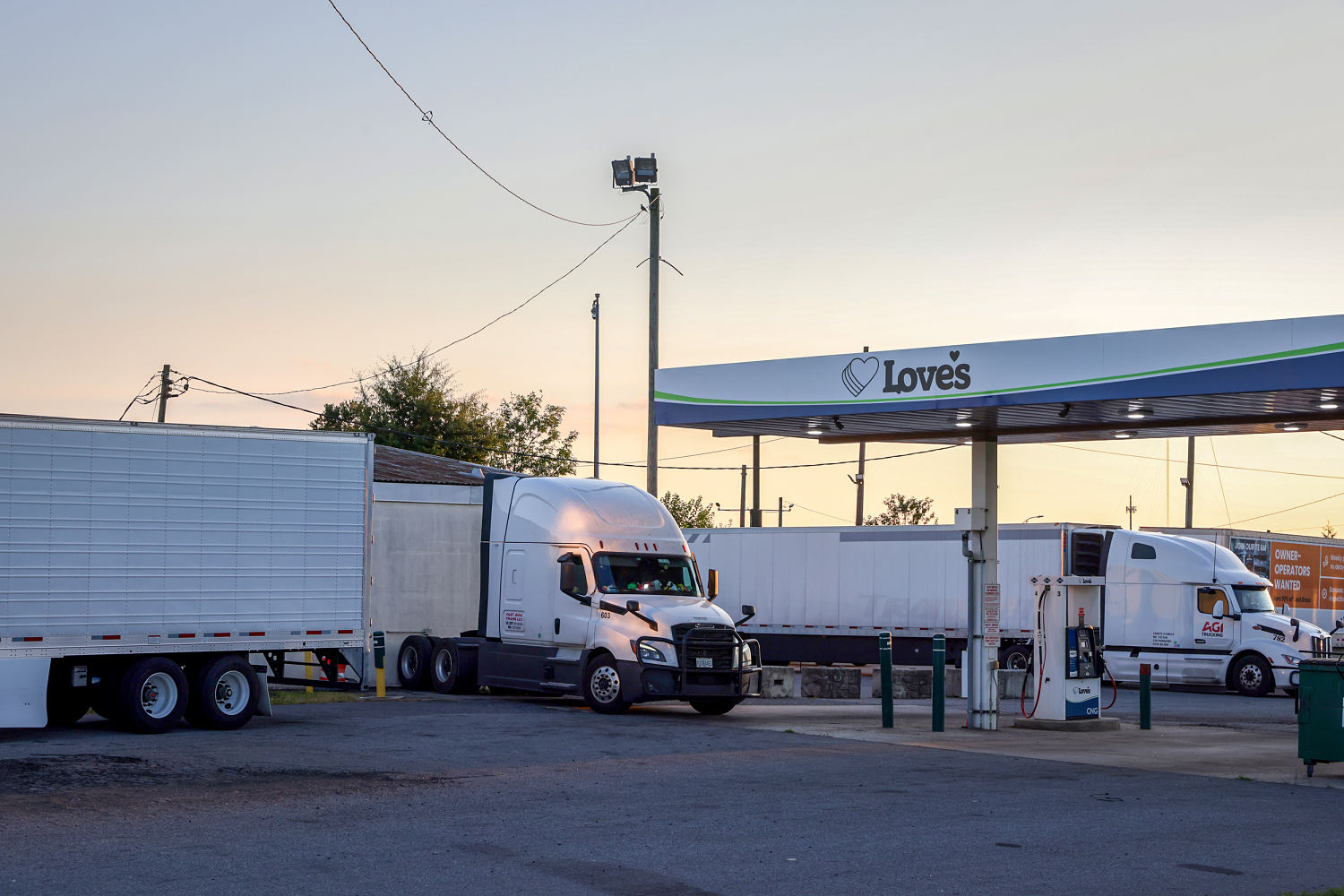
Geopolitical shocks in the Middle East and Eastern Europe have broken traditional energy pricing models, pushing the national average for diesel to an all-time high of $5.85 per gallon. This represents a more than 55 percent surge from pre-conflict baselines, decoupling distillate fuel behavior from standard crude oil movements.
The primary driver is not a generalized petroleum shortage, but a localized structural chokepoint failure. The ongoing military conflict involving Iran has severely constricted transit through the Strait of Hormuz, removing roughly 20 million barrels of daily supply potential from international circulation. Because diesel is the non-discretionary workhorse of global freight, agriculture, and heavy manufacturing, its pricing mechanics operate on a different velocity curve than consumer-facing gasoline. If you found value in this article, you might want to check out: this related article.
The Mechanics of Distillate Divergence
Crude oil is a heterogeneous mix of hydrocarbons that must be refined into specific fractions, primarily gasoline, jet fuel, and middle distillates like diesel and heating oil. When refinery capacity faces constraints or crude inputs spike past $95 a barrel for Brent benchmark standards, middle distillates absorb a disproportionate share of the cost burden. For another look on this event, refer to the latest coverage from The Motley Fool.
Several structural vulnerabilities explain why diesel climbs faster and stays elevated longer than gasoline:
- Inelastic Industrial Demand: While private vehicle owners can curtail discretionary driving when gasoline prices spike, logistics networks cannot substitute diesel for alternative power sources at scale. Heavy-duty trucks, freight rail, container ships, and agricultural combines must operate regardless of fuel cost.
- Refining Yield Constraints: Global refining infrastructure cannot dynamically switch yields overnight to favor high percentages of middle distillates over light distillates. Years of underinvestment in complex cracking units have left a permanent structural deficit in global distillate production capacity.
- Inventory Depletion: Commercial stockpiles of diesel in major hubs have hovered near historic lows due to post-pandemic demand recoveries compounded by structural sanctions on Russian diesel exports following the invasion of Ukraine.
The Cascading Transmission Mechanism
High diesel prices do not stay localized within the energy sector; they act as a universal tax on physical goods. The transmission mechanism moves through three distinct layers of the macroeconomy.
First, line-haul logistics providers face immediate margin compression. Contract pricing mechanisms often feature fuel surcharges, but these indices typically lag spot-market price volatility by 30 to 60 days. This lag forces carriers to absorb operating losses during acute upward spikes, leading to carrier insolvencies and capacity contraction.
Second, agricultural inputs experience severe cost inflation. Modern farming operations rely heavily on diesel-powered machinery for tillage, planting, and harvesting, alongside petrochemical fertilizers whose synthesis requires natural gas and energy-intensive processing. When distillate prices surge, the marginal cost of food production rises exponentially, creating a secondary inflationary wave that takes months to clear through grocery supply chains.
Third, manufacturing and raw material extraction endure compound cost increases. Every tier of component delivery—from raw ore transport to finished goods distribution—accumulates fuel surcharges. Consequently, headline inflation metrics fail to capture the deep structural distortion occurring within producer price indices.
Operational Mitigation and Strategic Positioning
Organizations vulnerable to distillate exposure must transition away from reactive fuel budgeting toward deterministic supply chain engineering. Fleet operators should prioritize route optimization algorithms that minimize deadhead miles and enforce strict speed-governing policies to capture marginal fuel economy improvements. Procurement teams must decouple logistics contracts from lagging index adjustments, establishing dynamic, real-time pricing corridors with carriers to share the volatility risk transparently. Furthermore, industrial enterprises should audit regional inventory buffers, shifting away from just-in-time delivery models toward localized warehousing to hedge against sudden freight capacity freezes caused by regional fuel rationing or localized price spikes.