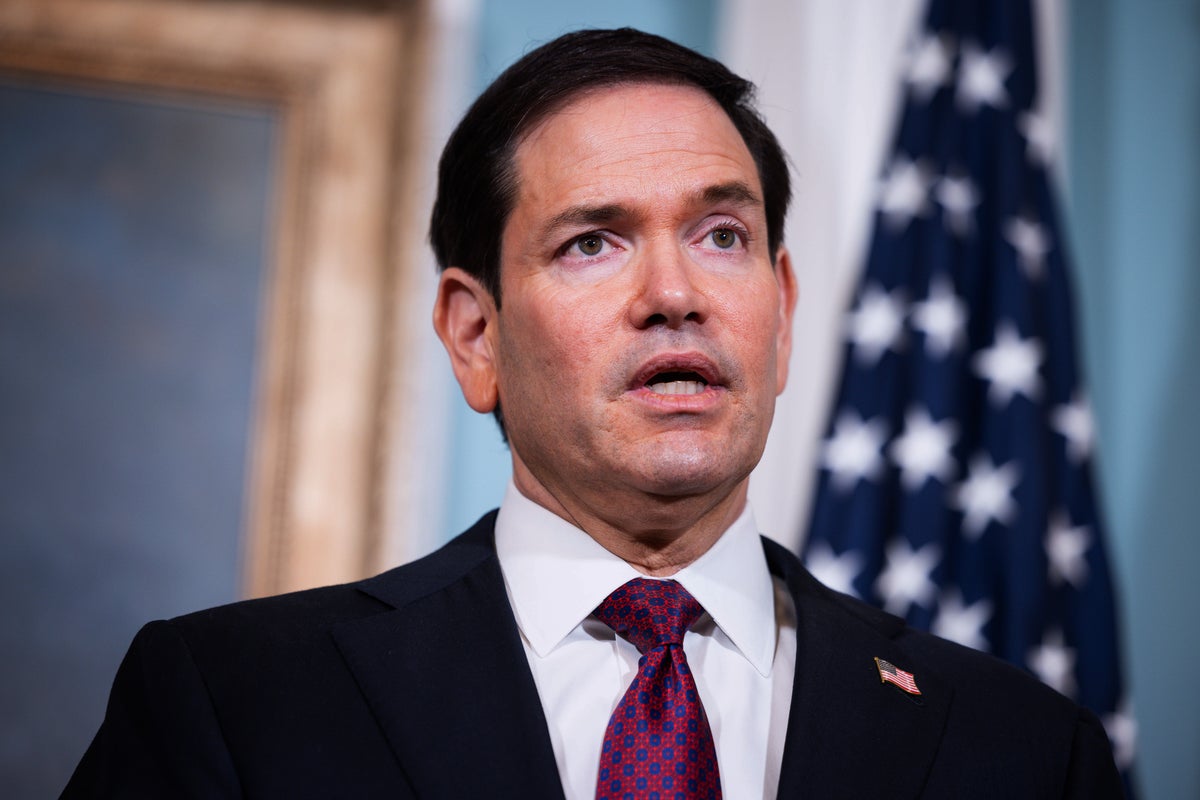
Foreign policy execution relies heavily on the manipulation of financial access points rather than broad, indiscriminate trade restrictions. When the United States Department of State, under Secretary Marco Rubio, executed a series of coordinated designations targeting subsidiary nodes of Cuba's Grupo de Administración Empresarial S.A. alongside key military personnel, the action represented a shift from traditional diplomatic posturing to mechanical structural decoupling. Understanding the operational efficacy of this policy requires breaking down the underlying economic topology of the Cuban state apparatus, the precise function of secondary sanctions, and the systemic bottlenecks induced by targeting procurement and logistics nodes.
The Architecture of State-Directed Monopolies
To evaluate the impact of these designations, one must first map how capital flows within the Cuban economy. The structural core of the island's economic organization is controlled by the military conglomerate known as GAESA. Unlike traditional state-owned enterprises in command economies, GAESA operates as a diversified holding company spanning tourism, retail, logistics, and financial intermediation. It commands an estimated significant share of the national gross domestic product and maintains direct control over foreign exchange generation.
The primary mechanism of regime resilience is not ideological compliance, but financial self-sufficiency derived from monopoly rents. By capturing hard currency through tourism and remittances, the central apparatus funds domestic security and political administration while insulating the ruling class from market feedback loops.
State-directed monopolies create two distinct vulnerabilities:
- Centralized Point of Failure: Because capital accumulation funnels through a finite set of conglomerates and commercial banks, external regulators can isolate large swathes of economic activity by targeting a small number of corporate nodes.
- Foreign Partner Exposure: These entities rely on international supply chains and foreign direct investment to maintain basic infrastructure, creating a dependency on external financial clearinghouses that are vulnerable to U.S. jurisdiction.
Mechanics of the Designations and Secondary Enforcement
The designations announced by the State Department target five specific entities and eight high-ranking individuals, including defense leadership and military attachés stationed in strategic foreign capitals. The legal vehicle driving these actions stems from executive orders designed to penalize supporters of the Cuban security apparatus.
The operational weight of these sanctions lies in secondary enforcement. Primary sanctions prohibit U.S. persons from engaging in commerce with designated parties. Secondary sanctions, conversely, threaten foreign financial institutions and international corporations with exclusion from the U.S. dollar-denominated clearing system if they process transactions for the blacklisted targets.
This creates an acute risk calculation for international actors. A foreign commercial bank or logistics provider operating in Europe, Asia, or Latin America must weigh the marginal revenue of maintaining business relationships with Cuban military subsidiaries against the existential threat of losing access to correspondent banking networks in New York. In practice, compliance departments at international firms adopt ultra-conservative risk postures, terminating commercial relationships long before legal enforcement occurs.
The Logistics and Procurement Bottlenecks
The recent designations systematically map onto critical operational choke points within the Cuban supply chain. The targeted entities include procurement arms responsible for securing military and dual-use equipment from foreign suppliers such as Russia and China, as well as firms managing aviation maintenance and heavy industrial production.
When procurement channels are blocked, the systemic effects compound rapidly across the macroeconomy:
- Supply Chain Friction: Industrial repair facilities and logistics firms face immediate capital starvation, rendering them unable to procure replacement parts for critical infrastructure, including transportation networks and power generation equipment.
- Transactional Paralysis: Commercial banks designated in prior and current waves eliminate the baseline credit facilities required by foreign investors to execute import-export operations, accelerating capital flight and deterring incoming joint ventures.
- Operational Compliance Costs: As the regulatory perimeter expands, the friction of verifying end-users increases transaction costs for any non-military trade, forcing even permitted civilian commerce into administrative gridlock.
Strategic Forecast and Economic Trajectory
The systematic tightening of financial and logistical constraints forces the Cuban state into an intractable optimization problem. The regime must choose between decentralizing economic control to foster organic growth—thereby risking political autonomy as independent economic actors gain leverage—or maintaining absolute structural dominance over the domestic market while enduring severe capital exhaustion and infrastructure decay.
As secondary sanctions continue to narrow the aperture for foreign currency generation, the internal coherence of the state apparatus faces mounting pressure. The efficacy of this strategy will not be measured by immediate political concessions, but by the permanent degradation of the financial liquidity required by the military conglomerate to sustain its operational apparatus.


