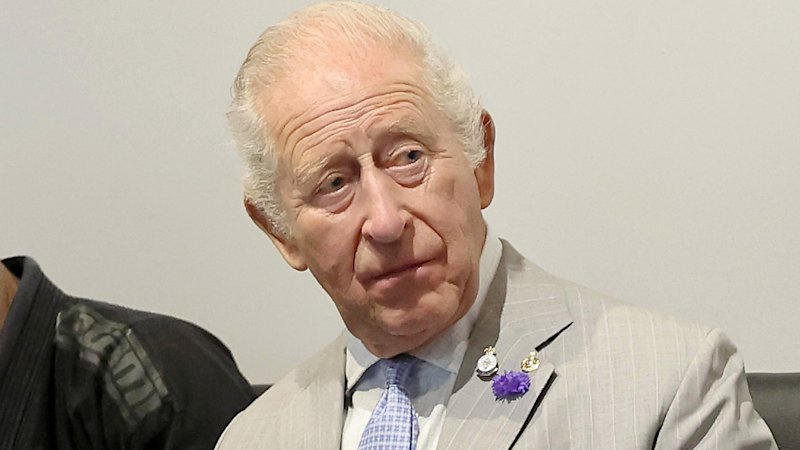
The institutional longevity of the British monarchy relies on its ability to manage public perception of its fiscal burden, yet the unilateral publication of personal tax data reveals a structural opacity that numbers alone cannot resolve. The June 2026 announcement that King Charles paid £12.9 million in income and capital gains tax for the 2024–25 financial year represents a calculated shift toward proactive disclosure. However, isolating a top-line tax figure without publishing the underlying asset valuations, deductions, and cross-subsidies creates an incomplete data set. This operational strategy serves as a selective corporate communications mechanism rather than a systemic implementation of financial transparency.
To evaluate the fiscal reality of the contemporary Crown, observers must separate state funding from private wealth accumulation and examine the statutory frameworks that govern royal revenue. The intersection of public capital, private real estate empires, and voluntary fiscal compliance establishes a unique economic model. This structure insulates sovereign wealth from the standard progressive taxation mechanisms applied to the British populace while using targeted financial disclosures to mitigate political risk.
The Sovereign Tax Framework and the 1993 Memorandum
The monarch operates under a historical legal framework defined by the Crown Exemption, a constitutional doctrine holding that the sovereign is not legally liable for income tax, capital gains tax, or inheritance tax. The modern financial interface between the state and the individual on the throne is governed not by statutory tax law, but by the non-statutory Memorandum of Understanding on Royal Taxation, originally negotiated in 1993 and updated following the accession of King Charles.
Under this framework, any tax paid by the sovereign is entirely voluntary. The mechanism is designed to mimic standard statutory rates, yet it diverges significantly in its treatment of deductions, exemptions, and asset transfers.
+-----------------------------------------------------------------------+
|                       THE CROWN EXEMPTION MATRIX                      |
+-----------------------------------------------------------------------+
|  Revenue Source       |  Legal Status       |  Voluntary Treatment    |
+-----------------------+---------------------+-------------------------+
|  Sovereign Grant      |  Tax Exempt         |  No Tax Paid            |
|  Duchy of Lancaster   |  Tax Exempt         |  Income Tax Paid* |
|  Private Estates      |  Tax Exempt         |  Income & CGT Paid      |
|  Inter-Sovereign      |  Tax Exempt         |  No Inheritance Tax     |
+-----------------------------------------------------------------------+
*After the deduction of official expenses
The voluntary system establishes three distinct tiers of revenue processing:
- The Sovereign Grant: State funding tied to the net profits of the Crown Estate. This revenue stream is completely exempt from taxation, as it is earmarked for official state duties and property maintenance.
- The Privy Purse: Private income derived primarily from the Duchy of Lancaster. The sovereign pays the equivalent of the top-rate income tax on this surplus, but only after deducting substantial "official expenses" incurred outside the scope of the Sovereign Grant.
- Personal Assets: Direct private holdings, including the Balmoral and Sandringham estates, private investment portfolios, and cash savings. These are subject to voluntary income and capital gains taxes, but remain completely insulated from inheritance tax when passed from monarch to monarch.
The primary limitation of this arrangement is the absence of independent verification. Because the royal household calculates its own tax liability internally before submitting a final lump sum to His Majesty’s Revenue and Customs (HMRC), the public has no window into the gross revenues, specific investment vehicles, or write-offs utilized. The system substitutes standardized accounting verification with institutional trust, a variable that is fundamentally volatile.
Deconstructing the Private Portfolios: The Duchy System
The mechanism generating the sovereign’s taxable private income is an anomalous asset class consisting of the Duchies of Lancaster and Cornwall. These entities function as permanent landed trusts that pass down through generations without ever being liquidated or subjected to inheritance tax.
The Duchy of Lancaster, which provides the funding for the Privy Purse, holds 44,748 acres of agricultural, commercial, and residential land across England and Wales, alongside a significant portfolio of urban retail and industrial property. In the 2025–26 fiscal year, the duchy generated an annual surplus of £25.2 million, a steady escalation from the £24.4 million recorded previously.
The economic efficiency of the duchy system depends on a highly specific cost-allocation model. The sovereign can deduct the costs of funding non-working royals or supplementary official duties directly from the duchy’s gross revenue before calculating the voluntary tax bill. This creates a financial loop: private revenue is offset by quasi-official expenditures, reducing the taxable base and rendering the public tax figure uninterpretable without a granular line-item audit of those internal deductions.
The heir to the throne operates under an identical parallel structure via the Duchy of Cornwall. Valued at approximately £1 billion, this portfolio contains 130,000 acres of land and diverse commercial assets. Prince William’s reported income from the duchy reached £21.6 million for the 2025–26 period, yielding a voluntary personal tax payment of £7.76 million for the 2024–25 cycle.
The structural preservation of these estates is guaranteed by the Inter-Sovereign Inheritance Tax Exemption established in 1993. When assets pass from monarch to monarch, they face a 0% tax rate, contrasted with the 40% statutory rate applied to British estates above the inheritance threshold. The policy justification holds that taxing the private estates would fragment the historical asset base, diminishing the financial independence of the monarchy. The consequence, however, is a compounding concentration of wealth that operates outside the standard fiscal cycle of the state.
The Mechanics of the £12.9 Million Declaration
The disclosure that King Charles paid £12.9 million in the 2024–25 fiscal year, combined with £11.7 million from the prior year, allows for a structural analysis of the sovereign's implied cash flow. Palace officials highlighted that this scale of contribution positions the monarch within the top 100 individual taxpayers in the United Kingdom. While factually probable based on British income distributions, this positioning obscures the fundamental distinction between effective and nominal tax rates.
Without data on the gross inflows, the precise effective tax rate remains unknowable. Financial analysts can construct an optimization equation to isolate the missing variables. Let $T$ represent the total voluntary tax paid, $I_d$ the net surplus from the Duchy of Lancaster, $I_p$ the income from personal estates and market investments, $E_o$ the self-declared official expenses deducted from private income, $G_c$ the capital gains realized, and $r_t$ the top statutory tax rates. The basic equation governing the voluntary payment mimics the standard fiscal framework:
$$T = r_i (I_d + I_p - E_o) + r_g(G_c)$$
In this equation, $T$ is fixed at £12.9 million for 2024–25. The statutory top rate of income tax ($r_i$) sits at 45%, and the capital gains rate ($r_g$) peaks at 24% or 28% depending on the asset type. Because $E_o$ (official expenses), $I_p$ (private investment returns), and $G_c$ (capital gains) are withheld from the public report, the £12.9 million figure can represent multiple, wildly divergent financial realities:
- The High-Yield Scenario: The monarch experienced significant capital gains ($G_c$) from the liquidation of private global equities or property, meaning his recurring annual income is lower than assumed, and the tax spike is temporary.
- The High-Deduction Scenario: Gross private and duchy revenues were exceptionally high, but massive internal deductions for official expenses ($E_o$) suppressed the net taxable base, resulting in a low effective tax rate relative to total gross intake.
The lack of clarity regarding these variables is what financial transparency advocates classify as a data firewall. For a standard corporate entity or public official, transparency requires disclosing both sides of the balance sheet. By releasing only the output variable ($T$), the institution retains total control over the input variables, preventing external verification of whether the sovereign's fiscal contribution aligns with the spirit of the tax code applied to citizens.
The Sovereign Grant Offset: Funding Interdependencies
The publication of personal tax data cannot be analyzed in isolation from the concurrent escalation in state funding via the Sovereign Grant. The financial mechanism that supports the public functions of the monarchy is undergoing an expansion that complicates the narrative of a self-sustaining or financially contributing institution.
The Sovereign Grant is calculated as a percentage of the net profits of the Crown Estate, a vast portfolio of land, coastline, and commercial properties valued in the billions. Historically set at 15%, the grant was temporarily raised to 25% to fund the £369 million, 10-year infrastructure overhaul of Buckingham Palace.
Following a review by the royal trustees—comprising Prime Minister Keir Starmer, Chancellor Rachel Reeves, and the Keeper of the Privy Purse, James Chalmers—a new funding formula has been codified. Beginning in the 2027–28 financial year, the core Sovereign Grant will be fixed at 20.5% of Crown Estate profits for a five-year term.
+-----------------------------------------------------------------------+
|                 SOVEREIGN GRANT CORE FUNDING ESCALATION               |
+-----------------------------------------------------------------------+
|  Financial Year       |  Core Funding Level   |  Primary Driver       |
+-----------------------+---------------------+-------------------------+
|  2024–25              |  £51.8 Million      |  Baseline Formula       |
|  2025–26              |  £132.1 Million* |  Wind Farm Influx       |
|  2027–28              |  £99.9 Million      |  New 20.5% Reset        |
+-----------------------------------------------------------------------+
*Includes temporary allocations and capital adjustments
The driving force behind this revenue expansion is a commercial windfall from offshore wind farm leasing options on the seabed, which is owned by the Crown Estate. Because the Crown Estate’s net profits surged to £487 million, the new 20.5% allocation will lock in a core Sovereign Grant of £99.9 million for 2027–28. This represents an increase of £48.1 million compared to the core grant of £51.8 million in 2024–25.
This fiscal mechanism creates a profound structural asymmetry:
- Public Revenue Absorbency: When state-managed public assets like the seabed generate massive commercial surpluses, a fixed percentage is diverted to the royal household rather than flowing entirely into the consolidated fund for public services.
- Private Cost Shielding: While the state-funded Sovereign Grant rises to near-unprecedented levels, the monarch's voluntary tax payment remains flat or tied strictly to private operations.
The £12.9 million personal tax payment represents roughly 13% of the projected £99.9 million annual public grant the institution will receive by 2027. When contrasted against total official net expenditure—which rose to £117.2 million in the 2025–26 period, driven by property maintenance costs of £67.5 million and staff wages of £33.7 million—the voluntary tax contribution functions economically as an internal discount on the broader state subsidy, rather than an independent revenue stream for the state treasury.
Strategic Vulnerabilities in the Current Accountability Framework
The decision to publish top-line voluntary tax figures carries distinct operational risks for the monarchy. By entering the arena of quantitative financial disclosure, the palace shifts its defensive posture from traditional mystique to corporate accountability, a domain where its data structure is inherently weak.
The first vulnerability is the data verification deficit. Large private corporations and high-net-worth individuals operating in the UK are subject to standard audit trails, statutory corporate filings at Companies House, and potential regulatory scrutiny from HMRC. The royal family’s financial disclosures, handled via annual summaries, lack the granular schedules, asset valuations, and transaction histories required to confirm compliance with standard accounting definitions. Releasing an unverified number invites persistent criticism from fiscal analysts and anti-monarchy groups who note that self-declaration is not equivalent to independent audit.
The second vulnerability is the exposure of internal wealth disparities. The publication of Prince William’s £7.76 million tax payment on a £21.6 million duchy surplus highlights the immense wealth concentrated within the immediate nuclear family, even as broader public spending faces structural constraints. Furthermore, the operational choice to conceal the exact amounts paid to individual non-working royals who receive stipends from the Privy Purse leaves a significant informational vacuum.
The final strategic risk rests in the tension between the voluntary nature of the tax and the mandatory escalation of public funding. As long as the sovereign's tax contribution remains an act of royal benevolence rather than a statutory obligation, it fails to buy permanent political insulation. Instead, it invites ongoing legislative and public scrutiny regarding why an institution receiving a near-£100 million core annual state grant remains exempt from the standard tax laws that define the economic contract for every other entity in the state.
The Strategic Path Toward Institutional Stabilization
To convert this rudimentary disclosure strategy into a durable model of institutional transparency, the royal household must abandon partial data drops in favor of systemic reporting. Releasing isolated tax figures without clear context creates an informational vacuum that generates speculation.
The primary strategic adjustment requires transitioning from a voluntary, self-calculated tax memorandum to a fully audited, transparent reporting model that mirrors the disclosure standards of institutional trusts. This involves publishing complete balance sheets for the Duchy of Lancaster and the Duchy of Cornwall, detailing all gross revenues, individual capital gains events, and the exact criteria used to define tax-deductible "official expenses."
The royal household must decouple its operational state funding from the commercial windfalls of public assets. Lowering the Sovereign Grant percentage below the newly set 20.5% threshold during periods of extreme Crown Estate profitability would demonstrate genuine fiscal restraint. Aligning the sovereign’s private estate structures with standard capital gains and inheritance frameworks on non-essential holdings would neutralize the primary arguments of structural inequity, preserving the core symbolic institution through genuine, verifiable financial alignment with the public state.