The convergence of aggressive labor action, evolving climate patterns, and infrastructure bottlenecks has transformed the May and June travel window from a "shoulder season" bargain into a high-volatility operational risk. Travelers prioritizing cost-savings often overlook the systemic stressors that peak during this specific 61-day window. Success in navigating this period requires a shift from consumer-level planning to a logistical risk-mitigation framework.
The Structural Triple Threat: Labor, Climate, and Infrastructure
The early summer period functions as a stress test for the entire European tourism apparatus. Unlike the peak months of July and August, where staffing levels are maximized and systems are braced for impact, May and June operate on a precarious transition model.
1. The Labor Friction Coefficient
Labor unions in the aviation and rail sectors strategically time industrial actions to maximize leverage before the peak season. By striking in May or June, unions disrupt the ramp-up phase of airline operations without exhausting their strike funds before the high-revenue August window. This creates a "randomized disruption" environment.
- Air Traffic Control (ATC) Bottlenecks: Significant portions of European airspace, particularly over France and Germany, face chronic staffing shortages. When one sector strikes, the resulting re-routing causes a "cascading delay" where a 2-hour strike in Marseille can ground a flight in Dublin six hours later.
- Ground Handling Deficits: Many airports utilize seasonal contracts that do not fully vest until late June. This results in a lower "turnaround efficiency ratio," meaning baggage handling and aircraft refueling take longer than the scheduled blocks allow, leading to missed slots.
2. The Thermal Variance Anomaly
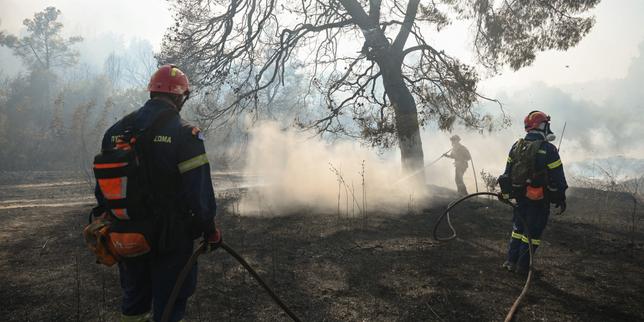
Climate data from the last five years indicates that the "Mediterranean heat dome" is forming earlier each season. May and June now frequently experience temperatures exceeding $35^\circ C$ ($95^\circ F$), yet the local infrastructure in many historic centers is not rated for this thermal load.
- Cooling System Failure: Older hotel stock often relies on centralized chillers that are calibrated for a $25^\circ C$ ambient temperature. When temperatures spike 10 degrees above the mean, these systems hit a "coefficient of performance" (COP) failure, leading to widespread outages.
- The Urban Heat Island Effect: In cities like Rome, Athens, and Madrid, the stone architecture absorbs solar radiation throughout the day and emits it at night. In June, the "nighttime cooling delta" (the difference between peak day and lowest night temperature) has shrunk, preventing the human body from recovering from heat stress.
3. The Regulatory Calibration Gap
New border control protocols, specifically the Entry/Exit System (EES) and the Electronic Travel Information and Authorisation System (ETIAS), often undergo final-stage testing or initial rollouts during these months.
- Biometric Processing Latency: The introduction of digital finger-printing and facial recognition at non-Schengen borders increases the "per-passenger processing time" by an estimated 30-40 seconds. While that sounds negligible, at a hub like Heathrow or Schiphol, this creates a linear queue growth that can exceed terminal capacity within two hours of peak arrival.
The Economic Mirage of the Shoulder Season
Travelers often calculate the value of a May trip using a simple price-to-utility ratio. This is a flawed metric because it ignores "hidden friction costs."
The Cost Function of Last-Minute Disruption
When a flight is canceled in May, the "re-accommodation probability" is lower than in October. Because airlines are running at 90%+ load factors in preparation for summer, there are fewer empty seats to absorb displaced passengers. A "cheap" £50 flight can quickly incur £400 in unplanned accommodation and "opportunity cost" losses when the next available seat is three days away.
Dynamic Pricing and Yield Management
Hotel algorithms are now more sensitive to "demand velocity." If a specific week in June shows a slight uptick in searches, prices scale exponentially. The perceived discount of the shoulder season is being eroded by AI-driven revenue management systems that prioritize "occupancy density" over traditional seasonal blocks.
Tactical Mitigation Framework: Operational Redundancy
To counteract these systemic risks, the traveler must move away from "optimistic scheduling" toward "redundant architecture."
Tier 1: The Buffer Ratio
Every transit leg must be evaluated based on its "connection fragility." If a journey requires a tight 60-minute layover in a strike-prone hub (e.g., Paris Charles de Gaulle), the risk of failure exceeds 40% during May labor surges.
- The 3-Hour Minimum: Adopt a hard rule of 180 minutes for all international-to-domestic transfers.
- First-Flight Priority: Statistics consistently show that the first flight of the day (06:00 - 08:00) has the highest "on-time performance" (OTP) because the aircraft is already on-site and the crew has not timed out.
Tier 2: Thermal and Health Hardening
Standard summer clothing is insufficient for the May/June "volatility window."
- Hydration Logistics: In heatwave conditions, the "insensible water loss" (fluid lost through skin and lungs) can reach 1.5 liters per hour during active sightseeing.
- The Siesta Protocol: Mirror local behavior not for cultural immersion, but for physiological survival. Cease all outdoor activity between 13:00 and 17:00 when the UV index is at its peak.
Tier 3: Document and Digital Readiness
The reliance on a single smartphone for boarding passes and maps is a single point of failure in high-stress environments.
- Physical Redundancy: Carry paper copies of travel insurance, ETIAS approvals, and hotel addresses. In the event of a cellular network outage—common during European festivals or large-scale protests—digital-only travelers are effectively paralyzed.
- The "Shadow" Itinerary: Identify two alternative transport methods (e.g., a bus line or secondary rail route) for every primary leg of the journey.
The Geography of Risk: Regional Specifics
The impact of May/June volatility is not distributed evenly across the continent.
The Southern Perimeter (Italy, Greece, Spain)
The primary risk here is infrastructure saturation. Small island destinations (the Cyclades or the Balearics) have finite water and power resources. In June, as cruise ship volume spikes, the local "per-capita resource availability" drops. This leads to low water pressure and intermittent power "brownouts."
The Central Hubs (France, Germany, Belgium)
The primary risk is industrial volatility. These nations have the highest density of unionized transit workers. A "rolling strike" in the French rail system (SNCF) can freeze travel across the entire Western European corridor, affecting Thalys and Eurostar services.
The Northern Tier (UK, Scandinavia, Netherlands)
The primary risk is staffing-induced processing delays. Airports like Manchester or Amsterdam have struggled with "security throughput" due to the time required to vet and train new security personnel before the July peak.
Quantifying the "Total Trip Value"
To accurately assess a May or June holiday, use the following formula:
$$V = \frac{U - (C_f + C_h)}{P}$$
Where:
- $V$ = Actual Value
- $U$ = Utility (Expected enjoyment/relaxation)
- $C_f$ = Friction Costs (Delays, strikes, queuing time)
- $C_h$ = Health/Environmental Costs (Heat exhaustion, sleep deprivation)
- $P$ = Price paid
If the friction and health costs ($C_f + C_h$) outweigh the utility ($U$), the lower price ($P$) is irrelevant. During the May/June window, the variables $C_f$ and $C_h$ are at their annual peak relative to the price.
Strategic Recommendation
The most effective play for travelers in this window is the Periphery Strategy. Avoid "Primary Hubs" and "Bucket List" cities which act as lightning rods for both labor action and heat-island effects. Shift itineraries toward secondary cities or high-latitude destinations where the infrastructure-to-population ratio remains favorable and the thermal load is manageable. If travel to primary hubs is non-negotiable, increase the "contingency fund" by 25% to account for the inevitable pivot to private transport or last-minute accommodation changes when systems fail. The era of "seamless" shoulder-season travel has ended; the era of "resilient" travel has begun.