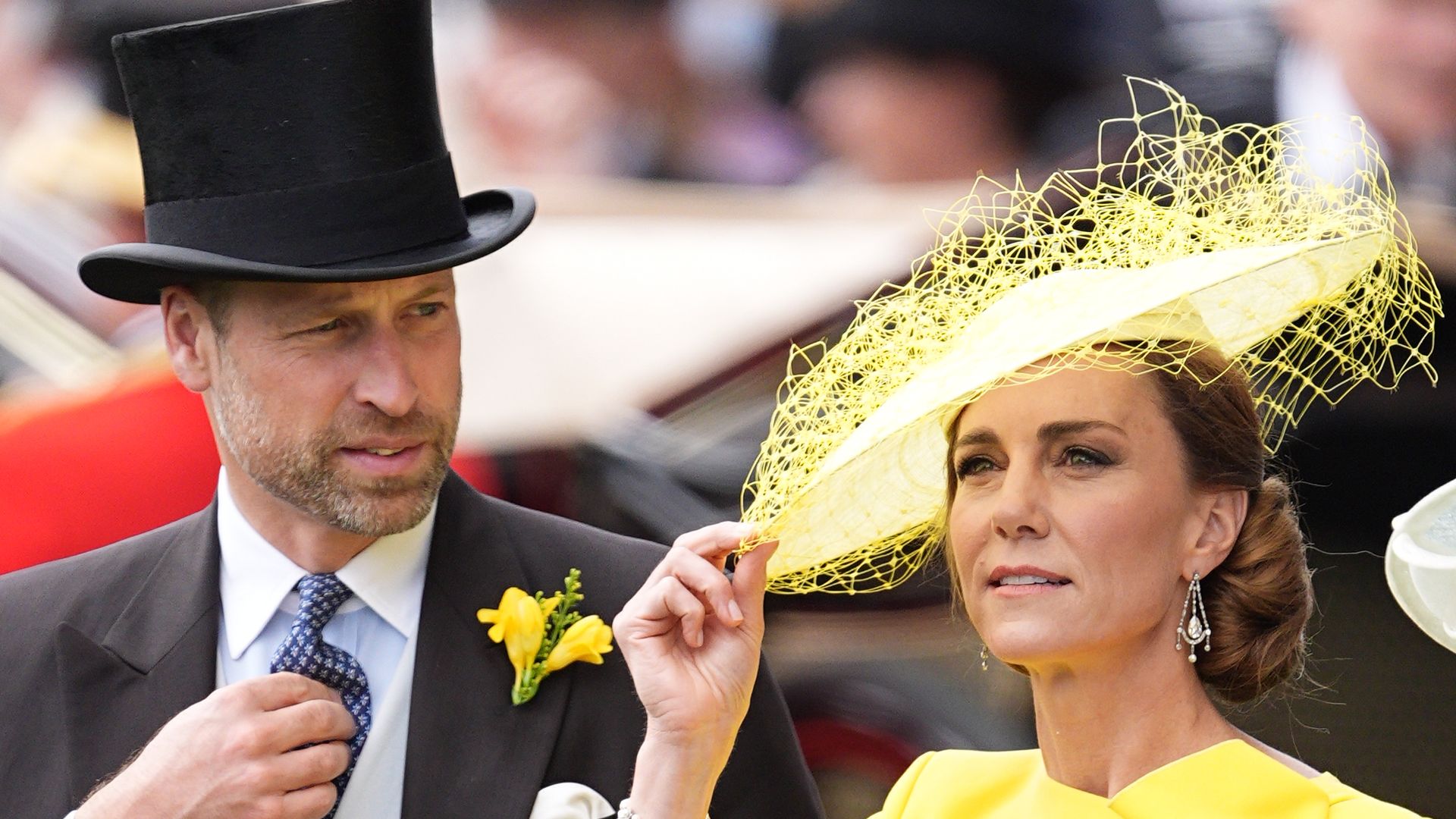
Soft power projection requires high-visibility physical deployment into markets where global policy outcomes are decided, which explains why the arrival of the Prince and Princess of Wales in Mumbai for the Earthshot Prize represents a calculated geopolitical and capital-allocation maneuver rather than a ceremonial tour. Standard coverage treats royal visits as celebrity logistics, tracking arrivals, wardrobes, and surface-level itineraries. That framing misses the operational mechanics. By anchoring the Earthshot Prize in India’s financial capital, the institution is attempting to bridge Western philanthropic capital with high-density Asian industrial scalability, testing whether royal convening power can accelerate commercial climate technology deployment in the Global South.
The Structural Logic of the Mumbai Deployment
Selecting Mumbai over European or North American financial centers obeys a strict economic and demographic calculus. Climate mitigation strategies designed in London or New York frequently fail when exposed to the unit economics of developing markets. Technologies that rely on heavy state subsidies or high consumer price premiums cannot scale across populations where energy affordability and rapid industrialization take precedence over carbon accounting.
India presents a dual-variable challenge that makes it the ultimate stress test for environmental innovation:
- Emissions Velocity vs. Per-Capita Baseline: India is the third-largest aggregate emitter of greenhouse gases globally, yet its per-capita emissions remain a fraction of the OECD average. Any credible global decarbonization model must prove it can decouple India's ongoing GDP growth from fossil fuel consumption without suppressing living standards.
- Capital Absorption Capacity: Unlike smaller developing nations that lack the financial infrastructure to absorb institutional capital, Mumbai houses the Bombay Stock Exchange, the Reserve Bank of India, and the headquarters of conglomerates capable of executing multi-billion-dollar infrastructure rollouts.
Deploying the Prince and Princess of Wales to this specific node creates a diplomatic forcing function. Royal attendance compresses the timeline required to secure meetings with tier-one industrialists, sovereign wealth representatives, and state-level regulators. In institutional fundraising and policy alignment, attention is a scarce asset; the British monarchy functions as an attention-aggregation engine that lowers customer acquisition costs for early-stage climate ventures seeking commercial pilots.
Deconstructing the Earthshot Capital Allocation Model
To evaluate the efficacy of this trip, one must separate the public-relations apparatus from the underlying venture mechanism. Founded by Prince William through The Royal Foundation in 2020, the Earthshot Prize operates on a decade-long horizon (2021–2030), awarding five £1 million grants annually across five fixed categories: Protect and Restore Nature, Clean Our Air, Revive Our Oceans, Build a Waste-Free World, and Fix Our Climate.
A £1 million non-dilutive grant is insufficient to build utility-scale infrastructure or fund deep-tech manufacturing. Treating the prize money as the primary output is an analytical error. The actual mechanism relies on a three-stage value chain designed to de-risk early-stage solutions for follow-on institutional investors:
- Stage One — Validation Filtering: Thousands of global nominations are screened through an expert advisory panel, effectively acting as unpaid technical due diligence for venture capital funds and corporate innovation arms.
- Stage Two — Brand Equity Transfer: Finalists and winners inherit the institutional credibility of the British Crown and its global coalition of corporate partners. For a startup operating in air filtration or agricultural waste processing in South Asia, this brand transfer eliminates the trust deficit that typically stalls B2B enterprise sales.
- Stage Three — Network Liquidity: The Mumbai event serves as a physical marketplace matching vetted innovators with supply-chain operators, philanthropic foundations, and impact funds. The prize money funds operational runway, while the surrounding summit generates the commercial off-take agreements required for Series A and Series B financing.
The Indian Innovation Pipeline
India has consistently generated a disproportionate share of Earthshot finalists and winners—including Takachar (which converts agricultural waste into marketable bioproducts to prevent stubble burning) and Kheyti (which provides modular "Greenhouse-in-a-Box" solutions for smallholder farmers).
This concentration is not accidental. Indian climate startups operate under severe capital constraints, forcing founders to engineer for extreme cost efficiency from day one. When a technology achieves profitability among smallholder farmers in Telangana or waste pickers in Pune, its unit economics are resilient enough to export across Southeast Asia, Sub-Saharan Africa, and Latin America. By bringing the ceremony and its accompanying investor delegations directly to Mumbai, the Earthshot organization is attempting to move upstream in this pipeline—capturing innovations earlier and connecting them directly to domestic corporate balance sheets rather than relying solely on Western aid.
Geopolitical Subtext and Bilateral Friction Management
Every international deployment of senior British royals operates in coordination with the Foreign, Commonwealth and Development Office (FCDO). While the Kensington Palace communications team frames the Earthshot Prize as an independent environmental initiative, the timing and location intersect directly with broader UK-India bilateral priorities.
Following the United Kingdom's exit from the European Union, London’s trade strategy has prioritized securing bilateral trade agreements and deeper investment ties with Indo-Pacific powers. Negotiations over a UK-India Free Trade Agreement (FTA) have repeatedly stalled over contentious friction points, including visa mobility for Indian professionals, tariff reductions on British automobiles and spirits, and rules-of-origin requirements.
Environmental diplomacy serves as a low-friction diplomatic channel when formal trade negotiations hit political roadblocks. Climate finance and clean technology transfer represent areas of mutual strategic alignment:
- For London: It positions the City of London as the premier global hub for green finance, channeling ESG-mandated institutional capital into Indian green bonds and renewable energy projects.
- For New Delhi: It reinforces India's diplomatic positioning as a leader of the Global South that demands climate action be paired with tangible technology transfer and financing from historical emitters, rather than punitive regulatory barriers.
The presence of both William and Kate maximizes media saturation across both British and Indian news cycles, creating a halo effect around bilateral cooperation. However, this dual-purpose utility introduces operational vulnerabilities. If the visit is perceived domestically in India as Western lecturing on environmental standards—particularly given historical emissions disparities—it risks triggering nationalist pushback. Consequently, the messaging architecture during the Mumbai engagements strictly emphasizes Indian ingenuity and co-creation, positioning the royal delegation as amplifiers of local solutions rather than external arbiters of environmental policy.
Operational Limitations and Structural Bottlenecks
A rigorous assessment requires identifying where the Earthshot model breaks down under real-world industrial pressures. High-profile royal visits generate intense short-term media spikes, but structural decarbonization faces friction that convening power alone cannot resolve.
The "Valley of Death" in Hardware Scaling
Most high-impact solutions in the "Clean Our Air" and "Build a Waste-Free World" categories involve physical hardware, chemical processing, or biological inputs rather than pure software. Scaling hardware requires capital expenditure (CapEx) for manufacturing plants, supply chain logistics, and regulatory permits. While the Earthshot network excels at unlocking philanthropic grants and early-stage venture capital, commercial banks in India remain conservative regarding debt financing for unproven green technologies. A royal handshake does not alter the risk-weighting algorithms of commercial credit committees.
Regulatory Fragmentation Across Indian States
India’s federal structure means that land acquisition, environmental clearances, pollution control board approvals, and municipal waste contracts are controlled at the state and municipal levels, not centrally in Mumbai or New Delhi. A startup validated at a high-profile Mumbai summit still faces fragmented bureaucratic procurement processes when attempting to deploy municipal water treatment or urban air-quality infrastructure across different states.
The Attention Decay Curve
Media coverage of royal tours follows a steep exponential decay curve. Within 72 hours of the delegation's departure, mainstream press attention shifts back to domestic political cycles or celebrity narratives. If the Earthshot team fails to convert summit introductions into legally binding Memoranda of Understanding (MOUs) and capital commitments within a 90-day post-event window, the diplomatic momentum dissipates without altering baseline emissions trajectories.
Measuring Success Beyond Media Impressions
Traditional public relations agencies evaluate royal tours using vanity metrics: total press clippings, social media impressions, broadcast reach, and crowd sizes. For an initiative claiming to repair the planet within a ten-year window, these metrics are functionally useless. High-impression counts do not sequester carbon or filter particulate matter.
To determine whether the Mumbai deployment produces substantive economic and environmental returns, analysts must track four lagging operational indicators over the 12 to 24 months following the visit:
- Follow-On Capital Ratio: The ratio of private institutional capital raised by Indian Earthshot finalists within 18 months of the Mumbai summit relative to the baseline £1 million grant. A healthy venture-catalyst model should demonstrate at least a 10x to 15x capital multiplier.
- Corporate Off-Take Velocity: The number of commercial procurement contracts signed between Earthshot cohort companies and major Indian conglomerates (such as Tata, Reliance, Mahindra, or Adani) where the corporate entity acts as a paying customer rather than a charitable donor.
- Policy Adoption Rate: Specific instances where municipal governments or state pollution boards revise procurement standards or technical specifications to accommodate technologies showcased during the Mumbai engagements.
- Unit Cost Compression: Measurable reductions in the per-unit production or deployment cost of winning technologies achieved through access to Indian manufacturing supply chains introduced during the tour.
The Strategic Play for Institutional Stakeholders
For corporate sustainability officers, impact fund managers, and policy strategists operating in South Asia, the royal arrival in Mumbai should be treated as a temporary liquidity event in the climate-tech sector. The presence of the Prince and Princess of Wales temporarily concentrates decision-makers, regulatory attention, and cross-border capital pools into a single geographic radius.
Stakeholders must avoid spending resources on symbolic proximity—sponsoring galas or pursuing photo opportunities yields zero operational return. Instead, institutional actors should use the 60-day window surrounding the Mumbai deployment to execute targeted, high-friction transactions: closing co-investment syndicates alongside the Earthshot Global Alliance partners, finalizing cross-border licensing agreements for Indian-engineered hardware, and locking in corporate off-take commitments while regulatory visibility is at its peak. Once the royal aircraft departs, the cost of coordinating those same stakeholders reverts to its standard, high-friction baseline.