For three long years, the skies off the eastern coast of Asia did not know peace. Every morning began with the same metallic roar: radar screens lighting up in green, warning alarms chirping in military command centers, and fighter jets scrambling into the damp salt air over the Western Pacific.
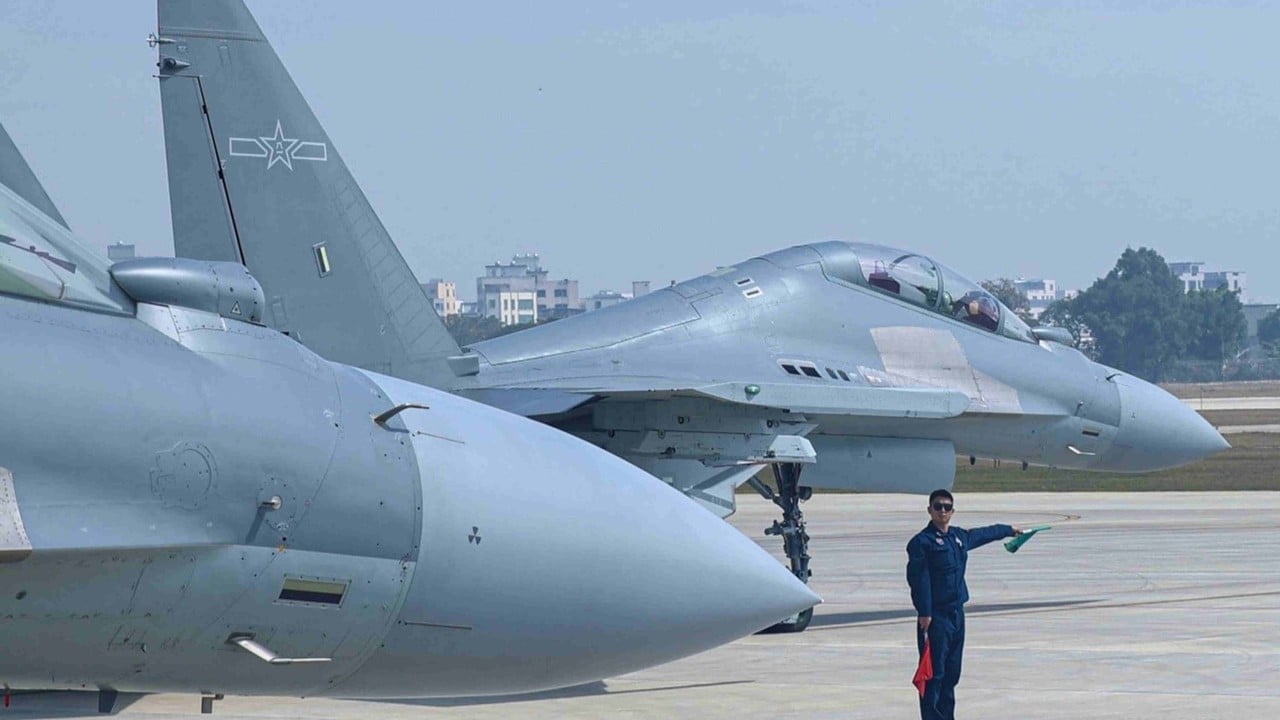
To the men and women sitting in front of radar consoles in Taipei, the daily incursions by the People’s Liberation Army were a predictable rhythm of anxiety. A standard pattern emerged. Su-30s would test the northern edges of the Air Defense Identification Zone. J-16 multirole fighters would swoop through the southwestern corner, cutting close to the median line before veering back toward mainland bases in Fujian. Strategic bombers would loop around the island’s southern tip. It was an relentless symphony of intimidation designed to wear down airframes, exhaust pilots, and condition a nervous populace into accepting the unthinkable as routine.
Then, in the early months of 2026, something unexpected happened.
The noise began to fade.
By mid-year, defense analysts auditing flight logs noticed a startling statistical reality: PLA fighter jet sorties near Taiwan had plummeted to their lowest levels in three years. The daily swarms had fractured into sporadic blips. The aggressive multi-vector drills had thinned out. On many days, the air defense warnings remained dead quiet.
When a threat that has defined your daily existence suddenly steps back, your first impulse is relief. Your second, if you are paying attention, is a sudden, sharp coldness in the pit of your stomach. Because in the high-stakes chess match of international geopolitics, a sudden stillness rarely means the game is over. It usually means someone is switching strategies.
The Sound of an Unseen Shift
Imagine standing on a coastline where a freight train has rumbled past your front door every twenty minutes for thirty-six months. You get used to the vibration in your tea cup. You learn to talk over the screech of iron on steel. You build your life around the noise.
Then, one afternoon, the train stops running.
In military analysis, this phenomenon is known as operational cadence, and breaking it is never accidental. The reduction in flight hours across the Taiwan Strait during the first half of 2026 was not a subtle two-percent fluctuation. It was a clear, deliberate drop-off.
To understand why those jets stayed on the tarmac, you have to look past the cockpit canopy and step into the unglamorous, grinding realities that govern modern armed forces. Airplanes are fragile beasts made of titanium, complex avionics, and thousands of hours of required maintenance. For three years, Beijing ran its air force at a punishing operational tempo. Maintenance crews worked round-the-clock shifts. Engines burned through their flight-hour life expectancies months ahead of schedule. Fuel budgets ballooned.
Consider a hypothetical frontline squadron leader at an airbase in Eastern Theater Command—let's call him Commander Chen. For thirty-six months, Chen’s ground crews were replacing parts faster than supply lines could deliver them. Jet engines do not care about political messaging; they suffer metal fatigue regardless of national ambition. By running continuous, high-intensity harassing missions, China was accomplishing its goal of stressing Taiwan's smaller air force, but it was also quietly chewing through the operational readiness of its own premier fighter fleets.
A machine pushed too hard eventually breaks. By early 2026, the sheer physical toll of maintaining three years of constant pressure forced a tactical breath.
Internal Waves and Unmet Targets
Yet mechanical wear and tear tells only half the story. The sky is an expression of the land below it, and the land in early 2026 was undergoing its own quiet upheavals.
Inside the sprawling headquarters of the Central Military Commission in Beijing, the financial and political equations were shifting. China’s economic engine, navigating a protracted post-real-estate recalibration, demanded stricter scrutiny of state spending. A single operational flight hour for a modern twin-engine fighter jet like the J-16 costs tens of thousands of dollars in jet fuel, crew pay, airframe attrition, and support logistics. When multiplied across hundreds of sorties a month, the bill becomes astronomical.
Simultaneously, the internal architecture of China's defense establishment experienced deep structural seismic activity. Sweeping anti-corruption investigations and leadership reshuffles target-locked high-ranking officers within the Rocket Force and procurement sectors. When senior leadership is restructured, operational priorities are inevitably frozen or audited. Promoted officers do not simply execute their predecessors' blueprints; they re-examine them.
If your logistics pipeline is undergoing an audit and your command structure is being reorganized, you do not launch thirty jets a day into contested airspace to make a point you have already made ten thousand times before. You pause. You reassess. You conserve your assets.
The Evolution of the Shadow
There is a dangerous temptation to read this decline as a victory for deterrence or a sign of backing down. That interpretation misses the fundamental nature of modern conflict.
Power does not disappear; it changes form.
While the thunder of fighter jets receded, other, quieter instruments stepped into the vacuum. Defense observers watching the region quickly noticed that as the high-altitude fighter sorties dropped, different shapes began appearing on maritime tracking boards. Coast Guard vessels, maritime law enforcement cutters, and civilian-flagged research ships started asserting a subtle, persistent presence around offshore islands.
This is the shift from high-profile military posturing to gray-zone normalization.
A J-16 flying across the median line makes international headlines and forces Taiwanese fighters to scramble, costing both sides millions. But a Coast Guard vessel coasting through territorial waters claiming to conduct routine safety inspections? That rarely makes the evening news in Western capitals. Yet its long-term strategic impact is remarkably similar. It slowly, methodically erodes sovereignty without ever firing a missile or triggering a defense treaty.
The military air sorties were the loud, grand overture. Once the world became accustomed to the tension, the orchestra stepped back to let the background instruments handle the melody.
The Trap of the Quiet Sky
Humans are wired to measure danger by volume. We fear the thunder, not the slow rise of the tide.
For the citizens of Taipei, Kaohsiung, and the rural townships along the eastern coastline, the reduction in air raid sirens and scrambled jets in mid-2026 felt like a breath of cool air after a stifling summer. Coffee shops along the DanShui River were full. Life moved with its accustomed, vibrant hustle.
This human reaction is completely natural. No society can live at maximum alert forever without suffering deep psychological fatigue. But that fatigue is precisely what makes a sudden lull so potent.
When the sky stays quiet for three months, six months, a year, vigilance softens. Scramble times slow by seconds. Readiness budgets face political pressure from domestic social programs. International media outlets move their correspondents to newer, louder crises elsewhere in the world.
The drop in sorties near Taiwan in early 2026 was not an olive branch. It was a calibration.
Strategic patience is the hallmark of long-term planning. By dialing back the overt aerial pressure, Beijing achieved three things at once: it preserved its military hardware, managed internal political and economic pressures, and tested how the world would react to a sudden absence of drama.
The Unwritten Next Chapter
Standing on the beach at Hualien, looking out over the deep azure expanse of the Pacific, the water looks impossibly tranquil. The waves lap against the black pebble shore with a rhythmic, soothing murmur. There are no contrails crisscrossing the blue above. No distant sonic booms shaking the windows of the coastal villages.
It is easy, in a moment like that, to believe that the storm has passed.
History warns us against that comfort. The reduction of PLA fighter sorties in the first half of 2026 was a chapter break, not the end of the book. The jets are parked in their hardened shelters, their engines cooling, their mechanics replacing worn seals and updating navigation software. The pilots are in simulators, studying new tactics.
The silence hanging over the strait today is not the silence of peace. It is the deep, deliberate breath a sprinter takes while settling into the starting blocks, waiting for a signal that only they know is coming.