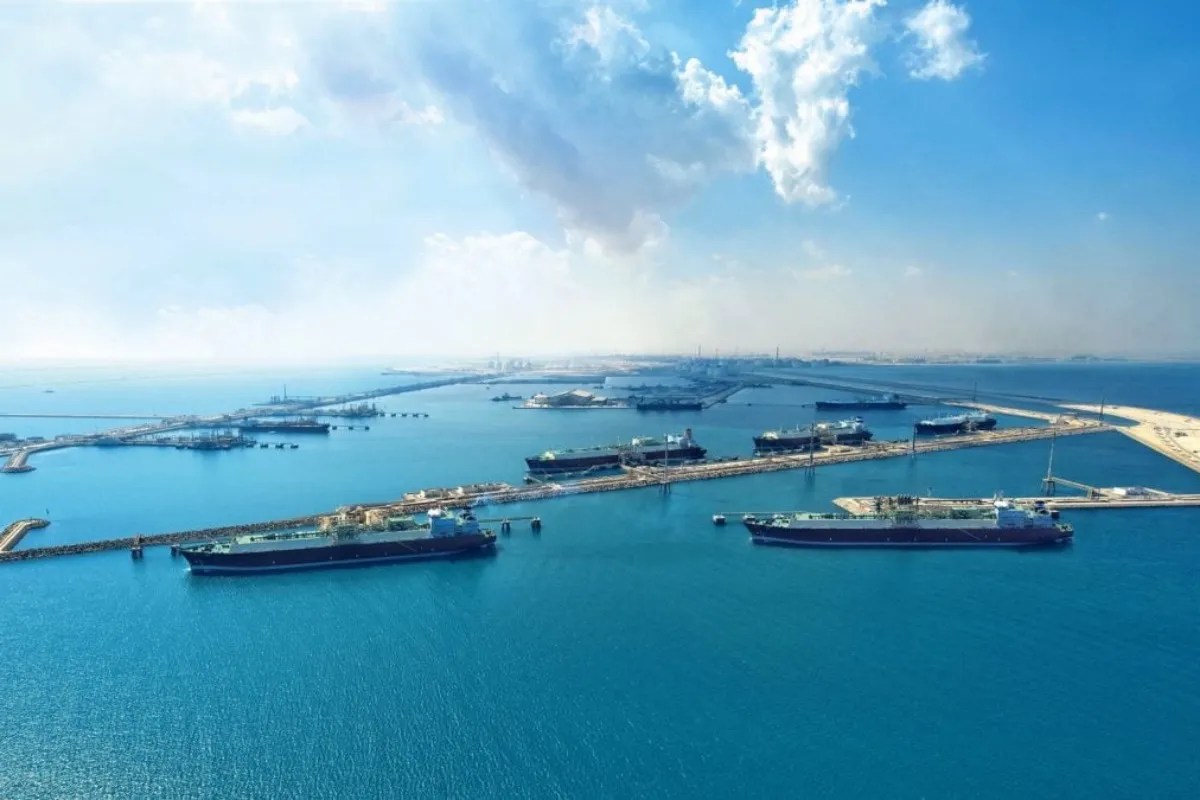
The water in the Strait of Hormuz is a deceptive shade of deep blue. Under the baking Middle Eastern sun, it looks calm, almost stagnant. But beneath that placid surface lies the world’s most volatile economic choke point. It is a narrow ribbon of water, barely twenty-one miles wide at its tightest bottleneck. Through this slender corridor flows one-fifth of the world’s liquid petroleum. If global commerce has a jugular vein, this is it.
When tension rises in the Persian Gulf, the world holds its breath. A single miscalculation, a stray drone, or a political decree can cause oil prices to spike instantly, triggering a domino effect that reaches from Wall Street boardrooms to the poorest neighborhoods of South Asia. For months, the threat of a total shutdown of the Strait has loomed like an executioner's axe.
Yet, in the midst of escalating geopolitical friction, a quiet directive was issued from Tehran. Iran signaled that despite the geopolitical storms brewing, certain ships would have unhindered passage. Specifically, oil and liquefied natural gas (LNG) tankers bound for Pakistan and China received a green light.
To understand why this matters, look away from the map of military positions and look instead at a single household in Karachi.
The Weight of a Choke Point
Think of a small-scale textile factory owner on the outskirts of Karachi. Let's call him Tariq. He does not study naval charts. He does not read intelligence briefings on Iranian missile capabilities. But Tariq understands geopolitics through his electricity bill and the violent hum of his backup diesel generator.
Whenever the Strait of Hormuz tightens, Tariq’s life gets harder. Pakistan relies heavily on imported energy to keep its grid alive. When global energy prices fluctuate due to Middle Eastern instability, the shockwaves are felt instantly in Pakistani markets. Power outages last longer. Fuel costs swallow profit margins. For Tariq, a closed strait does not mean a abstract diplomatic crisis; it means laying off three workers who have families to feed.
Further east, across the Karakoram highway, the stakes change scale but retain their human urgency. China is the world's largest crude oil importer. Its massive industrial engine demands a constant, uninterrupted diet of energy. While Beijing has spent decades diversifying its energy supply through Siberian pipelines and domestic renewable transitions, the sea lanes remains its vulnerability. A sudden halt in Gulf oil would slow factories in Guangdong, increase shipping costs globally, and hit the pockets of everyday consumers worldwide.
The maritime stand-off seemed poised to crush these interconnected economies. Then came the diplomatic pivot. Iran’s decision to grant safe passage to Pakistani and Chinese vessels served as a sudden release of pressure.
The Anatomy of the Green Light
Geopolitics is rarely driven by pure altruism. Iran’s decision to exempt Pakistan and China from the shadow of a Hormuz blockade is a calculated move rooted in survival and strategic alignment.
Consider the isolation Iran faces under layers of international sanctions. To survive economically, Tehran requires partners who are willing to bypass traditional Western financial systems. China is that crucial economic lifeline, purchasing a significant portion of Iranian oil through backchannels and providing a diplomatic shield at the United Nations. Pakistan, sharing a long, sensitive border with Iran, represents a neighbor that Tehran cannot afford to alienate, especially given the shared security challenges in the Balochistan region.
By ensuring that Chinese and Pakistani tankers can pass through the Strait unimpeded, Iran achieves two things simultaneously.
First, it honors its critical economic alliances, proving itself a reliable partner to Beijing even during a crisis. Second, it uses the threat of the blockade selectively. By showing it can turn the tap off for some while leaving it on for others, Tehran demonstrates absolute control over the waterway. It transforms the Strait of Hormuz from a blunt instrument of war into a precision tool of diplomacy.
The Invisible Networks
The mechanics of this safe passage are fascinatingly complex. Marine traffic tracking data shows how tankers move through these high-risk zones. When a vessel enters the Persian Gulf today, its captain is acutely aware of the risks. Insurance premiums for transiting the region can skyrocket overnight, sometimes costing more than the fuel required for the entire voyage.
For a Pakistani or Chinese tanker navigating these waters, the green light changes the psychology on the bridge.
The crews on these massive vessels—often merchant mariners from developing nations—bear the true human cost of geopolitical tension. They are the ones scanning the horizon for fast-attack craft or naval mines. Knowing that their flag state has a diplomatic understanding with the regional power brings a profound sense of relief. It transforms a high-stakes gamble into a standard, albeit tense, operational run.
This selective freedom of navigation also prevents a total collapse of Pakistan's fragile energy sector. With foreign exchange reserves frequently under pressure, Islamabad cannot afford to buy emergency fuel at exorbitant spot-market prices if the Gulf shuts down. The Iranian assurance acts as an unwritten economic guarantee, stabilizing energy projections at a time when the country's economy is navigating a difficult recovery.
The Friction that Remains
But the real problem lies elsewhere. A green light in a crowded, militarized waterway is only as good as the communication systems supporting it.
The Strait of Hormuz is not a wide-open ocean; it is a pair of two-mile-wide shipping lanes—one inbound, one outbound—separated by a two-mile buffer zone. When international warships patrol the same narrow corridors used by commercial tankers, the margin for error shrinks to near zero. An Iranian naval commander identifying a target in the dead of night relies on electronic transponders and visual confirmation. If a tanker carrying oil to Gwadar or Qingdao is misidentified in a moment of panic, the diplomatic green light turns irrelevant in an instant.
Moreover, this arrangement places Pakistan and China in a delicate diplomatic position on the global stage. Accepting special privileges from Iran while Western nations face heightened risks in the same waters requires a masterclass in diplomatic tightrope walking. Islamabad must balance its crucial relationship with Gulf Arab states and Western trading partners while benefiting from Iran’s maritime concession.
The Ripple Effect on the Ground
Back in the industrial zones of South Asia, the immediate crisis recedes, replaced by a watchful truce. Tariq’s factory keeps running. The diesel generator remains off for a few more hours today because the local power plant received its shipment of fuel oil on time.
The global economy is often spoken of in abstract terms—indices, futures, and barrels. But the true measure of geopolitics is found in continuity. It is found in the ability of a small business to predict its costs for the next month, or a truck driver's ability to fill his tank without spending a week's wages.
Iran's selective opening of the Strait of Hormuz highlights a fragmented world where global rules are being replaced by regional deals. The universal principle of freedom of navigation is being carved up into spheres of influence and bilateral understandings. For now, the tankers move forward, their hulls sitting low in the water, carrying the lifeblood of economies through a corridor defined entirely by the shifting whims of regional power.