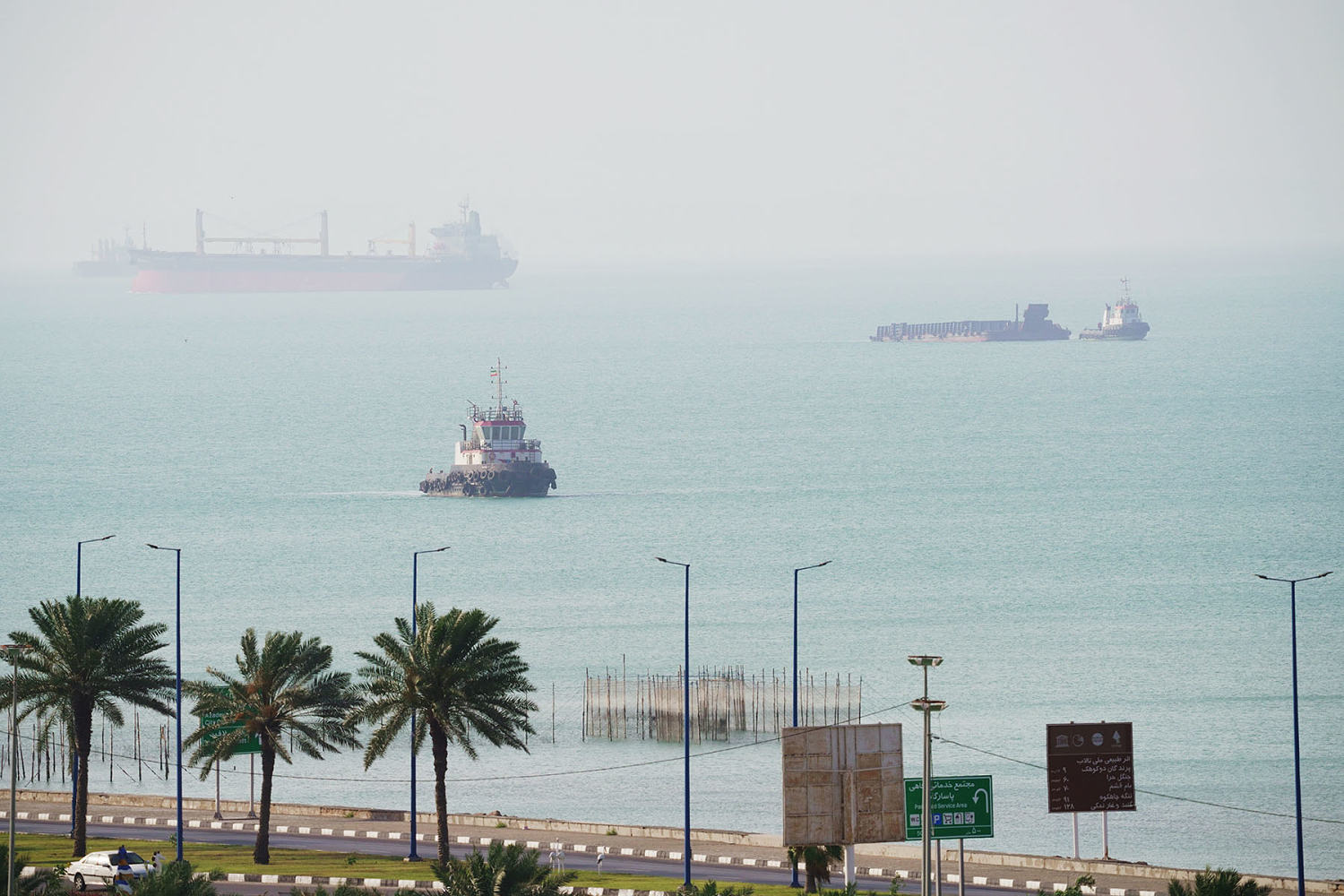
The prevailing narrative on the Strait of Hormuz is a masterpiece of intellectual laziness. If you read the mainstream press, you are fed a steady diet of "global crisis" rhetoric. They paint a picture of a fragile choke point where a single stray mine could collapse the world economy, and they treat U.S. naval hegemony as the only thing standing between us and $200-a-barrel oil.
It is a fairy tale. If you enjoyed this piece, you should look at: this related article.
The recent hand-wringing over the U.S. asking allies for help while simultaneously "attacking" them via trade policy misses the point entirely. The real story isn't about diplomatic friction or "maritime security." It is about the fact that the Strait of Hormuz is becoming strategically obsolete, and the U.S. knows it. While the media obsesses over whether the UK or France will send a frigate to play escort, the actual power players are already moving the goalposts.
The Myth of the Global Oil Chokehold
Every "expert" loves to cite the statistic that roughly 20% of the world’s liquid petroleum passes through the Strait. They want you to believe that if Iran "closes" the Strait, the lights go out in London, New York, and Tokyo. For another angle on this event, refer to the recent coverage from The New York Times.
This is fundamentally wrong.
Energy markets are not the fragile glass ornaments they were in 1973. The global supply chain has spent forty years building redundancies that the doom-scrollers ignore. Saudi Arabia’s East-West Pipeline can move five million barrels a day to the Red Sea, bypassing the Strait entirely. The UAE’s Habshan-Fujairah pipeline cuts another 1.5 million barrels out of the Hormuz equation.
Furthermore, the United States is no longer the desperate customer sitting at the end of that Persian Gulf hose. Thanks to the Permian Basin and horizontal drilling, the U.S. is a net exporter. When Washington asks allies to step up in the Gulf, it isn't a cry for help. It is a strategic hand-off. The U.S. is signaling that it no longer feels the need to subsidize the security of China and India’s energy supply with American tax dollars and naval lives.
Your "Allies" Are Actually Competitors
The media frames the tension between the U.S. and its European allies as a "diplomatic failure." They claim Trump’s rhetoric "weakens the coalition."
Let’s be real: A coalition that requires one partner to do 90% of the heavy lifting while the others complain about the tone of the request isn't a coalition. It’s a protection racket where the protector is finally asking for the bill to be paid.
The European powers have spent decades de-funding their militaries while relying on the U.S. Navy to keep the global commons open. When the U.S. applies pressure—whether through tariffs or demands for increased defense spending—it is disrupting a status quo that has been objectively bad for American interests.
The contrarian truth? Fraying these alliances is a feature, not a bug. By forcing allies to choose between securing their own energy routes or facing the consequences of "closed" waters, the U.S. is reclaiming its strategic flexibility. If the Strait of Hormuz becomes "unstable," the biggest losers are the manufacturing hubs in East Asia and the energy-dependent economies of Europe. The U.S., with its domestic production and North American supply chain, stays insulated.
Iran’s "Golden Gun" is Shooting Blanks
We are told Iran holds the world hostage with its ability to sink tankers or lay mines.
Imagine a scenario where Iran actually attempts to "close" the Strait for more than 48 hours. Doing so would be an act of national suicide. Iran’s own economy is entirely dependent on the very water they threaten to block. You cannot choke your neighbor if you are breathing through the same tube.
The Iranian strategy is "gray zone" warfare—nuisance attacks, drone strikes on tankers, and seizure of vessels—specifically designed to stay below the threshold of a full-scale war. They rely on the West’s fear of high oil prices to gain leverage at the negotiating table. But that leverage only exists if we continue to believe the lie that Hormuz is indispensable.
The Real Cost of "Security"
I have watched maritime insurance premiums spike and shipping lanes shift. I have seen companies panic and hedge millions on oil futures based on a single tweet. The irony is that the "instability" in the Strait is more profitable for certain sectors than peace ever was.
When the U.S. "attacks" its allies while asking for help, it is forcing a market correction in geopolitics. For too long, the cost of securing the Persian Gulf has been "off-balance sheet" for the countries that benefit most from it. By making the security of the Strait a point of contention, the U.S. is effectively moving that cost back onto the primary consumers: China, Japan, and the EU.
The Obsolescence of the Aircraft Carrier Era
The fixation on sending naval task forces to the Strait is a 20th-century solution to a 21st-century non-problem. In an age of anti-ship ballistic missiles and autonomous drone swarms, parking a multibillion-dollar aircraft carrier in the narrow waters of the Gulf is a tactical nightmare.
The U.S. isn't "abandoning" its allies; it is recognizing that the traditional methods of "projecting power" in the Strait are increasingly risky and decreasingly necessary. The future of energy security isn't found in a naval escort; it’s found in the diversification of energy sources and the hardening of terrestrial infrastructure.
Stop Asking if the Strait is Open
The question isn't whether the Strait of Hormuz will stay open. The question is why we are still pretending it's the center of the universe.
The global energy map has shifted. The U.S. has flipped from a buyer to a seller. The "choke point" is a psychological weapon used by a desperate Iranian regime and a media-industrial complex that thrives on crisis.
If you are waiting for a "return to normalcy" in transatlantic relations or a "stabilization" of the Persian Gulf, you are looking backward. The disruption is the point. The U.S. is exiting the business of being the world's unpaid security guard, and the Strait of Hormuz is simply the first place where the guard is handing over the keys and walking away.
The era of the "global commons" being a free ride for U.S. competitors is over.
Adjust your portfolio accordingly.


