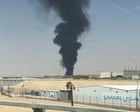
The narrow neck of water separating the Persian Gulf from the Gulf of Oman handles roughly a fifth of daily global petroleum consumption, making it the most pressurized maritime chokepoint on earth. When Tehran formally asserted that commercial transit through the Strait of Hormuz will stay throttled until a rigid set of political demands is met, global markets treated the statement as standard posturing. That was a miscalculation. By tying the survival of maritime commerce to a seven-point list that includes the total cessation of regional hostilities, asset releases, and the lifting of naval blockades, the Iranian state has weaponized geography. Cargo tracking data confirms that commercial hull counts have plummeted to a fraction of their historical baselines, driven equally by naval threats, sea mines, and the soaring cost of war-risk insurance.
Understanding this standoff requires looking past diplomatic communiqués and examining the physical mechanics of the shipping lane. The channel narrows to roughly twenty-one miles at its tightest point, with inbound and outbound traffic lanes each just two miles wide, separated by a buffer zone. This geometry leaves Very Large Crude Carriers with virtually zero margin for error. When military authorities declare the corridor closed to vessels linked to adversarial nations, underwriters respond by pulling coverage. Without insurance, shipowners simply do not sail. The de facto closure operates effectively without requiring a total physical blockade of every square mile of water.
The Cost of Alternative Routes
Proponents of free trade often point to regional pipelines as a safety valve, suggesting that crude can be pumped overland to alternative terminals on the Red Sea or the Gulf of Oman. This argument ignores physical capacity limits. Infrastructure like the East-West Pipeline in Saudi Arabia or the Habshan-Fujairah pipeline in the United Arab Emirates offers vital mitigation, but they cannot absorb the massive volume normally hauled by supertankers. Millions of barrels per day lack an alternative outlet when the maritime route shuts down.
Consider a hypothetical scenario in which a major consumer nation attempts to bypass the bottleneck entirely using small-scale truck fleets or under-capacity pipelines; the resulting logistics bottleneck would drive inland fuel expenses up exponentially within forty-eight hours, paralyzing manufacturing and transport sectors simultaneously. The physical reality remains absolute. Pipelines are rigid pipes with fixed diameters, whereas maritime shipping is elastic, scalable, and currently locked down.
Navigating the Seven Demands
The core of the current crisis centers on the conditions articulated by Iranian officials, which span economic compensation, security guarantees, and operational control of the waterway. Western capitals view these terms as non-starters, designed to extract maximum concessions under duress. Yet viewing them solely as diplomatic blackmail misses the structural strategy at play. Tehran has successfully linked its own economic isolation under international sanctions directly to the cost of global energy security.
If frozen assets remain locked and naval patrols maintain pressure on Iranian ports, the risk profile of the entire region shifts permanently. Energy importing nations in Asia and Europe absorb the immediate economic shock through volatile pricing, while domestic populations face persistent inflation. The longer the stalemate persists, the more ordinary shipping routines adapt to higher baselines, normalizing a permanent risk premium that reshapes trade routes from the ground up.
The Limits of Naval Escorts
Naval coalitions operating in the wider region face an intractable operational dilemma. Escorting individual commercial vessels through a restricted chokepoint requires immense destroyer and frigate assets, turning military escorts into fixed targets for asymmetric defense systems deployed along the coastline. Patrol vessels cannot be everywhere at once, and a single successful strike against a protected hull destroys the commercial confidence required to keep supply chains moving.
Energy markets are reacting not to temporary blips, but to a fundamental structural shift in how sovereign states can manipulate global choke points with relatively low-cost asymmetrical assets. As long as the core political demands remain unaddressed, cargo will continue to divert, spot prices will stay elevated, and the illusion of secure global maritime transit will remain shattered against the rocky islands of the Persian Gulf.