The Chokepoint That Holds Global Commerce Hostage
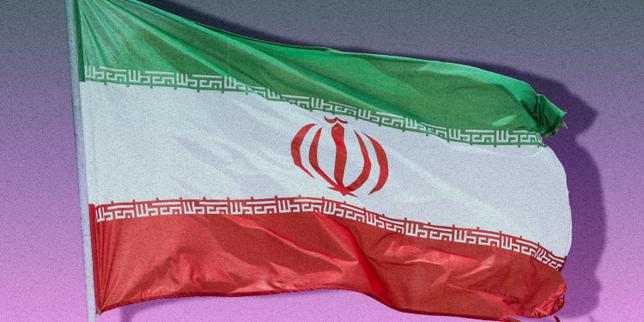
Iran has quietly granted explicit permission for a specific allocation of Iraqi oil tankers to transit the Strait of Hormuz without interference. The move shifts the tactical baseline in the Persian Gulf. It is a calculated exception to a maritime choke point where every single barrel of crude carries a geopolitical tax.
The Strait of Hormuz is roughly twenty-one miles wide at its narrowest point, with the inbound and outbound shipping lanes each just two miles wide. That narrow corridor handles roughly a fifth of the world's petroleum consumption. When Tehran signals that a neighbor's tankers can slip through unmolested, tanker brokers take notice, insurance underwriters recalculate risk premiums, and ministries across the globe try to decode the underlying bargain.
Understanding why this exception happened requires looking past official diplomatic cables. Energy markets do not run on goodwill. They run on physical security, military deterrence, and the cold arithmetic of state survival.
Baghdad Caught in the Middle of Regional Crosscurrents
Iraq pumps millions of barrels of crude every month, with the bulk of its export capacity routed through southern terminals feeding into the Persian Gulf. For decades, Baghdad has walked a tightrope between Washington and Tehran. Iraqi oil revenue keeps the federal government afloat, pays public sector salaries, and funds basic infrastructure. Yet, the physical pathway for that wealth passes directly under the guns of the Islamic Revolutionary Guard Corps Navy.
When tensions spike in the region, shipping lanes turn hazardous almost overnight. Maritime insurance rates surge by hundreds of basis points. Shipowners demand hazard pay for their crews, and charterers think twice before booking tonnage through the Gulf. By carving out a safe passage exemption for Iraqi carriers, Iran achieves multiple objectives simultaneously.
- Secures influence over Baghdad's political machinery by demonstrating control over its economic lifeline.
- Signals to regional adversaries that Tehran retains the power to selectively open or close the valve on global energy flows.
- Mitigates domestic blowback inside Iraq, where severe economic disruption from blocked oil sales could destabilize a fragile government on Iran's western border.
This is not charity. It is strategic triage. Iran needs friendly or at least compliant neighbors to buffer against ongoing sanctions and economic isolation. Allowing Iraqi tankers through the gauntlet keeps a vital regional economy functioning while reminding everyone who polices the water.
The Mechanics of Maritime Exemptions
Navigating the Strait of Hormuz under a cloud of geopolitical friction is an exercise in high-stakes compliance. Tanker captains do not simply weigh anchor and hope for the best. Every transit requires precise coordination, active transponders, and explicit clearance from regional naval authorities.
When an Iraqi tanker approaches the maritime boundary, communication protocols kick in. Vessel traffic services monitor the coordinates down to the meter. Historically, friction points arise when foreign navies conduct exercises or when regional actors decide to detain vessels over alleged smuggling or boundary violations.
[Iraqi Oil Fields]
       │
       ▼
[Basra / Khor al-Amaya Terminals]
       │
       ▼
[Strait of Hormuz Chokepoint] ──► (Targeted Iranian Exemption Applied)
       │
       ▼
[Global Export Markets]
By exempting Iraqi hulls from this volatile calculus, Tehran creates a protected lane. Tankers flying the Iraqi flag or carrying officially designated state cargoes bypass the routine harassment that typically plagues non-aligned shipping.
Yet, this preferential treatment introduces structural market distortions. When one flag state gets a free pass while others face heightened inspection, boarding risks, or electronic jamming, the economics of chartering shift violently. Shippers will bend over backward to secure paperwork or flag arrangements that grant access to the protected corridor.
Insurance, Risk, and the Shadow Fleet Reality
Every geopolitical maneuver in the Persian Gulf ultimately registers on a balance sheet in London or Singapore. Marine insurance underwriters look at Hormuz not as a geographic wonder, but as an active risk zone. War risk surcharges can add tens of thousands of dollars to a single day's voyage.
When a nation like Iran grants passage rights to specific tankers, the immediate effect on insurance quotes is nuanced. On one hand, the designated vessels face a lower probability of direct kinetic interdiction. On the other hand, the overall volatility of the waterway remains high. Underwriters do not reward single-party exemptions with sweeping rate cuts across the board. They price the underlying chaos.
Furthermore, the Persian Gulf hosts a sprawling shadow fleet of tankers operating with turned-off automatic identification systems, obfuscated ownership, and flagged in jurisdictions with lax oversight. These vessels routinely move sanctioned crude in and out of the region, playing a high-stakes game of hide-and-seek with Western enforcers.
The official Iraqi tankers moving through the Hormuz exemption do not belong to this shadow category. They are legitimate, traceable state-linked assets. This contrast highlights the dual-track reality of Gulf maritime commerce. You have the transparent trade operating under direct geopolitical arrangements, and you have the subterranean trade dodging satellites and coast guard cutters in the dead of night.
What This Means for Global Energy Security
Energy security is often discussed in abstract terms of reserves and production quotas, but it ultimately boils down to logistics. If the physical pipes and shipping lanes are vulnerable, underground reserves in the desert matter very little.
The decision by Iran to let Iraqi tankers pass unhindered demonstrates that regional actors can manipulate energy flows with surgical precision. They do not need to shut the entire Strait of Hormuz down to exert leverage. A partial blockade, combined with selective exemptions, achieves maximum psychological and economic impact with minimum military expenditure.
Refineries from Europe to East Asia depend on predictable arrivals. When supply chains become dependent on localized political dispensations, market actors price in that vulnerability permanently. Every exception granted is a reminder that the world's most critical energy artery remains under the discretionary control of a single regional power.
The tanker traffic continues to move, the engines hum beneath the waterline, and the market watches the horizon for the next shift in the wind.