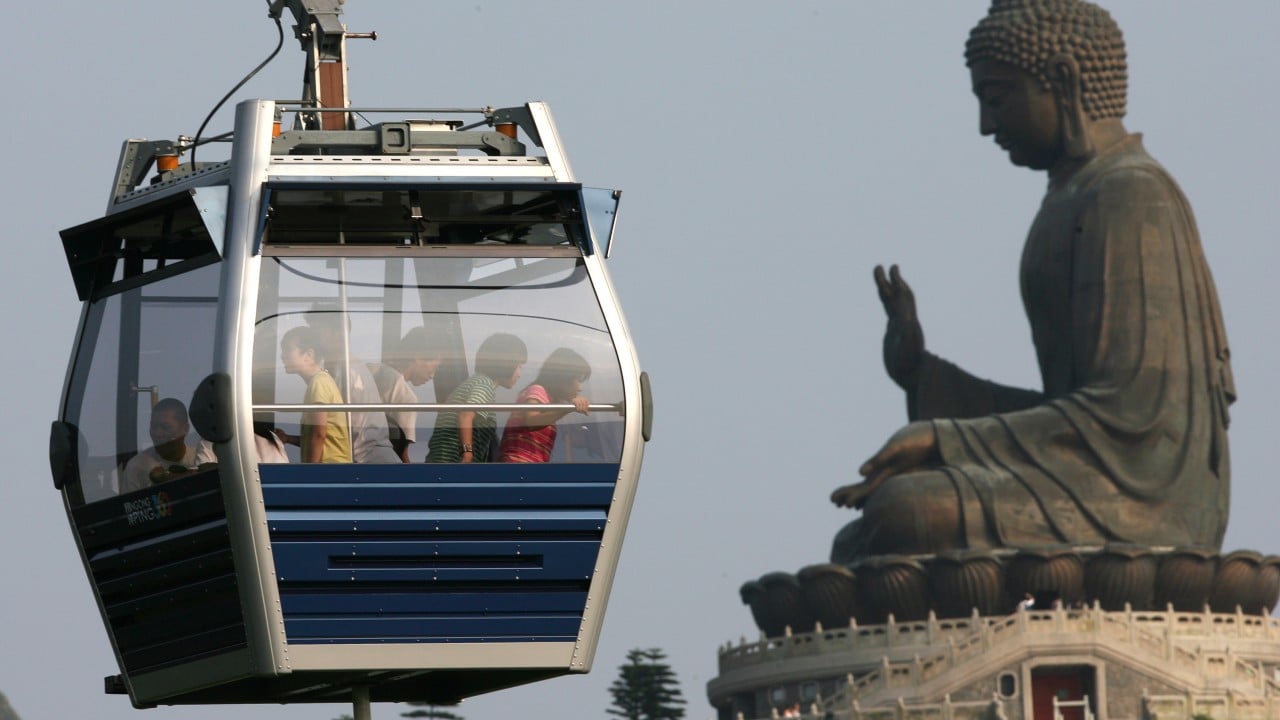
When the Ngong Ping 360 cable car finally opened its doors on Lantau Island after repeated typhoon-related setbacks and safety overhaul demands, public relations teams breathed a collective sigh of relief. Yet the polished press releases ignored a darker operational reality. The delays were not merely acts of meteorological bad luck. They exposed systemic vulnerabilities in how mega-tourism projects in Hong Kong absorb high-wind pressures, bureaucratic oversight failures, and the relentless commercial pressure to turn natural sanctuaries into high-yield tourist processing plants.
To understand why the Ngong Ping 360 launch stalled under heavy weather warnings, one must look past the scenic vistas of the Tian Tan Buddha and examine the engineering compromises made long before the first cabin left the Tung Chung terminal. Operating a 5.7-kilometer bi-cable ropeway across rugged terrain exposed to South China Sea tropical cyclones requires extreme structural discipline. When typhoons sweep through the region, sustained gale-force winds test every single tower, haul rope, and cabin grip. Regulators learned the hard way that minor calibration errors under pressure translate into catastrophic safety risks. Meanwhile, you can explore related developments here: The Economics of Culinary Discovery Why Algorithmic Travel Media Fails.
The Anatomy of a Meteorological Bottleneck
Typhoons are a predictable seasonal reality in Hong Kong, not unexpected anomalies. Every infrastructure project slated for coastal or mountain deployment must account for maximum probable wind loads. However, the initial planning phases of the Ngong Ping project collided with aggressive municipal tourism targets. Municipal planners wanted a world-class attraction operational immediately to capture rising visitor numbers. Speed trumped meteorological caution.
When severe weather warnings forced suspension notices during testing phases, operators faced severe financial bleeding. Each day of delay cost millions in lost revenue, idle maintenance crews, and stalled retail leasing inside the Ngong Ping Village commercial complex. Financial models built on perpetual tourist flow do not account for weeks of weather-enforced shutdowns. To explore the full picture, we recommend the recent article by Condé Nast Traveler.
Wind Shear and Structural Tolerance on Lantau Island
Lantau Island features complex topography. Air currents do not move in uniform sheets; instead, they fracture against peaks like Nei Lak Shan, creating severe turbulence and localized wind shear. Standard ropeway engineering models often underestimate these micro-meteorological phenomena.
During late-season tropical depressions, wind speeds at higher tower elevations exceed operational thresholds far earlier than ground-level weather stations indicate. The system relies on automated wind-speed sensors that trigger automatic shutdowns. When these sensors registered erratic readings during pre-launch testing, engineers found themselves locked in a debate between public safety and commercial viability. Operating an aerial tramway in high winds introduces severe fatigue stress on the wire ropes and grip mechanisms. Ignoring these physical realities invites mechanical failure.
Detachable gondola systems depend on precise synchronization between the cabin grip and the haul rope. High-intensity wind gusts cause dynamic oscillation of the cables, shifting the tension distribution across the sheaves. If an anemometer registers a sudden gust above safety limits, the entire line must slow down or halt. Yet stopping a heavy ropeway under heavy load creates its own mechanical strain. Every emergency brake application places immense torsional stress on the drive machinery.
Bureaucratic Blind Spots and Political Pressure
Public infrastructure projects in Hong Kong rarely exist in a vacuum of pure engineering. They are political statements. The transit operator, originally managed under different corporate configurations before settling under the MTR umbrella, faced intense scrutiny to deliver a high-profile economic engine for Lantau's development.
When severe weather delayed construction schedules and forced safety recertifications, government transport departments found themselves caught between strict statutory compliance and the embarrassment of a stalled ribbon-cutting ceremony. Bureaucrats rely on third-party certification bodies to vet safety claims. Yet these audits often suffer from tight deadlines and limited visibility into proprietary manufacturer specifications.
When a typhoon strikes during the critical final weeks of safety sign-offs, inspection routines get compressed. Engineers are expected to re-test structural integrity in compressed windows, creating a fertile environment for oversight omissions. The rush to reopen after a storm warning is lifted often bypasses comprehensive non-destructive testing of critical components like the main drive sheaves and emergency braking systems. Regulators sign off on paperwork because political momentum demands an open sign, leaving safety margins dangerously thin.
The Human and Financial Cost of Commercial Expediency
Tourism economics dictates that empty cabins generate zero revenue. Investors who poured capital into the Ngong Ping Village retail spaces demanded access to foot traffic. Every typhoon season brings financial anxiety to shop owners who signed high-rent leases predicated on uninterrupted visitor flows from Tung Chung.
When storms disrupt service, the economic shockwaves ripple outward. Tour operators scramble to reroute buses, hotels adjust staffing levels, and small vendors absorb perishable inventory losses. Yet the physical danger posed to passengers suspended hundreds of meters above steep ravines during sudden weather shifts dwarfs commercial complaints.
Industry analysts frequently misinterpret these weather-related delays as isolated logistical hiccups. They are systemic symptoms of an industry addicted to continuous growth. When passenger throughput becomes the primary Key Performance Indicator, safety margins are quietly treated as negotiable parameters rather than absolute boundaries.
The financial pressure trickles down to frontline maintenance staff. Technicians working under tight restoration deadlines after a typhoon warning is lowered face immense fatigue. Inspecting miles of haul rope across steep mountain saddles in humid, post-storm conditions requires meticulous attention to detail. When management pushes for an immediate restart to recover lost holiday revenue, the margin for human error widens exponentially.
Engineering for the Next Super Typhoon
Climate models project increasing frequency and intensity for regional tropical storms. Infrastructures built decades ago face operational stresses that stretch their original design parameters. For an aerial tramway system, retrofitting older towers with advanced anemometers and reinforcing grip assemblies requires massive capital expenditure and extended shutdown periods.
Operators now face a stark choice. They can either accept frequent, proactive weather suspensions to protect structural longevity, or they can push the limits of operational wind thresholds to satisfy short-term visitor quotas. History suggests commercial pressures often win until a near-miss forces a regulatory reckoning.
Modern ropeway engineering relies on predictive modeling rather than reactive maintenance. Yet predictive models are only as good as the historical weather data fed into them. When typhoons break historical intensity records, yesterday's safety margins become tomorrow's failure points. Upgrading tower foundations to withstand higher overturning moments requires civil engineering overhauls that few operators wish to finance voluntarily.
The public sees only the shiny cabins gliding peacefully above the green hillsides of Lantau. They do not see the frantic midnight maintenance logs, the tense emails between safety inspectors and corporate executives, or the calculated risks taken when a typhoon warning is downgraded and the system is cleared for restart before the ground has truly settled.
Extreme weather does not negotiate with corporate schedules. Until systemic operational reforms prioritize environmental resilience over continuous crowd capacity, every storm warning in Hong Kong will remain a stress test for an infrastructure model walking a razor-thin line between profit and disaster.