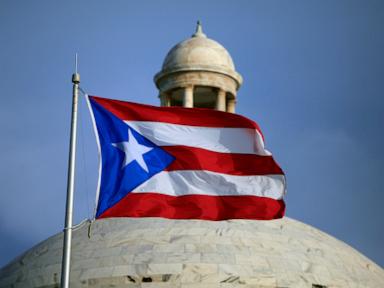
The media is recycling its favorite script for Puerto Rico, and it is entirely wrong.
If you read the mainstream headlines, the story is always the same: a tragic Caribbean melodrama of local corruption, standard bureaucratic incompetence, and dramatic high-profile resignations. The recent exit of Economic Development Secretary Sebastián Negrón Reichard, who walked out citing a total loss of trust in Governor Jenniffer González Colón’s administration, is being treated as a shocking political tremor. Commentators are breathlessly warning that a rerun of the historic 2019 protests is imminent, pointing to a "drugs-for-votes" prison scandal and massive public fury over multi-day blackouts and drying water taps.
This hyper-focus on local political theater is a lazy consensus. It treats Puerto Rico's public office as an actual seat of power.
I have spent decades watching governments and institutional investors navigate distressed debt and colonial administrative structures. I have seen administrations blow hundreds of millions of dollars playing musical chairs with cabinet positions, pretending that replacing a secretary or electing a new governor changes the fundamental math.
Here is the brutal truth nobody admits: Puerto Rico does not have a political crisis. It has a structural ownership crisis.
The local government in San Juan is essentially a glorified property management firm operating with a revoked credit card. Burning down La Fortaleza or forcing another governor out of office does absolutely nothing to alter the ironclad legal and financial architecture holding the island in a permanent stranglehold.
To understand why the mainstream analysis is a complete illusion, you have to look at the three major mechanics the media completely ignores.
The Myth of the Sovereign Governor
The prevailing narrative tells you that Governor González Colón is failing to govern. The real nuance is that under the current legal framework, she is literally not allowed to govern.
For nearly a decade, the real power on the island has belonged to the Financial Oversight and Management Board—popularly known as la junta. Imposed by the U.S. Congress under the 2016 PROMESA law, this unelected fiscal control board holds absolute veto power over every single dollar spent, every law passed, and every economic contract signed.
When Negrón Reichard resigned, complaining that his authority was constantly undermined by backroom interventions and reversed contract suspensions, the media blamed internal party warfare. That misses the macro picture. In a territory where an external board driven by Wall Street priorities routinely overrides democratically enacted workplace protections, labor rights, and infrastructure budgets, local cabinet positions are completely toothless.
Imagine a corporate scenario where a bankrupt subsidiary replaces its regional manager every six months while the parent company's restructuring firm controls the bank accounts, slashes the operational budget by 40%, and demands a higher return on assets. You wouldn't blame the revolving door of regional managers for the machinery breaking down; you would look at the restructuring firm.
The Privatization Trap
The public is understandably furious about the rolling blackouts and the severe water shortages stretching across San Juan. Activists paste the blame on the local administration and demand the termination of private utility consortia like Luma Energy.
But demanding a return to state-run utilities is a fundamentally flawed premise. The collapse of Puerto Rico's grid and water infrastructure isn't a failure of public versus private management—it is the logical outcome of a prolonged asset-stripping campaign.
Decades of systemic underinvestment, coupled with a crushing debt restructuring process designed to protect bondholders, guaranteed that the physical infrastructure would rot. Private operators were brought in not to build a resilient grid, but to cut operational costs and manage the decline.
If you replace Luma tomorrow, the new operator will face the exact same physical reality: a grid corroding from tropical climate shifts and a capital budget restricted by the fiscal board's mandate to prioritize debt service over human utility. The water trucks currently rolling through Santurce aren't a temporary political failure; they are the permanent infrastructure of a territory whose real wealth has been exported to satisfy old balance sheets.
The Diaspora Exploitation
Every time a political crisis hits San Juan, Washington politicians jump in with performative solutions. We see it with the introduction of bills like the Puerto Rican People’s Power Restoration Act of 2026, which promises a path to end the oversight board if a local successor is built. We see it with the endless, cyclical lobbying for statehood summits on Capitol Hill.
This stateside political interest isn't driven by an sudden urge for democratic purity. It is driven by the reality of the Puerto Rican diaspora—a massive, voting-eligible population concentrated in crucial swing territory like Central Florida and New York.
Mainland politicians leverage the optics of Puerto Rican suffering to lock in stateside voting blocks while doing absolutely nothing to disrupt the structural tax incentives that make the island a playground for wealthy tax exiles. Act 60 (the tax decree offering zero capital gains tax to wealthy mainlanders moving to the island) remains completely untouched by federal authorities. The status quo is highly profitable: the mainland extracts capital and cheap labor, stateside politicians extract votes, and local politicians take the blame when the lights go out.
Admitting this reality has a major downside. It means acknowledging that standard democratic tools—voting, protesting, replacing corrupt officials—are functionally useless within the current territorial arrangement. It forces an admission that the island's economic progress, highly praised during state-of-the-state addresses, is a statistical mirage that only exists for high-net-worth individuals shielded from the local reality.
The local political scandals are a sideshow. The cabinet resignations are irrelevant. Until the core structure of external financial governance and colonial tax extraction is completely dismantled, changing the face in La Fortaleza is just changing the captain of a ship permanently anchored to the ocean floor.


