Every election cycle produces the exact same ritual panic. Journalists clutch their pearls over participation drops, pundits diagnose a crisis of democracy, and well-meaning activists demand civic education campaigns to drag indifferent citizens to the ballot boxes. When the numbers roll in showing millions choosing empty desks over polling stations, the standard diagnosis is immediate: apathy, disillusionment, civic laziness.
The standard narrative gets it precisely backward.
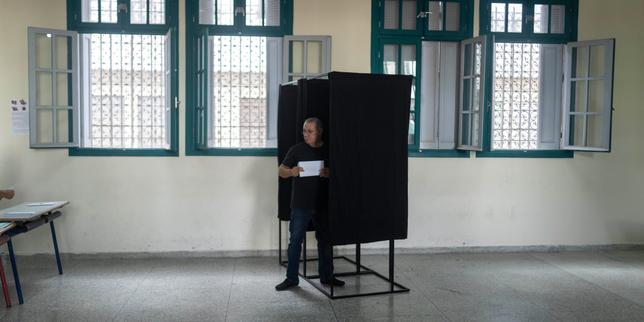
Let us look at the data from the recent legislative showdowns. When roughly six out of ten eligible citizens decide that casting a ballot is a waste of their afternoon, dismissing this as mere laziness is intellectual cowardice. It ignores the cold, rational calculus of populations who have figured out a fundamental truth that political scientists refuse to admit: refusing to play a rigged or irrelevant game is a valid political act.
The Comforting Lie Of Civic Apathy
For decades, political elites have pushed a lazy consensus. The thesis goes like this: if voter turnout is low, the citizenry is failing its democratic duty. This frames the voter as a consumer who simply needs better marketing, more inspiring speeches, or a smoother digital registration process to buy the product.
I have spent years watching institutions throw millions at voter-mobilization drives, treating non-voters like recalcitrant children who need a scolding or a treat. It fails every single time. Why? Because people are not stupid. They understand the limits of legislative power long before the pundits do. When economic pressures squeeze households and structural reforms crawl at a snail's pace, voters perform a simple cost-benefit analysis. They calculate the time lost, the bureaucratic friction, and the probability that their specific ballot will alter the composition of governance or the price of basic commodities.
When the output of that equation approaches zero, staying home is not a failure of civic duty. It is peak efficiency.
Redefining The Silent Majority
Let us look at the mechanics of modern representation. Political parties churn out manifestos packed with sweeping promises about growth, digital transformation, and social welfare. Yet, when the coalitions form and the dust settles, the average citizen sees little variance in their daily purchasing power or institutional responsiveness.
To understand why participation plateaus or dips, one must examine the actual locus of decision-making. When critical macroeconomic directions and large-scale infrastructural investments are charted well above the fray of day-to-day parliamentary debates, the legislature starts to look less like a sovereign house of the people and more like a rubber-stamping chamber for pre-ordained trajectories.
Voters sense this power displacement instantly. They do not need a degree in political sociology to know when a vote carries structural weight versus when it amounts to choosing the shade of paint for a room they do not own. Treating this acute awareness as "apathy" is a convenient way for political class actors to deflect blame from their own failure to deliver meaningful legislative leverage.
The Danger Of Compulsory Enthusiasm
The alternative proposed by institutional hand-wringers is often worse than the disease. We hear calls for heavier civic conditioning, frictionless digital sign-ups, or even whispers of compulsory voting.
Imagine a scenario where the state forces 95% of the population into booths through legal penalties or social shaming. What do you get? You do not get a vibrant, engaged democracy. You get polluted data. You get noise masked as mandate. Forced participation destroys the only real diagnostic signal abstention provides: a clear, quantifiable index of institutional distrust and irrelevance.
When millions collectively shrug and stay home, they are broadcasting a loud, unmistakable message to the political establishment. They are saying that the current configuration of parties, promises, and patronage does not merit their participation. Muffling that signal with mandatory turnout laws is like disabling the check-engine light because you do not like the red glow.
The Real Fix Starts With Institutional Honesty
If political parties actually wanted to cure abstention, they would stop blaming the voters and start reforming their own value proposition. That means devolving actual, uncompromised power to local elected bodies where a citizen's vote directly dictates the paving of a road, the opening of a clinic, or the funding of a school. People do not boycott elections because they hate democracy; they boycott them because they love efficiency and hate wasting time on theater.
Stop running campaigns telling people their voice matters when the structure ensures it does not. Earn the vote by surrendering real authority to the legislative branch, cutting out the performative rhetoric, and letting representatives actually legislate instead of acting as placeholders.
Until the political class changes the game, the smart money will stay home. And frankly, who can blame them.
Maroc : Un nouveau parti gagnant, mais une forte abstention aux législatives
This video provides context on the dynamic between shifting party victories and the persistent challenge of low voter turnout during legislative cycles.